
Texas Becomes the First State to Drop ABA-Accreditation for Law School
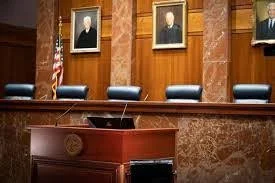
The Amendment passed by the Texas Supreme Court has the potential to challenge the legitimacy of the ABA nationwide. Source: Texans for Lawsuit Reform.
On January 6th, the Supreme Court of Texas amended the state constitution so that law schools in Texas are no longer required to receive accreditation by the American Bar Association (ABA), the organization in charge of overseeing legal education in the United States. An accreditation is a recognition that the education a law school provides is consistent with standards from the ABA. Graduates from ABA-accredited law schools are eligible to take the Bar, the final exam necessary to become an attorney. Instead of the ABA providing accreditation, it is now the Texas Supreme Court’s responsibility. This comes after the Federal Trade Commission (FTC), the government agency responsible for investigating anti-competitive behavior, labeled the accreditation process a monopolistic practice. Actions taken by the commission against the ABA have the potential to diminish the ABA’s influence while strengthening that of the courts in legal education.
The Texas Supreme Court cited two main reasons for the amendment. Firstly, they were influenced by the FTC claim that the ABA accredits the number of law schools in Texas through the accreditation process. In a letter to the court, the FTC explained that while the ABA is composed of judges and practicing attorneys, law professors make up a large portion of the association. The FTC argued that there is an incentive for law professors to reduce the number of accredited law schools, since this decreases the competition for the law schools that the professors represent. Leaders of the FTC believe that law school accreditation should be a responsibility held by the court, as the ABA has a conflict of interest. While the letter only addressed the role of the ABA in Texas, it still challenges the legitimacy of the ABA as a national organization. The effect of this diminished reputation is already rippling across the country, with states like Ohio and Florida also beginning to investigate the ABA.
The court was also influenced by the FTC claim that the ABA required Diversity, Equity, and Inclusion (DEI) policies as a prerequisite for accreditation. Their critique represents a larger shift to eliminate DEI practices from the legal profession. The FTC held that the ABA required law schools to uphold “controversial ideological views”. Policies often include stipulations that incoming classes of law students come from a diverse range of backgrounds. Restriction of DEI admissions considerations represents a trend in the legal profession, as government agencies are taking actions to remove DEI practices from legal institutions. Law schools are likely to cater more to sentiments held by the courts instead of the ABA if the association continues to lose power.
Opponents of the amendment argue that it isolates Texas law graduates, reducing the importance of the state in the legal profession. A group of deans from the most prominent law schools in Texas released a joint statement affirming that the decision would reduce the transferability of a Texas law degree. Experts’ concern reveals how the amendment can threaten the importance of Texas within the legal community. 12% of Texas law graduates move to other states; however, they need to come from an ABA-accredited law school to do so. Without requiring ABA accreditation, new law schools in Texas will be producing graduates who can only practice in-state. The lack of ABA accreditations will make new law schools in Texas irrelevant to the large number of students wishing to practice out of state, effectively lowering the demand for a legal education despite the growing number of law schools in Texas.
Pressure on the ABA is primarily led by conservative members of the government who have investigated other academic institutions. Lawsuits by the Trump administration against Harvard University and others encouraged conservative judges and members of the FTC to investigate the ABA. Florida and Ohio, states whose courts lean conservative, opened up reviews. Given the past distrust of academic institutions, recommendations made by the FTC to the Texas Supreme Court to drop the ABA accreditation process can be seen as a continuation of this broader trend. As a result, the ABA joins the ranks of Harvard, which has faced serious ramifications for their differences with the Trump administration.
In the coming months, the investigations in Florida and Ohio will conclude, and the ABA might lose its authority to accredit law schools in those states as well. Without this power, the ABA will fail to ensure law schools are sufficiently preparing students for the Bar Exam. This has the potential to lower national Bar passage rates if all schools are not being held to the same standard. Law school officials will have to see how the ABA will change as an institution, and might be forced to make decisions with significant consequences for law students across the United States.