
Seven Hearings, Very Little Substance
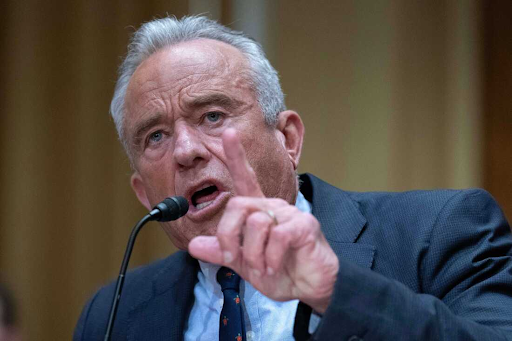
HHS Secretary Robert F. Kennedy Jr. during his congressional hearing. Source: NPR.
Over the past week, Health and Human Services Secretary Robert F. Kennedy Jr. completed a marathon of seven congressional hearings, which marked his first sustained engagement with lawmakers since September 2025. The occasion was ostensibly the Trump administration’s proposed FY2027 budget, which would cut his department’s funding by more than 12%. What the hearings actually revealed was something broader: a cabinet secretary who has mastered the art of deflection at an institutional scale. The dominant flashpoint was vaccines. Kennedy has faced blistering criticism from Democrats over his vaccine policy and the ongoing measles outbreak in the U.S., for which he has denied responsibility for. His defense was predictable at best. Kennedy argued that the outbreak predated his tenure, while ignoring his decades-long career as the country’s most prominent anti-vaccine activist before taking office. Sen. Lisa Blunt Rochester (D-De.) put the contradiction plainly, stating “You blame the Mennonites. You blame immigrants. You blame the globe.” The hearings also exposed Kennedy’s loose relationship with scientific evidence. Kennedy has long argued that infant mortality decreased not because of vaccinations but due to improvements in sanitation and nutrition. When Sen. Bernie Sanders (I-Vt.) asked whether it was “simply untrue” that vaccines reduced infant mortality, Kennedy cited a study he claimed supported his position – only for Sen. Bill Cassidy (R-La.) to look up the study mid-hearing and tell Kennedy he misrepresented the findings. What was perhaps most telling was the bipartisan frustration. Even Cassidy and Senate Majority Whip John Barrasso — both Republican physicians — pressed Kennedy on vaccines and preventive screening policy. The fact that Republican senators with medical degrees are openly skeptical of their own party's HHS secretary is not a minor detail. Kennedy touted drug price negotiations, dietary guideline updates, and rural health investments as proof of progress. Plausible. But seven hearings in seven days produced no meaningful commitments, no accountability on measles, and no clarity on HHS's direction. The performance was polished. The answers were not.