
Chicago Isn’t in Crisis; Presidential Power Is
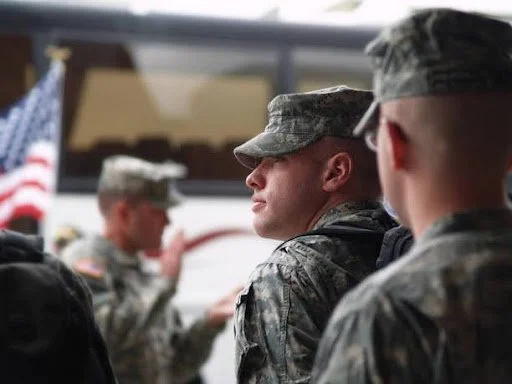
Members of the National Guard in uniform standing in formation, equipped with standard tactical gear. This image is representative of National Guard personnel; it does not depict the specific units deployed by President Trump to Chicago. Source: iStock.
In early October, Chicago became the center of a national power struggle when President Trump ordered 200 members of the Texas National Guard into the city to support ICE raids. The deployment came without the consent of Illinois’ leaders, prompting Illinois Governor J.B. Pritzker and Chicago’s Mayor Brandon Johnson to sue the administration, calling the action “an illegal occupation.” State leaders have condemned the move as an unlawful abuse of presidential power, warning that deploying military forces for civilian law-enforcement roles violates long-standing constitutional limits. The court battle now unfolding could determine the future balance of power between state governments and the presidency. The deployment is not about public safety, but about expanding presidential power and punishing political opponents. Allowing this occupation to stand would set a dangerous precedent for federal overreach.
The Posse Comitatus Act is central to this dispute. Passed in 1878, it prohibits the use of federal troops for domestic law enforcement unless the President acts under authority granted by Congress in the Constitution’s militia clause (Article I, Section 8, Clause 15). This clause allows domestic military deployment only under tightly limited, extraordinary conditions. The law reflects a core American fear: that a president could use the military not for national protection, but to control the public. The only major exception to Posse Comitatus is the Insurrection Act, which allows a president to deploy military forces in rare, extraordinary circumstances—for example, if a state requests help during riots or if a state is actively defying federal law.
Historically, the Insurrection Act has been invoked sparingly. In 1957, President Eisenhower used it to enforce school desegregation in Little Rock when the Arkansas governor ordered troops to block Black students from entering a public school. In 1992, President George H.W. Bush deployed federal troops to assist California during the Los Angeles riots—but only after California’s governor requested support. In both cases, there was widespread violence, governmental paralysis, or clear violation of constitutional rights.
Chicago today does not resemble those emergencies. The Illinois government is functioning, and Chicago is not in rebellion. In fact, crime in the city has declined, with homicides down 28 percent and shootings down 35 percent this year. Federal law enforcement has also been operating without obstruction—including Operation Midway Blitz, an ICE initiative that proceeded even though state and local officials opposed it politically. Most importantly, Illinois did not request military assistance. The deployment, therefore, raises the question: Is this truly about public safety or about political power?
Political patterns suggest further concerns. The cities targeted for military involvement, Chicago, Portland, Baltimore, are Democratic-led. Meanwhile, states with the highest crime rates, many led by Republican governors, have not been subject to military deployment. In one notable example, the governor of Louisiana requested National Guard support, yet federal approval was not as quick to respond. This contrast implies that the motive may not be public safety, but punishing political opposition and manufacturing a narrative of chaos in Democratic cities.
Trump made immigration enforcement a central part of his political identity, and he successfully tapped into existing voter anxieties over demographic change and cultural identity. This approach marked a break from earlier Republican presidents, who had generally supported either amnesty or comprehensive immigration reform. By deploying troops, he reinforces a law-and-order message while portraying political opponents as incapable of governing.
To qualify under the Insurrection Act, specific legal thresholds must be met—generally involving rebellion, widespread lawlessness, or a state actively refusing to enforce federal law in a manner that obstructs justice and makes normal judicial proceedings "impracticable." The Act does not define these terms precisely, granting the president broad discretion; however, past uses set a high bar for the required level of violence or governmental paralysis.
Currently, a temporary restraining order issued by Judge April Perry indicates that the courts recognize this as a serious constitutional conflict, and the case is already headed toward the Supreme Court.
Ultimately, this is not just a debate about immigration policy or crime statistics; it is about the boundaries of the presidency itself. A president who can deploy military force into communities for reasons that appear political rather than protective has stepped beyond the bounds of democratic limits. If this deployment is allowed to stand, it will not stop with Chicago. It will set a precedent that enables future presidents to send troops into any state that disagrees with them.
Once those guardrails move, they rarely return.