
Renewed Scrutiny of Prince Andrew Highlights Global Fallout of the Epstein Network
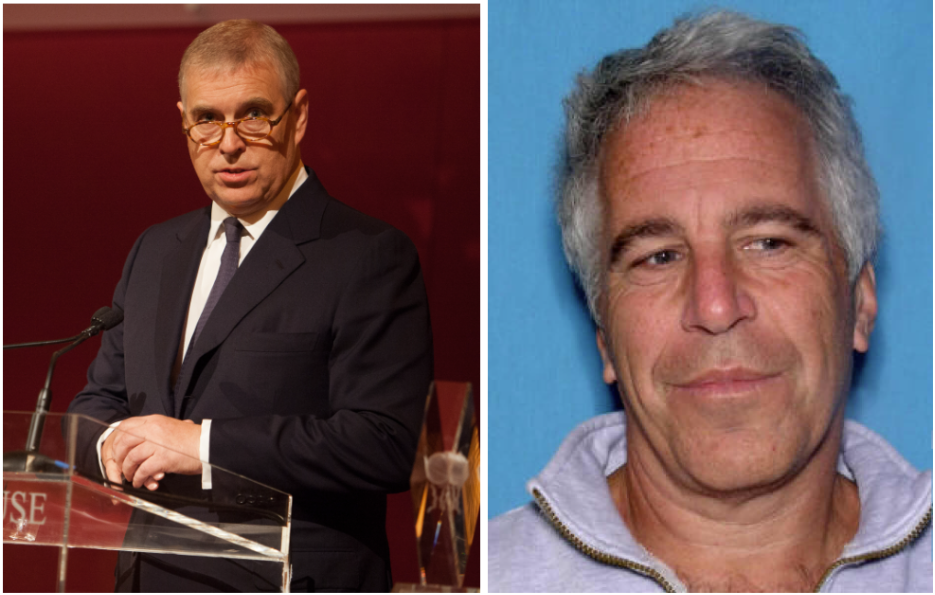
Prince Andrew (left) and Jeffrey Epstein (right). Their documented association remains the subject of ongoing public and institutional debate. Source (right): Wikimedia Commons, Source (left): Wikimedia Commons.

The renewed attention surrounding former Prince Andrew Mountbatten-Windsor has once again drawn international attention to the lingering global consequences of his association with child sex offender Jeffrey Epstein.
Mountbatten-Windsor’s relations with Epstein reflect the transatlantic scope of Epstein's network. In the United States, Epstein was arrested in 2019 by federal authorities, marking a dramatic turn in a case that had previously ended in a controversial plea agreement more than a decade earlier. Epstein's death while in custody increased public suspicion and fueled ongoing investigations into his associates. In 2021, British socialite Ghislaine Maxwell was convicted in a U.S. federal court on charges related to recruiting and trafficking minors for Epstein.
Despite Maxwell’s conviction in both countries, many observers have noted that relatively few high-profile figures reportedly connected to Epstein have faced criminal charges. Legal experts have pointed out that association by itself does not constitute criminal liability; prosecutors must meet a high evidentiary threshold to bring charges. But all the while, the perception that powerful individuals may evade consequences has fueled skepticism and public distrust.
Meanwhile, former Prince Andrew has faced years of scrutiny over his documented friendship with Epstein. Photographs and flight records have placed Mountbatten-Windsor in Epstein’s social circle during the early 2000s, even extending into 2008 when Epstein had first pleaded guilty to sex-related charges in Florida. The former prince has repeatedly denied any wrongdoing or involvement.
Public controversy intensified in 2019 when Andrew defended his past association with Epstein during a BBC interview. The interview prompted significant public backlash in Britain and abroad, prompting Andrew to step back from his public royal duties later that year. In 2022, Queen Elizabeth II stripped him of honorary military titles and royal patronages amid mounting pressure. During that same period, Mountbatten-Windsor had reached a civil settlement in the United States with Virginia Giuffre, who had accused him of sexual abuse when she was a minor. The settlement, however, did not include an admission of liability, and the former prince has consistently denied the allegations.
In the United Kingdom, the scrutiny of Andrew has also intersected with broader debates about the modern role of the monarchy. Under King Charles III, the royal family has sought to project an image of streamlined accountability and institutional stability following a period marked by multiple public controversies. In the latter half of 2025, King Charles III stripped Andrew of his titles, privileges, name, and royal home; he is now known as Andrew Mountbatten-Windsor. Andrew’s withdrawal from official duties was widely interpreted as an effort to shield the institution from further reputational damage. However, the institution’s efforts to distance itself were tested in February 2026, when Andrew Mountbatten-Windsor was arrested on his 66th birthday on suspicion of misconduct in public office, which is the first arrest of a senior British royal in nearly 400 years. While King Charles III said, “the law must take its course,” critics argue that the arrest of a man who was once a senior representative of the Crown inevitably taints the institution. This signals the end of an era of royal deference, raising the question of whether a family so closely linked to a high-profile criminal investigation can ever truly shield its reputation from the fallout.
In the United States, only Epstein and his associate Ghislaine Maxwell have been prosecuted, despite numerous individuals being named in investigative files, highlighting a gap between allegations and legal accountability. The contrast highlights the differences between the two countries in legal systems, prosecutorial discretion, and political culture. In Britain, the monarchy occupies a constitutional role that blends public symbolism with private family status, complicating legal scrutiny’s perception domestically and internationally.
The Epstein case centers on a single person and has evolved into a broader reckoning of elite power structures that go beyond national borders. From Manhattan courtrooms to Buckingham Palace, the aftershocks continue to test the public’s confidence in institutions that are long viewed as pillars of authority. The persistence of unanswered questions and the limited accountability for high-profile associates have reinforced concerns about transparency and equal application of the law. As a result, this case has not only remained a legal matter but also a symbol of the challenges that democratic societies face when holding influential individuals and institutions to account.
Looking ahead, the significance of the Epstein scandal will likely depend on whether future investigations, legal actions, or institutional reforms address the gaps that have fueled public skepticism. In both the United Kingdom and the United States, the continued media scrutiny and public pressure may influence how similar cases are handled, especially when they involve individuals with substantial social or political influence. For the British monarchy, fallout surrounding Andrew Mountbatten-Windsor can underscore the importance of maintaining public trust in an era of heightened accountability., This case serves as an enduring reminder that institutional credibility depends not only on the traditional authority but on a demonstrated commitment to transparency, justice, and the consistent application of the law.