
The Republican Midterm Strategy
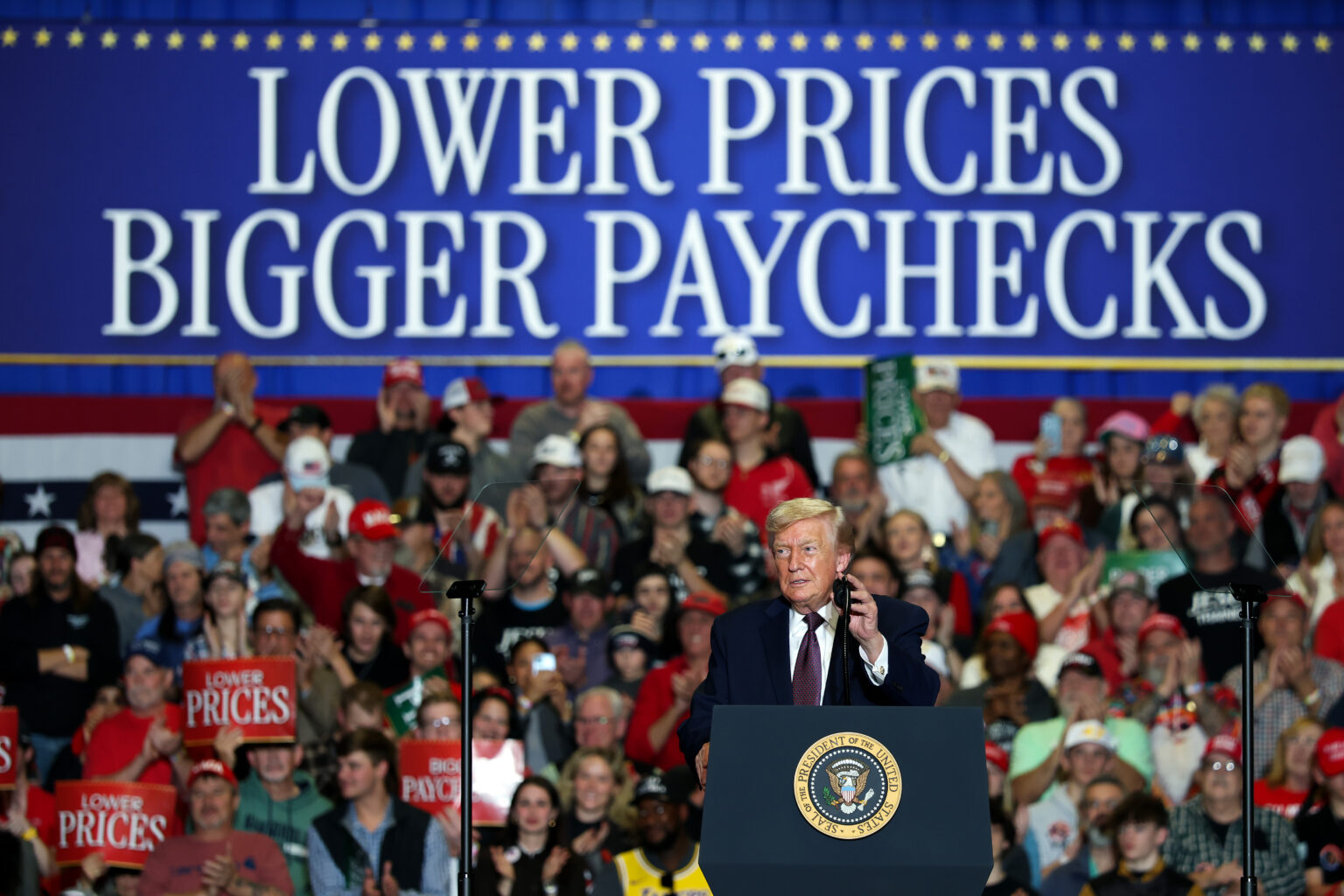
U.S. President Donald Trump delivers remarks during a rally at the Rocky Mount Event Center. Source: NC Newsline.
With around two weeks until the midterm elections, President Donald Trump is on the campaign trail nearly every day, even as three national polls show his approval rating at record lows of 33 percent. The same surveys show Democrats leading Republicans by 8-10 points on the congressional ballot. That pairing leaves Republican candidates with a strategic dilemma: increasing turnout from Trump’s loyalist voter base while embracing an unpopular president may cost them persuadable voters.
The White House rejects the notion of this problem. Spokesperson Davis Ingle called Trump the party’s “best messenger” and “most effective motivator,” and a White House official told Axios there is no distance between the president and the candidates. The polling on Republican voters offers some support for that view, since President Trump’s approval rating among Republicans stands at 76 percent in the Fox polls and 79 percent in the Post poll.
Those numbers, however, mask a split within the party itself. Fox found 95 percent approval among self-described “MAGA Republicans” but only 47 percent among non-MAGA Republicans. This distinction is important because the two groups pose different risks. The current strategy only works if the midterms are heavily dictated by base mobilization, which President Trump’s rallies certainly deliver. But a voter base split evenly on the president, especially when voter perception of the economy is vulnerable, could deliver a less-than-certain turnout.
The locations visited by President Trump have been mostly conservative strongholds, including Kansas, where Republicans are defending a Senate seat. It could be read that the party is deploying him where his unpopularity costs the least. However, reporting has shown that the race for Congress is tightening even in places President Trump won comfortably in 2024. From that angle, a rally in a “safe state” appears more as a response to vulnerability than a retreat from more competitive ground.