
A Fourteen-Day Window for Diplomacy
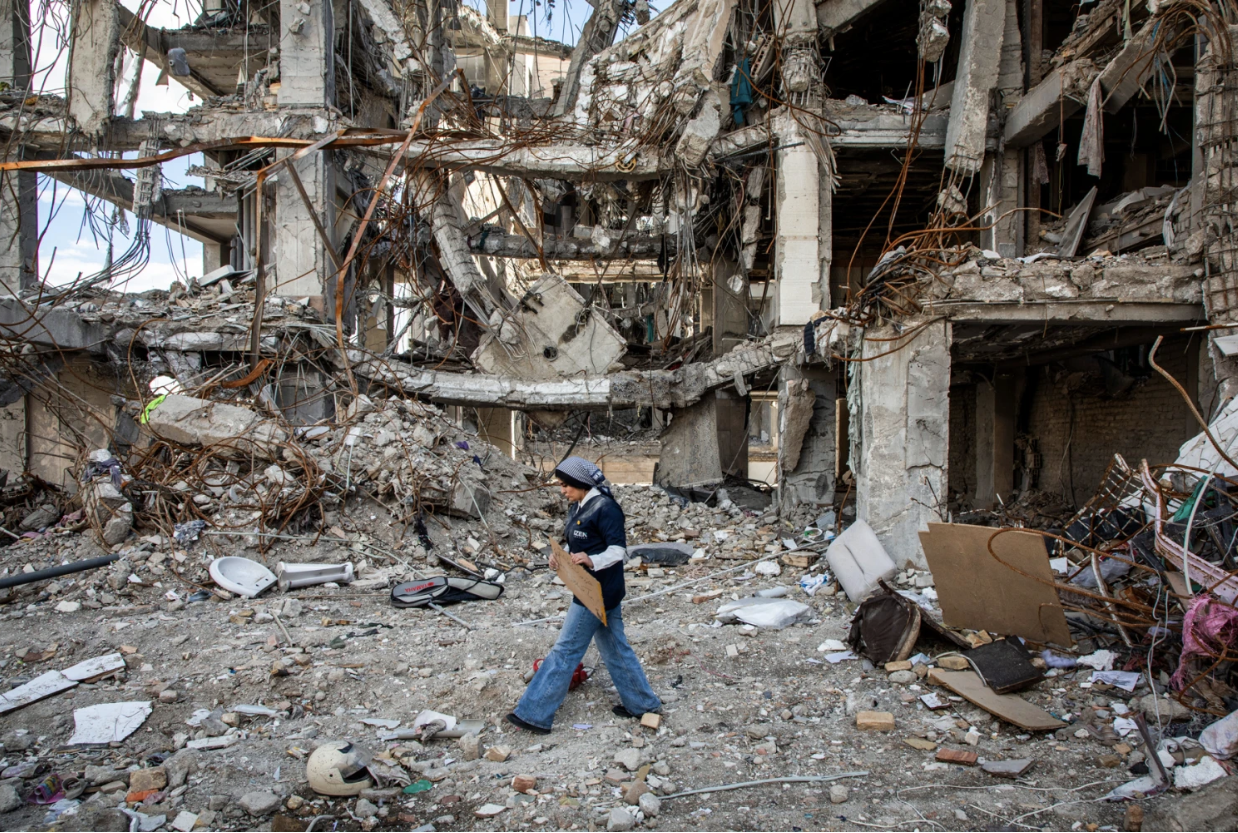
A woman walks through a demolished building in Tehran, Iran. Source: NBC.
Washington and Tehran have agreed to a two week ceasefire on April 7th, 2026. This comes after tensions between the United States and Iran seemingly reached boiling point. Earlier in the day, U.S. President Donald Trump stated “a whole civilization will die tonight” if Iran did not comply with the U.S. deadline. This deadline, given March 21, 2026, of 8 P.M. on Tuesday, April 7th, threatens Iran with a large-scale military strike if the Strait of Hormuz is not opened. The agreement was reportedly reached through meditation with Pakistan, with Prime Minister Shehbaz Sharif requesting the pause to allow for further diplomacy. President Trump announced the ceasefire via a post on Truth Social. The ceasefire is conditional. Iran must agree to the immediate and safe opening of the vital Strait of Hormuz. Iran has responded to the ceasefire agreement by submitting a ten-point proposal to resolve the conflict. This plan includes demands for lifting sanctions and releasing frozen assets. It also calls for an end to fighting in Lebanon and Yemen. Official talks regarding the proposal are scheduled to begin this Friday in Islamabad. The announcement led to an immediate reaction in global markets. Oil futures dropped significantly once the news broke. However, Iranian officials warned that this pause does not mean the war is over. They have stated their forces remain ready for combat if the deal fails. For now, the threat of immediate strikes on Iranian infrastructure has been removed. This pause in hostilities provides a crucial moment for international leaders to weigh in. Many hope that the talks in Islamabad will lead to a permanent resolution. Both sides still maintain their military readiness. This two-week window offers a rare chance in this conflict to avoid further escalation.