
The Retake And The Cockroaches
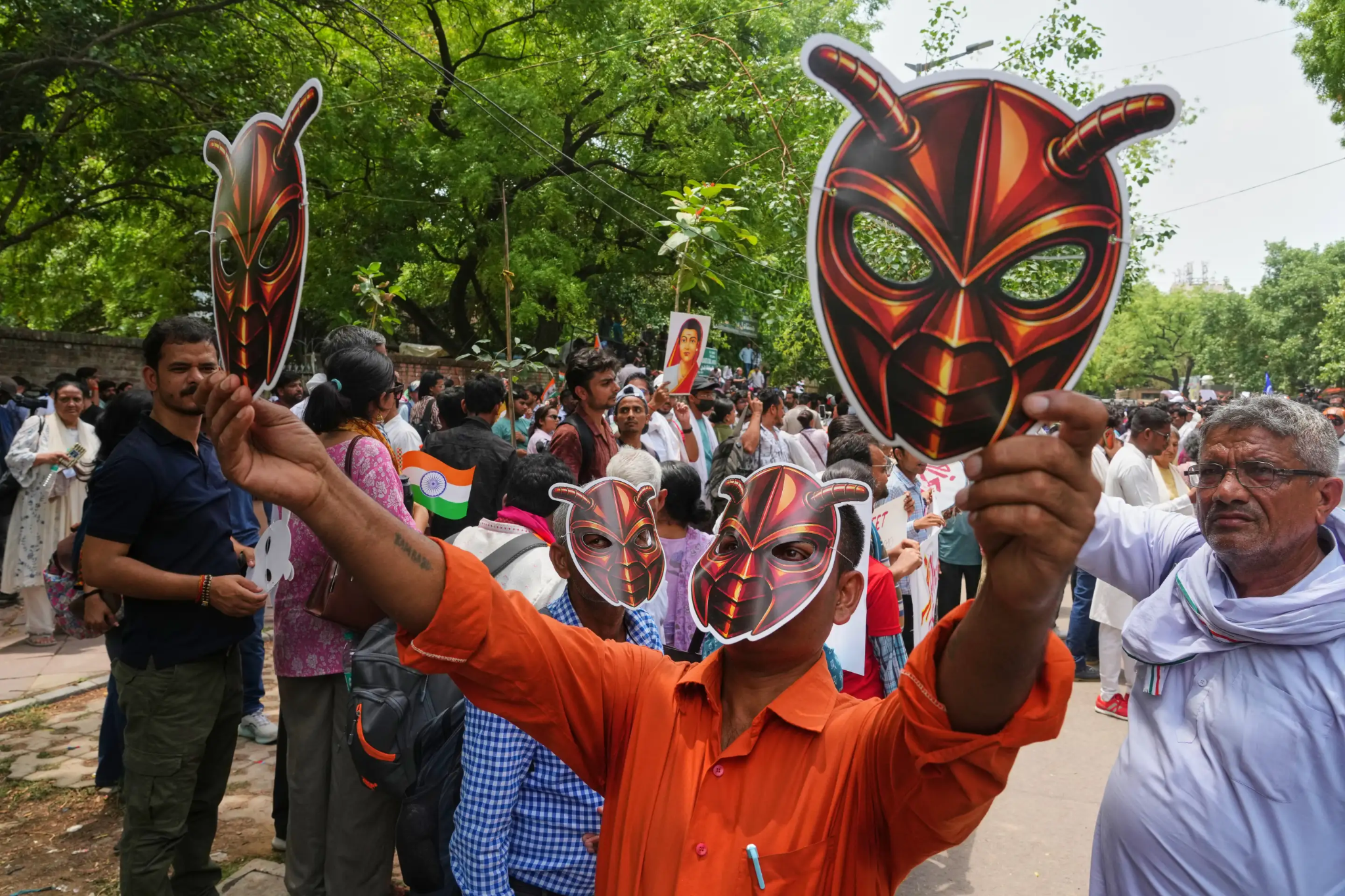
Supporters of the Cockroach Janta Party wear masks to show their support. Source: AP News.
Nineteen-year-old Sheikh Sana, an aspiring doctor, had already sat India’s National Eligibility cum Entrance Test once this year. When investigators found that exam questions had been leaked, they ordered a retake. The night before the retest, Sana wrote “I am sorry” on a plain sheet of paper and took her own life. Her death is just one of several suicides the youth-led Cockroach Janta Party attributes to the exam leaks. Although the group’s count of 21 suicides tied to the scandal has not been verified, police in three states within India have classified the deaths under investigation as suicides without commenting on cause. The scale of the administrative failure surrounding the NEET is staggering. More than 2.3 million students sat the exam competing for roughly 137,000 medical school seats before India’s Central Bureau of Investigation announced in mid-May that teachers and agents at private tuition centers had sold access to the leaked questions. The resulting fallout has been the main focus of the youth-led protests. For those protesting, the retest is a symptom of an education system they claim to be rigged against students without connections and financial opportunities. The leaked questions moved through paid tuition centers before the exam, meaning the same students who could afford coaching in the first place were positioned to buy early access to the answers, while everyone else is now bearing the cost. The government, by contrast, has treated the leak as a contained administrative failure rather than a systemic one and has proceeded with arrests and, as of Saturday, the education minister’s resignation. The Cockroach Janta Party began as satire after a Supreme Court justice remarked that unemployed young people confronting the system “like cockroaches.” Organizers adopted the insult as a name, parodying the Bharatiya Janata Party’s own acronym. The parody account gained roughly 19 million Instagram followers, more than the BJP and India's opposition Congress party combined. The following became an organizing base for grievances well beyond the exam itself, chief among them stagnant job creation. Critics argue that the problem has persisted despite a decade of economic growth under Modi's government. The state’s response is read in two competing interpretations. Protesters and outside observers point to mobile internet shutdowns, barricades, and riot police baton charges against marchers headed towards Parliament, along with the detention of hunger-striking activist Sonam Wangchuk, as evidence of a government intolerant of dissent. Some BJP officials counter that the movement might destabilize the country rather than reform it. Party Chief Nitin Nabhi has described the protestors as people who want to “make the country hollow.” Opposition leader Rahul Gandhi has taken the opposite line, accusing Modi of “silently watching the spectacle” rather than acting. As for what happens next, the government’s concession, a ministerial resignation and a pledge to discuss NEET reform, may satisfy demands for accountability on the leaks themselves without touching the deeper complaint about opportunity that the CJP has organized around. That distinction is very important in a country where, by Reuters’ accounting, 65% of the population is under 35. A large generation, mobilized around a single exam scandal but animated by broader economic frustration, is not satisfied by a resignation alone. Whether the protests recede with the ministerial change or persist as a standing challenge to the BJP's twelve-year hold on power will depend on whether it can address the unemployment and opportunity concerns the movement has come to represent, not just the exam scandal that triggered a resignation and a round of arrests, and whether it can close the leak investigation without closing the argument that set off the protests in the first place.