
Two Men Fatally Shot by ICE
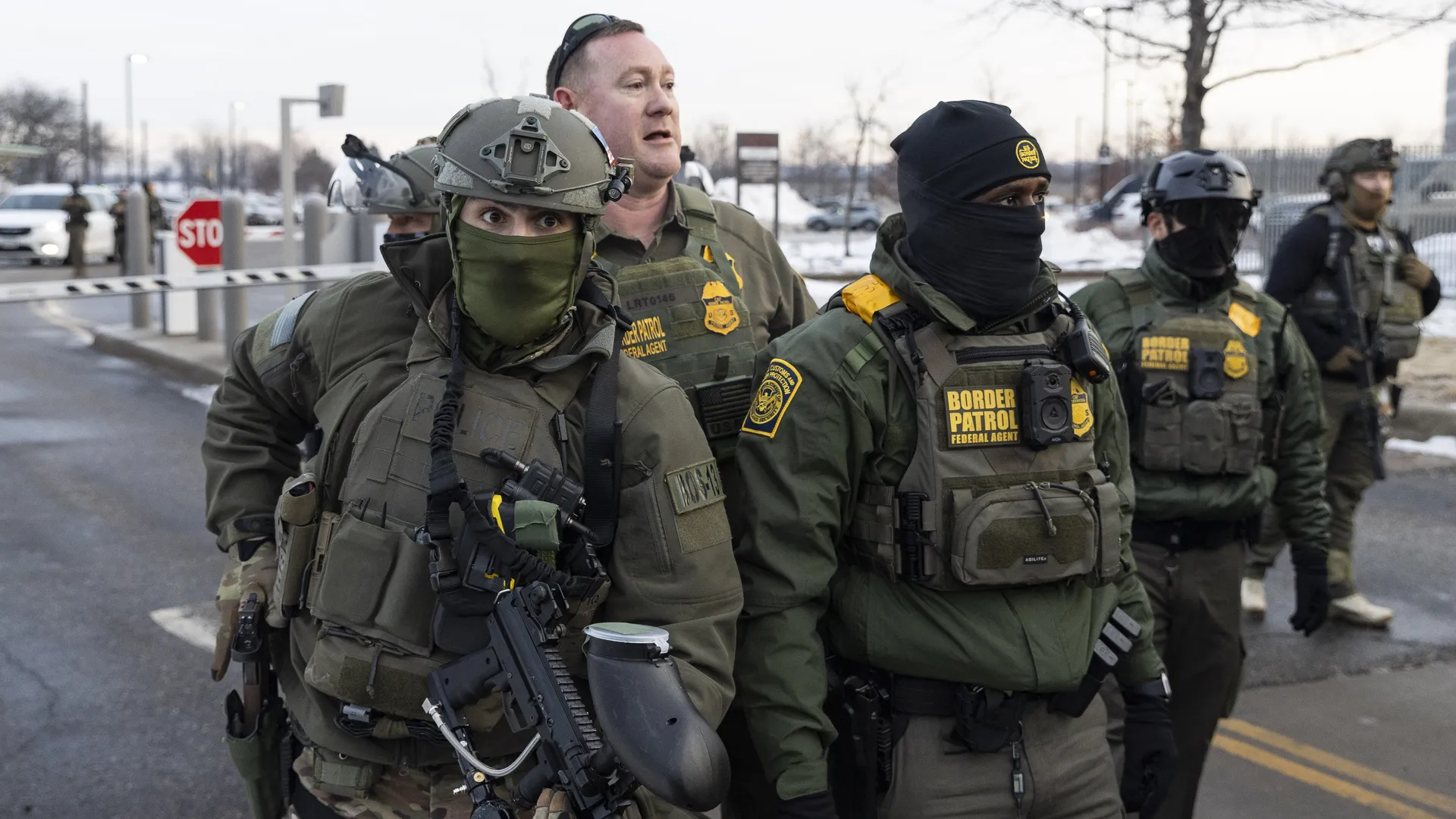
Federal agents monitor protesters outside an ICE facility in Minneapolis on January 9, 2026. Source: Axios.
In the span of eight days, ICE agents fatally shot two men during vehicle stops nearly two thousand miles apart. Lorenzo Salgado Araujo, a 52-year-old Houston city councilmember, business owner, and United States resident of 35 years, was shot and killed on July 7th in Houston. Joan Sebastián Durán Guerrero, a 26-year-old Biddeford, Maine resident, cleaner, and food delivery driver, was shot and killed on July 13th in Maine. Both men were fathers. His wife and three sons survive Araujo. Araujo’s son, Ronaldo Salgado, searched for his father before finding his work van behind lines of police tape. He later saw a video online of a man being shot in the street, who was only identifiable as his father by the voice heard pleading for his life in the video. Guerrero’s 3-year-old daughter was in the vehicle while her father was killed, and he leaves behind his partner. By Tuesday, ICE had ordered its Enforcement and Removal Operations agents to suspend most vehicle stops nationwide. This reversal invites two distinct explanations, each with different implications for how the incidents should be understood. The first treats the shootings as isolated incidents of individual officers' judgment. The Maine shooting was reportedly due to the officer’s fear for public safety, and the Houston shooting was described as part of a “targeted enforcement operation” with no further detail from the DHS. Under this reading, the vehicle-stop pause is a precautionary measure pending investigation, not an admission that anything about the underlying tactic was flawed. The second, structural explanation is harder to reconcile with that framing. NBC News sources within DHS have attributed the shootings to pressure on officers to meet increased arrest quotas, and the Wall Street Journal has documented more than a dozen incidents since July 2025 in which federal immigration officers fired at people inside vehicles. This framework represents a recurring pattern, not two anomalies. If the shooting were purely a matter of individual conduct, a policy response targeting the vehicle-stop tactic itself would be a strange remedy; suspending the tactic nationwide implicitly concedes that the tactic, not just the officers who executed it, carries the risk. That inference is suggestive rather than conclusive, since ICE has not officially linked the pause to quota pressure, and the agency could reasonably argue the timing reflects institutional caution rather than a recognition of systemic failure. A parallel accountability gap complicates the record even further. Agents involved in the Biddeford shooting were not wearing body cameras, according to Senator Angus King’s office, and Harris County’s district attorney has said federal authorities are not sharing evidence with local investigators examining the Houston shooting. That asymmetry places state and local officials in the position of reconstructing the conduct of federal officers without federal cooperation. This friction predates these shootings but is now playing out in real time across two separate jurisdictions. The political stakes are converging on this uncertainty rather than resolving it. Senator Susan Collins, facing a competitive Maine reelection, now watches potential challengers use the shooting to sharpen their contrast with her immigration policy. At this time, Columbia’s president has already called the Biddeford shooting a murder. What the vehicle-stop suspension confirms, independent of which explanation proves correct, is that ICE leadership found the operational status quo untenable after two fatalities in a week. Whether that reflects a course correction on tactics or a temporary pause pending investigation will likely depend less on official statements than on what the Maine and Harris County investigations surface in the coming weeks.