
Trump and Hegseth Push Overhaul of U.S. Military, Raising Questions of Power and Purpose
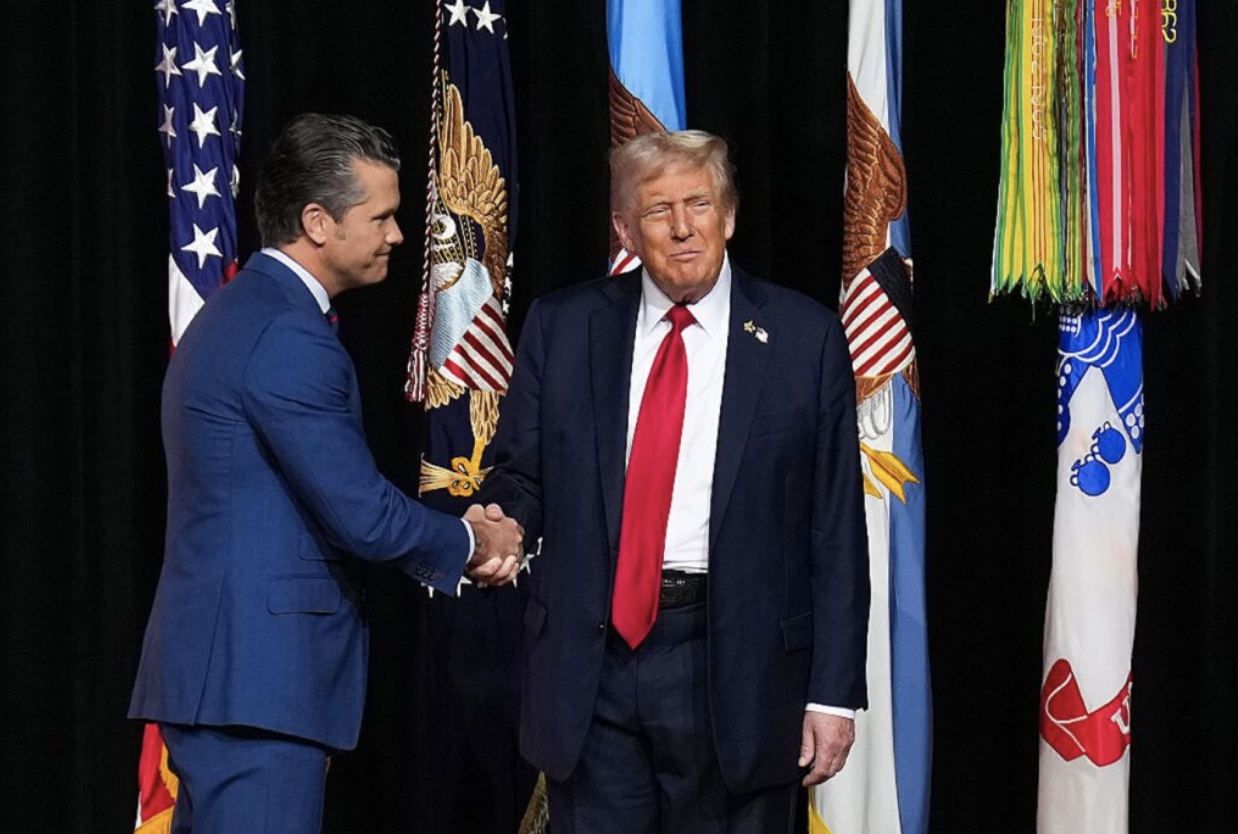
President Donald Trump and Pete Hegseth shaking hands between speeches at Quantico, VA. Source: Salon.
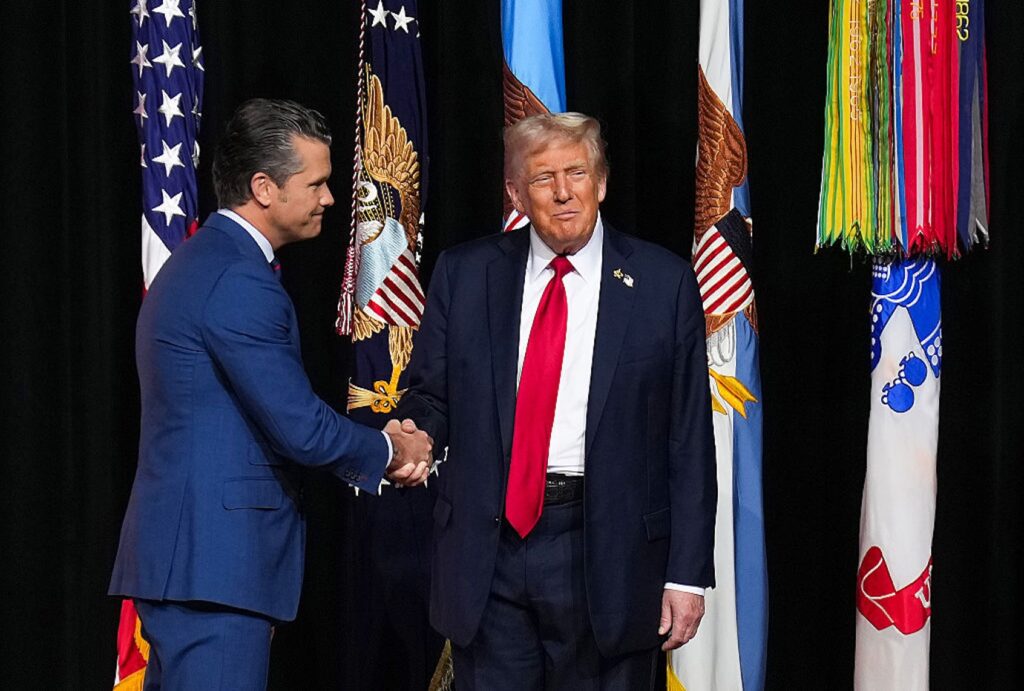
On September 30, President Donald Trump spoke to a group of military leaders about his plans to use American cities as military “training grounds” to fight against the “invasion from within,” a reference to his long-standing claims that crime, immigration, and political unrest pose internal threats to national security.
The speech marked the latest effort by the Trump administration to reshape what they argue is a Pentagon culture that has become overly bureaucratic, politically cautious, and distracted by social policy debates. Trump and Hegseth have repeatedly claimed that military leaders are prioritizing administrative concerns and “woke” personnel policies over readiness, combat effectiveness, and national security. By redirecting military resources toward domestic, presidential priorities, the administration says it is correcting what it views as years of misaligned spending and leadership focus.
Central to Trump’s proposal was the deployment of troops to Democratic-led cities like Chicago and New York; a move he claims would address crime and immigration but that would sharply expand presidential power and provoke legal and civil liberties concerns. Such a move explicitly violates the 1878 Posse Comitatus Act (PCA), which bars the president from using the military as a domestic police force. While the Insurrection Act provides narrow exceptions for genuine rebellions or when local officials request federal aid, Trump’s plan for routine, city-based training does not fall within those exceptions, making his plan incompatible with both laws.
Those legal tensions only heightened the stakes of Trump’s announcement, setting the stage for an unusually forceful display of presidential authority. That shift in tone was immediately reflected in the atmosphere at Quantico. Admirals and generals returning from conflict zones, alongside rank-and-file troops, were ordered to Virginia with less than a week’s notice – an unusually abrupt summons that signaled political urgency and disrupted standard military practice, raising concerns about the broader implications of the administration’s approach. Their presence made it clear that the focus was on the cultural and political dimensions of the military, despite urgent national security challenges abroad. Ahead of Trump’s speech, Defense Secretary Pete Hegseth vowed to end “woke” culture in the military, calling for “gender-neutral” fitness reforms for “every designated combat arms position” while openly welcoming the resignation of military leaders if they did not approve of his new approach.
As another component of the administration’s broader effort to reshape military culture, Hegseth has also targeted long standing fitness and qualification standards. He is a vocal advocate for making all physical standards the same, arguing that the military needs to “return to the highest male standard only.” Although women have served in the armed forces since 1948 and were only permitted to enter combat roles in 2016, positions such as infantry, armor, special operations and pararescue have long-relied on job-specific, gender-neutral standards designed to measure whether an individual can meet the physical demands of combat. Hegseth’s approach reframes this system by rejecting gender-based averages outright, insisting that every service member meet a single, elevated benchmark – a shift he views as essential to restoring military readiness, and one that dovetails with the administration’s larger effort to redefine who is considered fit to serve.
This push for stricter fitness benchmarks fits squarely within the administration’s broader effort to redefine who is considered capable of serving in the military. While Hegseth may be implementing harsher physical standards in 2025, he is not arguing for the removal of women from the military. Instead, he argues that building a “stronger military” requires a single, elevated standard – even “if that means no women qualify for some combat jobs.” Under this model, physical requirements become more demanding across the board, no longer divided into male and female categories, reinforcing the administration’s goal of tightening military culture around a narrower conception of readiness and strength.
This speech comes shortly after Hegseth ordered the military to cut twenty percent of its four-star generals and told the National Guard to shed twenty percent of its top positions. There is an apparent overhaul of the U.S. military under Hegseth’s rule, though it remains unclear whether the changes are steering the Armed Forces toward Trump’s vision of a domestically oriented military or toward preparation for a period of heightened global conflict. Regardless of the administration’s stated intent, these reforms represent a fundamental reorientation of the U.S. military: a move that blurs the line between national defense and domestic politics, and forces new questions about when, why, and under whose authority American troops can be deployed.