
A Dangerous Game in Venezuela
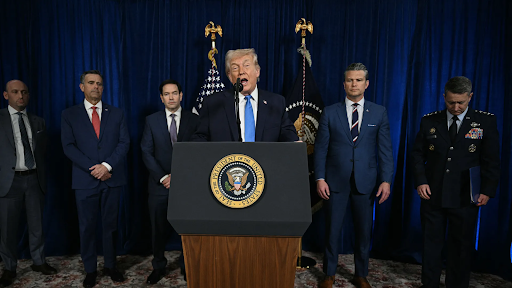
President Trump at a White House press conference about the recent operation in Venezuela. Source: Axios.
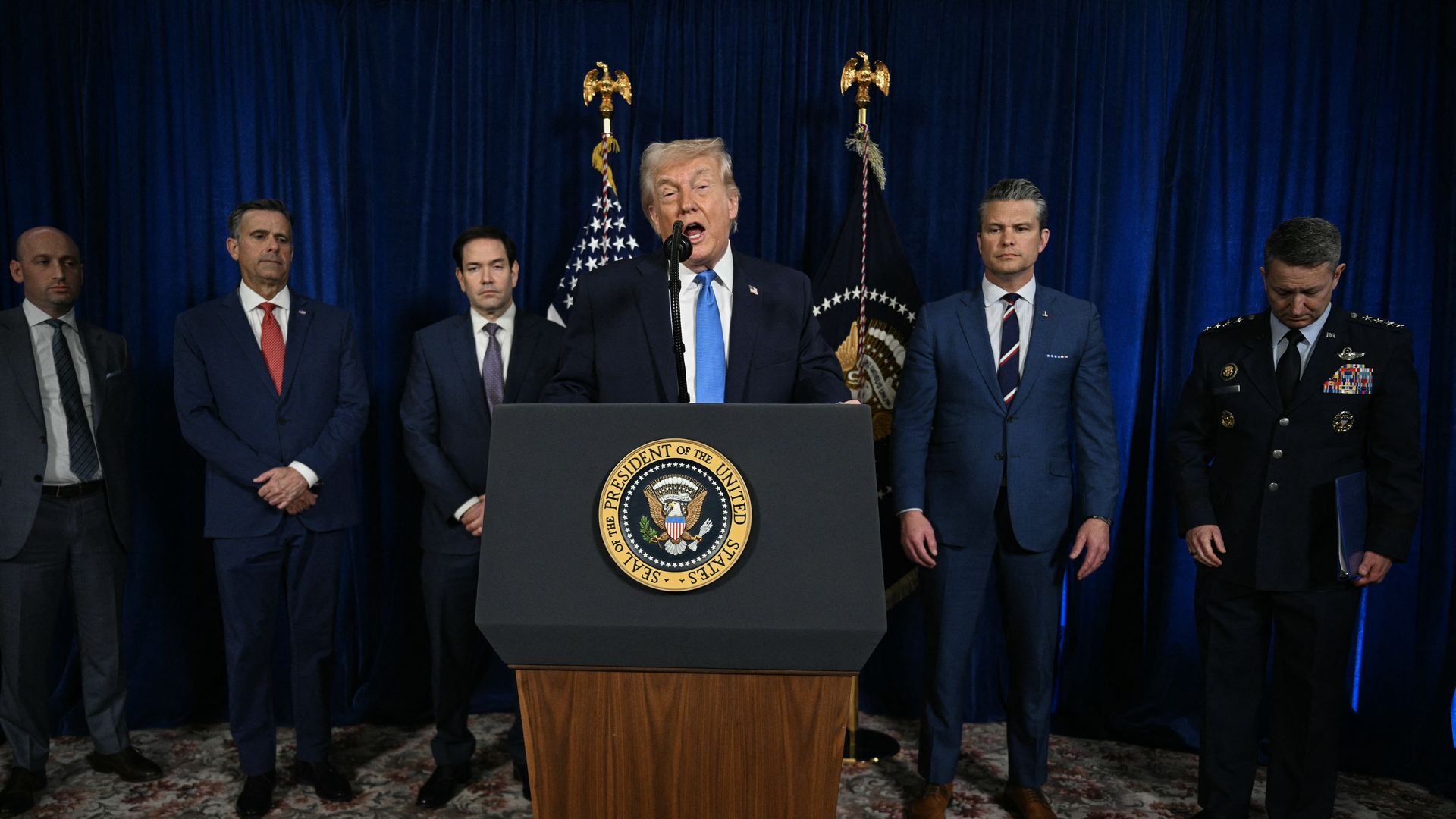
In 2017, at Trump National Golf Club in Bedminster, New Jersey, President Trump announced to reporters that the United States would consider taking military action in Venezuela. The President was not scheduled to talk about Venezuela at all that day — the topic of the press conference was North Korean nuclear weapons. But when a reporter asked about how the United States would address unrest in Venezuela, the President hit back with a surprise answer: “We have many options for Venezuela and by the way, I’m not going to rule out a military option.”
Though aides were reportedly against it, Trump continued to muse on the idea, bringing it up to the Colombian President a few weeks later and asking other world leaders for their thoughts at a UN General Assembly dinner. Eventually, the United States ran a series of war games to assess the outcome of Maduro's fall in several scenarios: a coup, an uprising or U.S. military action. All of them, they found, ended in protracted violence.
Three days ago, however, in the early hours of the morning, the United States sent military personnel into Venezuela and captured president Maduro, making good on the intention that President Trump first announced eight years ago. Though the early stages of the invasion were a success, President Trump’s takeover represents more than just a military victory—it is an unequivocal divergence from the status quo of international relations and a risky foreign policy gamble that is unlikely to end as neatly as it began.
There is no question that President Maduro was an illegitimate and authoritarian leader. His thirteen year tenure was marked by violence, the degradation of the Venezuela economy, and a decline in democratic freedom—as news of his removal broke, Venezuelans across Latin America and the United States took to the streets to celebrate. The path forward, however, is less clear. In the days since Maduro’s successful capture, the Trump administration has presented an uneven and incomplete plan for the country.
Despite its pronouncements of regime change, the administration has left much of the core leadership intact—both defense minister Vladimir López and one of Maduro's top enforcers, minister of the interior Diosdado Cabello, remain in their posts. Clad in a bulletproof vest, Cabello appeared in the streets of Caracas on Sunday with a group of armed guards and delivered a defiant message. “They think they are going to defeat us,” he told Venezuelans over a state television broadcast, “It’s not the first time. We have learned how to survive all of these circumstances.”
Critics of regime change in Venezuela have warned before of Venezuela’s “coup-proofed government,” one that Maduro, with the advice of Cuba, crafted to ensure maximum loyalty. Despite this, Trump announced Saturday that the United States would be supporting Maduro’s vice president Delcy Rodríguez over María Corina Machado, a Nobel Peace Prize winner and the leader of the popularly elected opposition party who announced that she was prepared to take over.
So far, Ms. Rodríguez and other leaders in the Maduro government have shown little willingness to bend to the Trump administration’s demands. Just two hours after Trump announced that Rodríguez would be “essentially willing to do what we think is necessary,” the interim president delivered a fiercely defiant speech, calling the United States’ actions “barbarity” and undermining the administration's claims of control.
Though the installation of Ms. Machado would not have guaranteed stability—nearly half of externally installed leaders are later removed –Trump’s decision to forgo an internationally recognized, popular government in favor of belligerent leadership still-loyal to the removed regime sets a shaky foundation for the future of democracy in the country.
More concerning still is the lack of a clear plan to manage and control the region. Softening its stance from Trump's original assertion that the United States would run the country, the administration has now outlined a plan for control that the New York Times has likened to a “guardianship,” where the United States will provide the vision and direction to be executed by the interim government. Control will be enforced through a “quarantine” on oil exports and the threat of further military interventions, according to Secretary of State Marco Rubio.
It’s a plan that has already begun to show cracks. In addition to the Maduro-loyal government that they have endorsed, the Trump administration will have to contend with the collection of armed groups that operate in the region. Venezuela is not an easy country to control: twice the size of Iraq with large stretches of forest and deep mountains to the south, conflicts are likely to end in protracted, guerilla style warfare. Any splintering in the remains of the Chavismo movement leaves not only an opening for democracy, but also for groups like the ELN, a Columbian guerilla group, armed paramilitary colectivos, and gang groups such as the Tren de Aragua to step in.
Despite Rubio’s claim that the United States will steer Venezuela at arms length, Trump’s plans for oil in the country suggest that a deeper entanglement is unavoidable. On Saturday, Trump made clear that oil was a key motivating factor in the decision to invade, calling it a “form of reimbursement for the damages caused to us,” and boasting that the United States would spend billions to update infrastructure. Such updates, according to the Financial Times, would cost upwards of $100 billion and take nearly a decade. If indeed the United States could convince oil companies to make the investment, Trump’s decision to “run” Venezuela, in whatever form that may take, commits the country to a long, arduous road that will almost certainly come at a greater financial and human cost than the administration anticipates or that the American people are prepared to support.
The administration, however, appears unconcerned by the long-term stability of the area. Saturday saw an emboldened Trump—one who proclaimed a new era of the “Don-roe Doctrine” and told the president of Columbia to “watch his ass.” In an interview with The Atlantic's Michael Sherer, Trump mused about the possibility of continuing his power grab, telling Sherer, “we do need Greenland, absolutely. We need it for defense.” He then told reporters on Air Force One that “Cuba looks ready to fall.”
Trump’s actions in Venezuela violate several tenets of international law, infringe on Venezuelan sovereignty, and deal a serious blow to an already-fragile system of norms that rely on our compliance to continue. Even if the United States is successful in its attempts to control and rebuild Venezuela, its actions set a dangerous precedent that may embolden rivals China and Russia. The return to a “Spheres of Influence” style of foreign policy may satiate a desire for profits and military glory in the short term, but destabilizing the world order leaves the door open to the escalation of conflicts elsewhere.
There is no question that the Trump administration pulled off a remarkably successful operation. Despite analyst concerns that military action would require extensive mobilization of troops and swiftly devolve into a more serious military conflict, it was done without casualties, and in under two-and-a-half hours—a rare near-flawless execution.
But when it comes to everything that follows? America should not expect to be so lucky.