
How China Profits from the Iran War Without Joining It
Diplomacy is often strategic theater, and the performance in Beijing on September 16 was difficult to miss. That day, Chinese Foreign Minister Wang Yi welcomed Iranian Foreign Minister Abbas Araghchi into the Chinese capital, just days before President Trump’s White House summit with Chinese President Xi Jinping. The timing made Beijing's decision to receive Iran's top diplomat particularly conspicuous. Wang’s description of China and Iran as "comprehensive strategic partners" therefore carried far more weight than a routine handshake. By publicly emphasizing the partnership at this moment, Wang turned an ordinary diplomatic meeting into a signal Washington could not ignore.
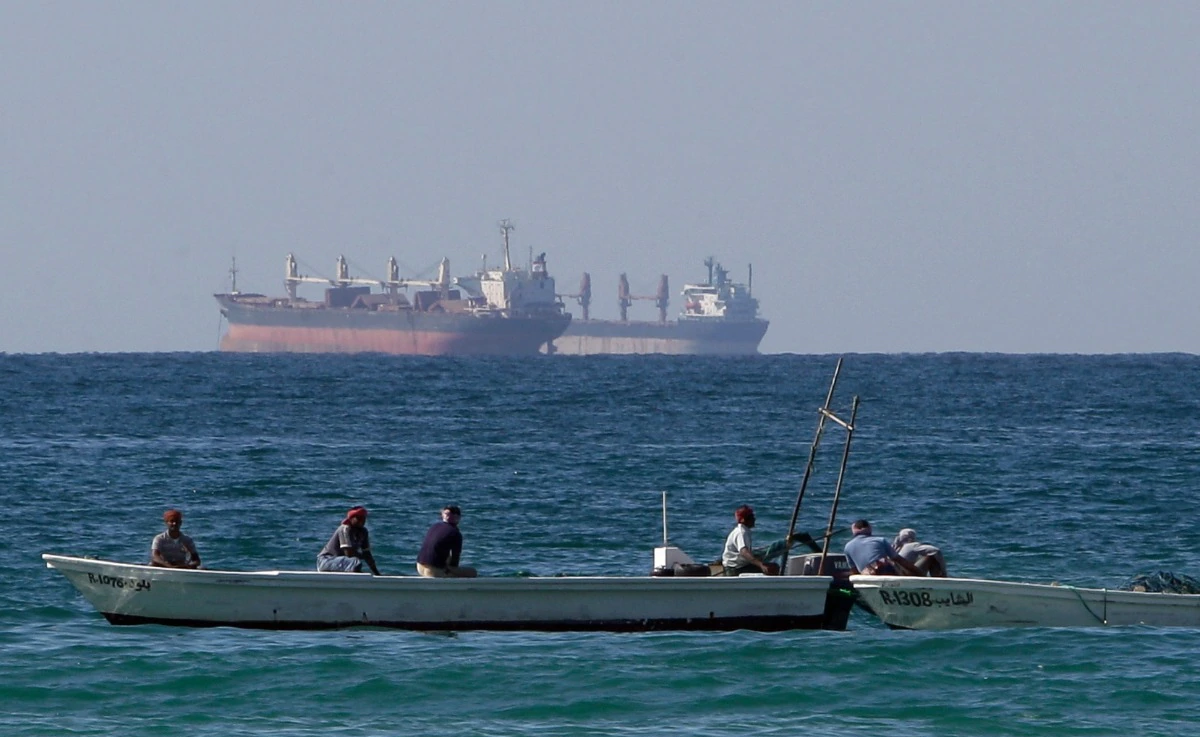
Wang urged "all parties" to reopen the Strait of Hormuz, a chokepoint that carried about a fifth of the world's oil and gas before the war, yet stopped short of pressing Iran directly and offered no mediation plan. Beijing reminded Washington that its influence over Iran still matters to the ongoing Iran-U.S. conflict, without committing to leverage that influence in the manner that Washington sought.
Much of China’s influence in Iran stems from its role as an economic lifeline, specifically through two channels: money and matériel. China is Iran's largest trading partner and the primary buyer of its crude oil, most of which is refined by independent "teapot" refineries kept largely outside the international financial system. In a September 2026 op-ed for The Bureau, geopolitical analyst Guermantes Lailari estimated that China buys roughly 90 percent of Iran's crude oil exports, providing Tehran with about $31.2 billion in annual revenue.
Although that figure represents only one assessment, the direction is indisputable, and Washington has attempted to squeeze the arrangement. The U.S. Treasury Department sanctioned a teapot refinery in April and warned two Chinese banks of secondary sanctions if Iranian funds moved through their accounts. However, sanctions experts have long argued that independent Chinese refiners are relatively insulated from U.S. sanctions because of their limited exposure to the U.S. financial system. This blunts the impact of Trump’s threats and renders China’s teapot loophole exceptionally resilient. This arrangement distributes the costs of sanctions onto smaller commercial actors, allowing Beijing to preserve access to Iranian oil while minimizing its own vulnerability to direct economic coercion.
China’s second source of leverage stems from its support for Iranian military capacity, a relationship far harder to see than the oil trade. While oil moves in tankers that can be tracked via satellite, military-related supplies move more discreetly. Dual-use chemicals and components are shipped by shell companies and routed through third-country ports under the guise of ordinary commerce. Those supplies then move through the chains that sustain Iran’s weapons manufacturing.
Iran Watch has traced repeated shipments of missile-propellant ingredients from China to Iran during the 2026 war with the United States and Israel, including through a procurement network that has moved hundreds of metric tons of precursor chemicals since 2023. Chinese industrial inputs have thus become deeply integrated into the infrastructure enabling Iran to replenish its military capabilities under pressure.
The U.S.-China Economic and Security Review Commission notes that China facilitates Iran's access to export-controlled dual-use technology through transshipment networks and shell companies in Hong Kong, mainland China, and third countries, including critical components used in Iranian drone and missile programs. Iran's arsenal, in other words, depends not only on what it can produce domestically, but on foreign suppliers. China can therefore shape Iran's ability to sustain its military capabilities without entering the conflict directly simply by choosing whether to keep critical supply lines open.
Beijing has stockpiled oil, but its reserves are finite, and a prolonged closure of the Strait of Hormuz would eventually starve the economy that Chinese power rests on. China therefore seeks to reopen the strait on terms it helps dictate, explaining why it maintains close ties to Tehran without pressuring it.
The Washington summit showed as much. Trump and Xi agreed that Iran should not develop nuclear weapons and that international waterways should remain free of transit tolls, but the summit produced no publicly announced Chinese commitment to use economic pressure or diplomatic leverage to compel Tehran to negotiate. Beijing has a clear interest in restoring shipping through the Strait of Hormuz, yet its public position has emphasized restraint rather than coercive measures against Tehran.
China need not declare a side to profit from both outcomes. Its influence runs through oil revenue routed via sanctions-resistant refineries and a quieter flow of dual-use materials that never appear as arms sales. Because both move as ordinary commerce, they give Beijing leverage over the conflict without the costs of openly taking a side. As Trump heads toward APEC in Shenzhen and the G20 in Miami, Washington will have another opportunity to ask China to use its leverage over Iran. The difficulty is that this support is disguised as trade, leaving Washington little to pressure Beijing directly.