
Judge Refuses to Issue Restraining Order Against ICE Operations in Minnesota
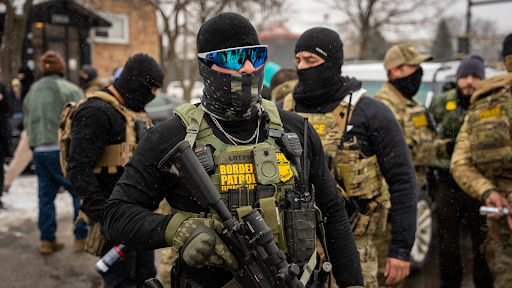
ICE agents during an immigration enforcement operation on January 7. Source: ABC7.
On January 14, Judge Kate Menendez denied Minnesota’s request that she issue a two-week restraining order against U.S. Immigration and Customs Enforcement (ICE) operations in the state. Menendez’s action constitutes a roadblock in Minnesota's lawsuit against a group of federal officials, most notably Homeland Security Secretary Kristi Noem, for allegedly violating the Tenth Amendment through a surge of 3,000 ICE agents to the state. At the heart of the case is a fundamental question about federalism: how far can the federal government go in unilaterally imposing law enforcement operations on a state that explicitly opposes them? The case remains open, with Menendez denying the federal government’s request to postpone their January 19 deadline to respond.
Over the past month, Minnesota has been a locus of political controversy across multiple domains. For instance, the Trump administration has used allegations of fraud against some Somali-American-run daycare centers to justify ICE deployments to the state. While these claims, first propagated by conservative influencer Nick Shirley, remain largely unverified as of now, Trump has argued for their veracity and suggested that operations targeting undocumented Somali immigrants could eliminate any remaining fraud. This framing, some critics argue, conflates immigration law enforcement with unrelated criminal investigations through an unproven link to undocumented immigration, effectively using suspicion as a rationale for mass federal intervention.
More recently, the shooting of Minneapolis resident Renee Nicole Good by ICE agent Jonathan Ross has sparked mass protests in Minnesota that the Trump administration claims have become violent, justifying a federal crackdown on the state. On January 7, in the middle of an ICE enforcement operation, Ross shot Good three times while she attempted to drive away after being ordered to exit her vehicle, with Ross claiming that she was using her vehicle to obstruct ICE and attack him. That characterization has been contested by civil rights advocates and local officials alike, particularly given video evidence showing Good turning her steering wheel away from Ross in the seconds before the shooting. In the wake of Good’s death, protests criticizing Ross’ actions have emerged across Minnesota, and Secretary Noem has used the unrest to deploy an additional 1,000 agents to the state to prevent “violent activities against law enforcement” on the part of demonstrators. However, the administration has provided little evidence of violence against ICE agents
The large concentration of federal forces in Minnesota carries with it risks. Most clear among these is the concern, echoed in the state’s lawsuit against Noem and others, that ICE operations have involved the use of excessive force and violated Minnesotans’ First Amendment rights to free speech and assembly. For example, in December, citizen observer Susan Tincher was arrested for, as she claims, asking ICE agents to identify themselves. Similarly, some Minnesota law enforcement leaders have alleged that ICE agents have racially profiled the state’s residents, including off-duty officers, in their deportation operations. Taken together, these incidents suggest not merely isolated misconduct but a broader breakdown in accountability. If the accounts from Tincher and law enforcement and related stories are substantiated with video evidence, they may further fuel calls for restrictions on ICE deployment and factor into an eventual decision in Minnesota’s lawsuit.
Despite legal concerns, ICE operations in Minnesota seem likely to continue for the time being. The deployment of an additional 1,000 agents to the state in particular raises national concerns, as the Trump administration may use events in Minnesota as a model for future engagements in other states. If so, the state may come to represent an early test case for a more centralized and confrontational approach to immigration enforcement nationwide. With that in mind, assuming protests against ICE continue, escalation of tensions in Minnesota between the federal government and demonstrators seems likely, and the future of broader ICE operations across the country remains uncertain.a