
Deadly Strike on Iranian Elementary School Sparks Investigation into Humanitarian Law Violations
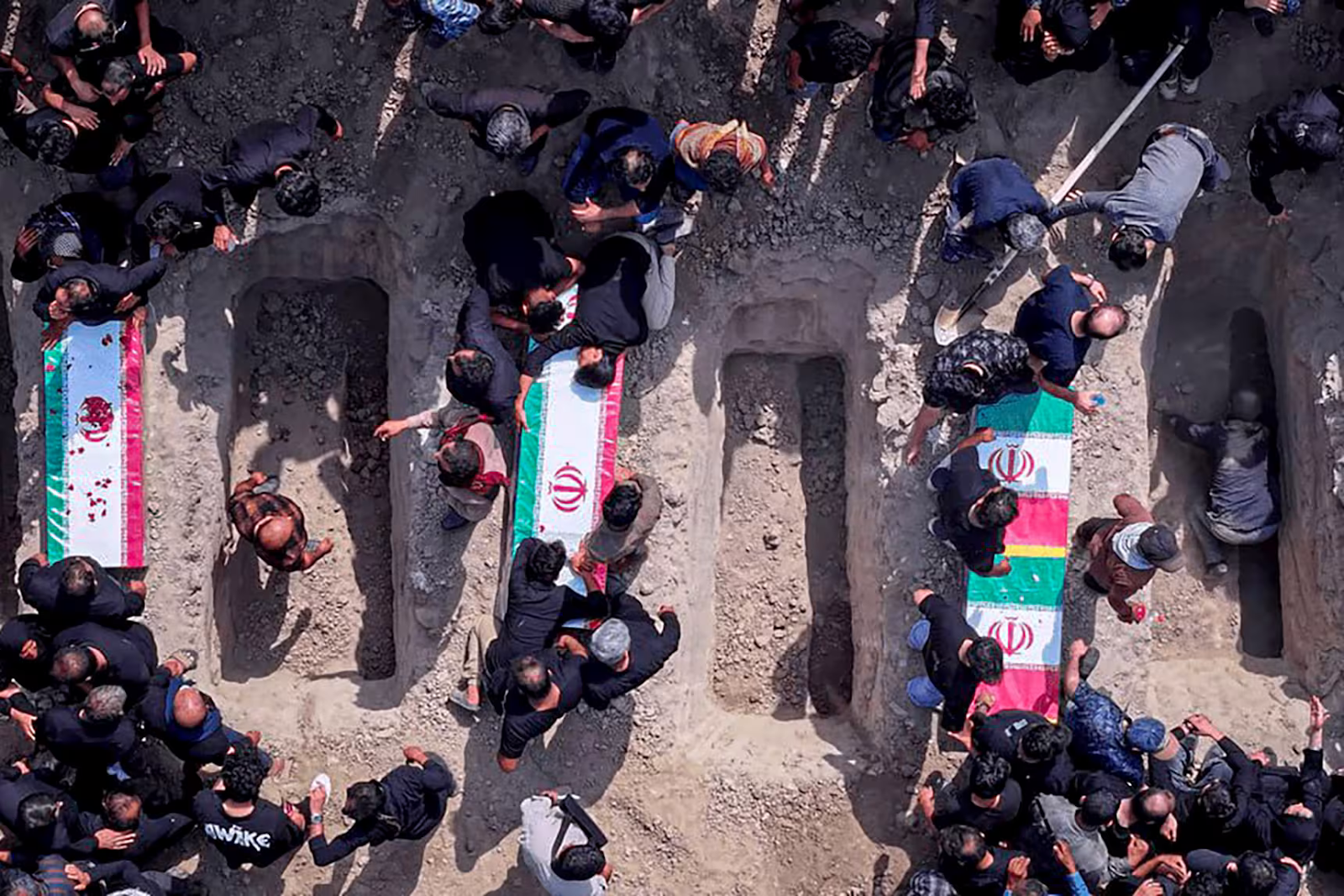
Funeral service held for staff and students harmed in the strike. Source: NBC News.
The strike on the girl’s elementary school in Minab occurred on February 26, 2026, in the wake of escalating military tensions between Iran, the United States, and Israel. In recent weeks, both the U.S. and Israel have carried out coordinated strikes targeting Iranian military infrastructure, marking a significant increase in conflict in the region. According to the United Nations Educational, Scientific, and Cultural Organization (UNESCO) and the United Nations (UN), the attack on the school was part of this broader campaign, which has raised growing concerns about civilian safety. International figures, including Malala Yousafzai and António Guterres, have condemned the strike and called for greater protection of civilians and educational institutions as violence in the region intensifies.
Nothing can be said with complete certainty about who carried out the strike, as military investigations can take months to reach definitive conclusions. However, early evidence suggests that a Tomahawk cruise missile was used, pointing toward direct United States involvement, given that these weapons are primarily used by the U.S. military. Additionally, with their access to advanced military technology capable of precise targeting and real-time surveillance, the site should have been identified as civilian infrastructure. For such a strike to occur, it suggests reliance on outdated or inaccurate data regarding the area. A strike of this magnitude should be conducted with the utmost certainty, and failure to update or verify target information is unacceptable when human lives are at risk. If found guilty, the United States would have demonstrated deplorable carelessness as a nation.
The strike has reportedly caused approximately 168 deaths, most of them children between the ages of 7 and 12. These figures are based on information from local officials and corroborated by analysis of digital footage from the scene. Under International Humanitarian Law(IHL), the deliberate targeting of civilians constitutes a war crime, placing an attack of this scale well within the scope of potential prosecution.
The UN has also noted that the strike occurred within ongoing tensions involving both U.S. and Israeli operations in Iran, further raising questions about responsibility. While the Israel Defense Forces (IDF) have not made statements on involvement, there are many concerns, especially given Israel’s recent record in Gaza. Organizations like Amnesty International and Human Rights Watch have documented repeated strikes on civilian infrastructure, including hospitals and residential areas. In that context, an attack of this scale and brutality is not a rarity, but part of a larger and deeply troubling pattern of violence against civilians.
If the United States is ultimately found responsible, the legal and diplomatic consequences could be significant. In theory, such actions should lead to war crime charges and a proceeding before the International Criminal Court (ICC). In practice, however, accountability is far less certain. The United States position as a global power, particularly within institutions like the UN, means that enforcement of international law is often uneven. As a result, even acts that appear to clearly violate legal norms may face limited consequences.
This strike reflects a dangerous pattern of escalating violence within the conflict between the United States, Israel, and Iran. Harm to civilians fuels retaliation on all sides, instilling fear and reducing the rationality of military decision-making. If this trend continues, the safety of civilians in Iran will become even more uncertain. The superpower status of the United States often shields it from full accountability, but sentiment within the country is beginning to shift. The war with Iran is not widely supported, and many have criticized Donald Trump, who previously pledged to avoid entering such a conflict. While investigations are still underway, all indicators point towards the United States responsibility. The use of faulty intelligence is not acceptable, especially when civilians are harmed as a result. The outcome of this war remains uncertain, but if these patterns of violence persist, more innocent civilians will inevitably be harmed. Carelessness on this scale cannot continue, or the foundation of rule-based warfare will become meaningless.