
How Did a Democrat Flip Mar-a-Lago’s District?
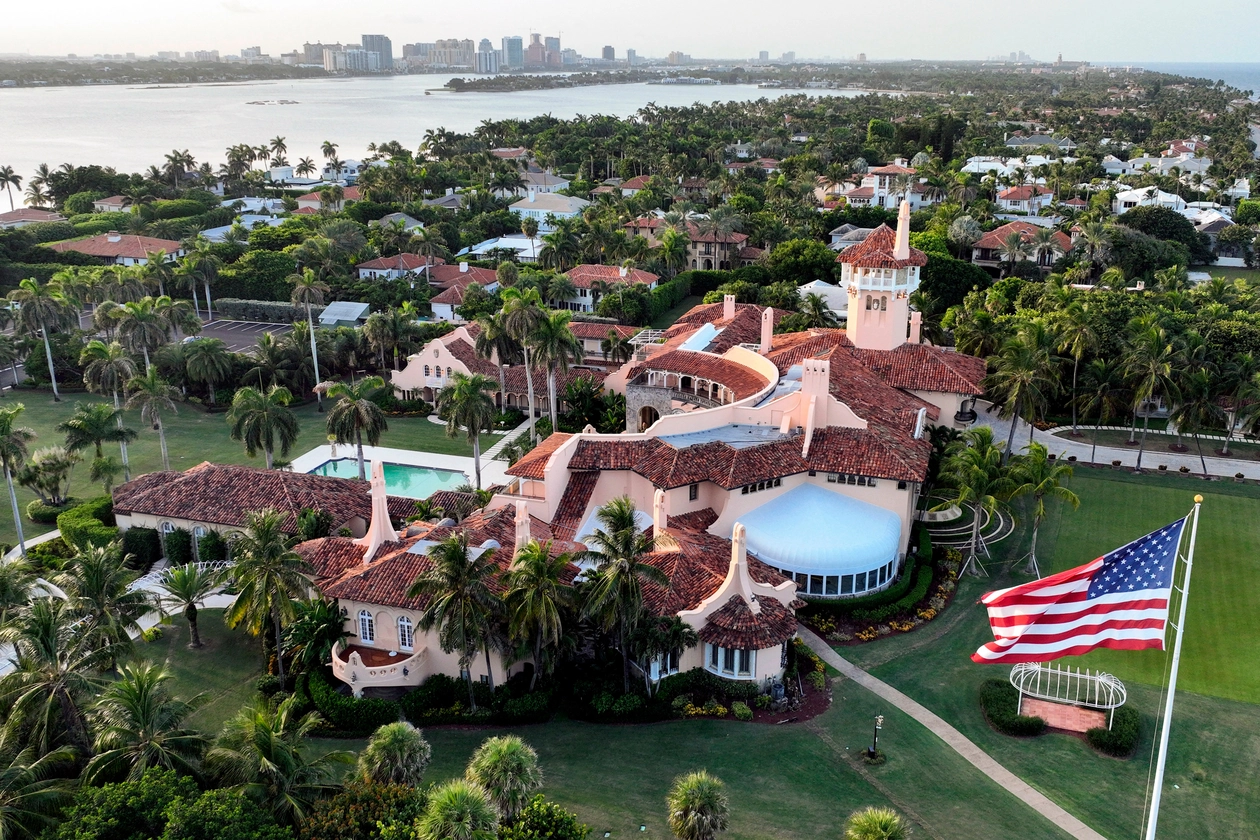
Trump’s Mar-a-Lago mansion sits on Palm Beach Island, in a wealthy Florida district. Source: Politico.
One of the most stunning examples of recent, beyond-all-odds Democratic upsets was Emily Gregory’s win over the Trump-endorsed Republican candidate for Florida’s House District 87. This district, which encompasses Trump’s Mar-a-Lago property, has been a Republican stronghold in previous Florida House elections. Its former representative, Republican Mike Caruso, won his re-election bid in 2024 by 19 percentage points before vacating the seat in August of 2025 to become the Palm Beach County clerk and comptroller. Also in the 2024 election season, Trump won this home district by 11 percentage points. History suggests a Trump-backed Republican should have been favored to win the special 2026 election to fill the vacated seat. Instead, Democrats like Gregory have been able to mobilize on recent Republican affordability failures and secure widespread special election wins.
The success of this mobilization can largely be attributed to voters’ level of engagement. Voters who are more likely to vote in local, midterm, and special elections are defined as high propensity voters. They tend to be wealthier and more educated, making them more likely to keep up with off-year, state, or local elections, and more likely to be invested in those elections’ outcomes. High propensity voters in special elections since the 2024 election have been paying attention to the GOP White House and Congressional economic policy failures, and it’s making a difference. Historically, these voters have been much more likely to vote Republican in elections due to their wealth, a trend that should have secured Florida’s high-income 87th State House district for the Republicans. However, in the last decade or so, higher-income voters and voters who hold a four-year degree or a higher education degree have become much more likely to vote Democratic.
The Democratic win in Trump’s home district, and the gradual change in high propensity voter affiliation, has to do with the fact that even in Florida, Trump has a net approval rating of -7 percentage points as of March 2026, and a national all-time low of net -18 percentage points. His low approval ratings are the result of GOP policy choices that high propensity voters no longer align with. Trump’s modern Republican base now consists more of lower propensity voters. This means high propensity voters are being even more easily put off of Trump-backed candidates, and in the less popular elections, those voters who are getting sick of Republican politics are much more likely to vote than those who still support the Trump-led GOP. The widespread distaste for the President is becoming associated with the GOP movement across the board. Therefore, when a Republican Candidate is endorsed by President Trump in a safe Republican District and still loses to a Democrat, there can’t be too much of a question as to what went wrong for the Republican.
Harnessing the attention of high propensity voters and Trump's low approval ratings, Gregory’s campaign largely focused on affordability solutions, which proved effective against her Trump-endorsed opponent. Gregory’s win reflects a trend that is being seen in special elections across the U.S., where voters are looking for honest solutions and finding them associated with democratic candidates. At the end of the first year of Trump's second term, at least 52% of Americans were unable to afford a secure living, based on housing, healthcare, grocery, and gas price increases. This is making a big difference in voters’ choices, as Democrats increasingly advertise affordability fixes. Though Palm Beach County is particularly wealthy, everyone felt the 7% increase in retail prices brought by Trump’s 2025 tariff war. In December of 2025, the President called America’s affordability crisis a “hoax”. Now, he’s entered the United States into a war in the Middle East that has already cost the United States around $25 Billion, and that has further driven up energy prices due to the closure of the critical Strait of Hormuz.
Voters of all affiliations are feeling the effects of these Republican-made decisions, driving the high propensity voters even further away from the party. When voters are this uncomfortable, and leadership repeatedly promises solutions and lower prices that aren’t being followed through on, voters are looking for any means to get by. High propensity voters paying the most attention to the U.S. political climate are gradually leading the pack towards the Democratic party, a trend which will be interesting to watch play out in the November 2026 midterms.