
Pahlavi or Khamenei: Dynasties Duel for Iran
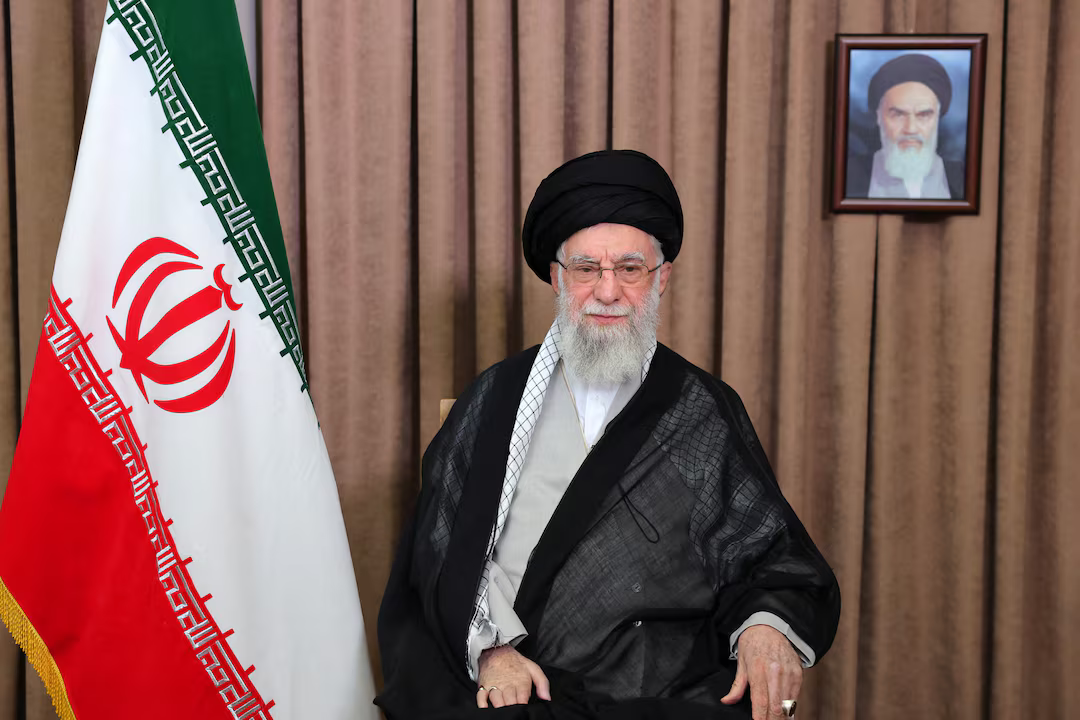
The former Supreme Leader of Iran appears on television after airstrikes in Tehran in 2025. Source: Reuters.
A joint U.S. and Israeli airstrike killed the Supreme Leader of Iran, Ayatollah Ali Khamenei, on February 28.
Khamenei’s 36-year rule was marked by opposition to the West and firm crackdowns on internal protests. His death could allow the return of a lion, the symbol of Iranian royalty. Changes in the highest levels of Iran’s leadership are a golden opportunity for the son of Iran’s last Shah to rise to power.
Initially, Iran’s future seems clear. Khamenei’s son, Mojtaba Khamenei, has already been named as the successor to his father, an act CNN described as a “defiant message to Trump” and internal and external pressures to change the Iranian regime.
However, despite Iran officially naming a new supreme leader, Crown Prince Reza Pahlavi’s opportunity to succeed his father, former Shah of Iran Mohammed Reza Pahlavi, seems stronger than ever. In fact, the naming of the former supreme leader’s son removes an obstacle to Reza Pahlavi’s rule.
For over thirty-five years, Iran has had the same leader. No new election cycles for the Supreme Leader, no transition of power between administrations, no way of knowing when or how the next leader would come along. Iranians have had to trust that their system can choose the right leader when the time comes, yet the system has not been validated in almost 40 years.
Though the Supreme Leader is appointed by an assembly, the handing down of power to the previous Supreme Leader’s son could suggest to Iranians that their republic could be fading less than a century after it began.
Before the revolution that led to Iran’s current regime, the country was governed by a monarchical system. Now, some have compared Mojtaba Khamenei inheriting his father’s position to the monarchy that the Iranians fought to dismantle.
“The 88-member Assembly of Experts did what many Iranians had hoped it would never do — turn the Islamic Republic into a dynasty,” CNN wrote.
If Iranians believe their republic now belongs to a family of kings, they have little reason to remain faithful to the regime. Iran’s current government, originally formed to bring representation, seems to be moving towards a monarchy. If Iranians do believe the Khamenei family owns supreme leadership, they are left with a choice of two dynasties: the Pahlavi and the Khamenei.
Reza Pahlavi himself has expressed his desire to lead the country as a transitional leader in a move towards democratic leadership, hoping for U.S. backing in his bold quest for change. He has been asking for President Trump’s intervention for months now, even thanking him for the United States’ actions that led to the death of the Supreme Leader.
Reza Pahlavi's rule would shock the Middle East. Iran would see it as a big change, as it was when the monarchy was initially torn down. Pahlavi said he sought “separation of religion from state,” quite the opposite of today’s Iran. Additionally, Pahlavi claims to see “equality” and “individual liberties” in Iran’s future.
Reza Pahlavi might not look like the same Shah his father was, planning on unlocking the self-governing structure Iran was promised 40 years ago.
Pahlavi’s foreign policy views add a layer of complexity to his hypothetical ascension. He envisions peaceful Iranian relations with Israel, even visiting Israel in 2023, and detests the nuclear program his country has built, hoping to end it.
The consequences of Pahlavi’s rule, however, are still up for debate. He claims to support democracy in Iran, but some of his actions suggest otherwise. Politico describes Pahlavi’s team and his supporters as using scare tactics and censorship to control the narrative around Reza Pahlavi. They claim his aides have tried to suppress or “sideline” potential rivals as well. He may not be suppressing protests like Ali Khamenei did in late 2025 and early 2026, but touting democracy and self-governance to assume power will backfire if he does not hold these promises.
Despite threats against their lives, Iranians continue to protest the current regime. They have shown they are not afraid to change the nation’s leadership, and if the Crown Prince suppresses the people’s voices, he will be just another Pahlavi thrown out of power.
Regardless, it is best to remember that before the pre-revolution culture can return to Iran, Pahlavi must find his way back to the throne. To this day, he remains exiled from Iran, and Mojtaba Khamenei now holds the power needed for such a shift. Whether or not he achieves his dream, one thing is certain: Pahlavi intends to return and rule Iran. This is his moment. If ever he were to return, he won’t get a better chance than his opposition becoming a monarch while the country struggles with an armed conflict. Pahlavi’s future now might rest on Iran’s.