
The Sumud Flotilla and the Fracturing Western Consensus
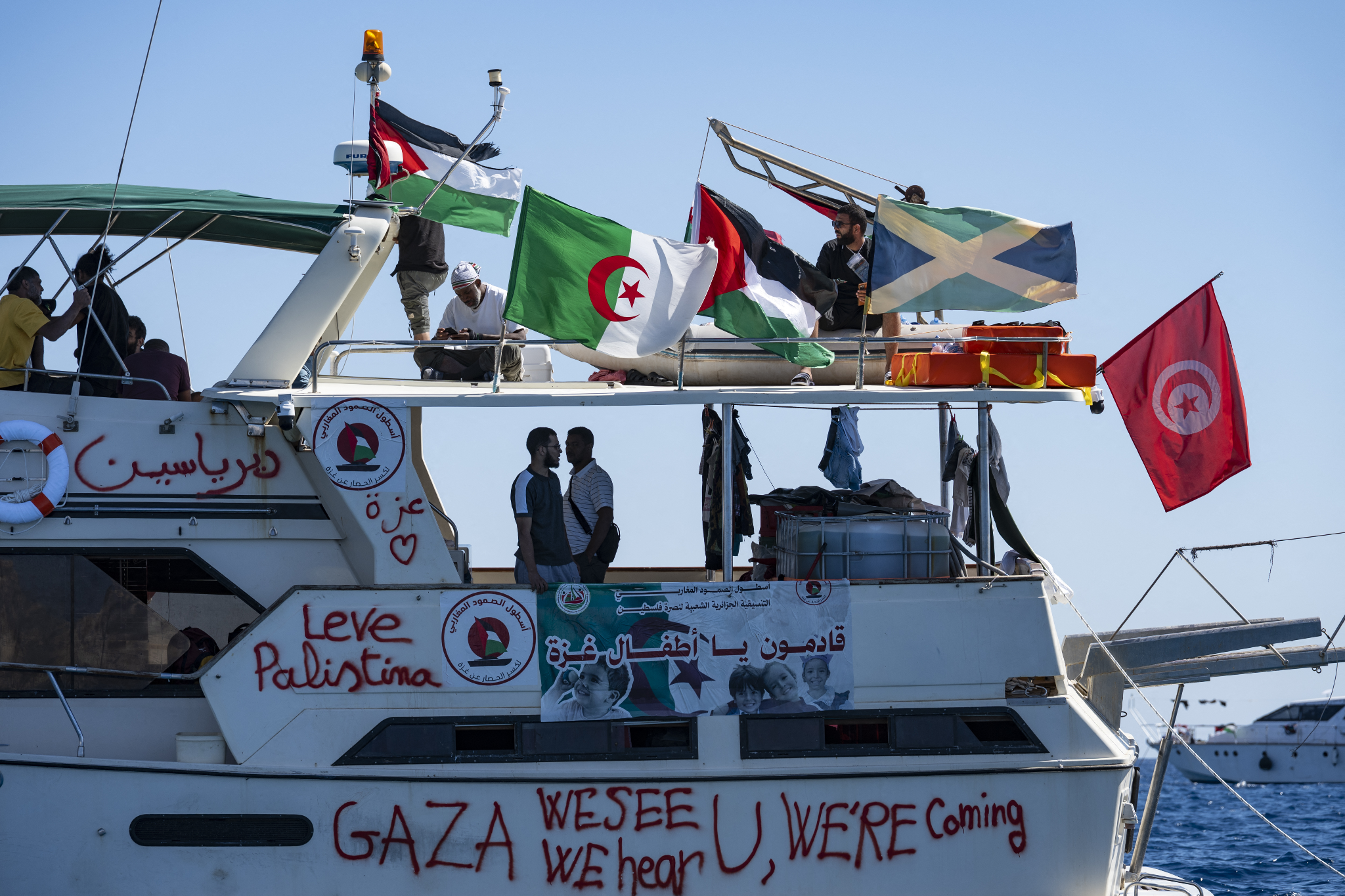
Members of the group of ships of the Global Sumud Flotilla to Gaza are seen moored at the small island of Koufonisi. Source: IFJ.
On May 19, 2026, Israeli naval forces intercepted over 50 vessels belonging to the Global Sumund Flotilla in international waters off Cyprus, detaining 428 activists from 40 countries before deporting the majority to Turkey days later. Lawyers representing the detainees documented allegations of rubber bullet injuries, beatings resulting in suspected broken bones, and sexual abuse. These allegations were serious enough to prompt Israeli Prime Minister Benjamin Netanyahu to publicly scold his own National Security Minister, Itamar Ben-Gvir, for the mishandling of prisoners, even as Netanyahu defended the interception itself. The legal basis for the operation remains disputed. Israel grounds its blockade authority in the San Remo Manual on International Law, which permits states to enforce naval blockades against vessels carrying contraband during armed conflict. The 2011 UN Palmer Report affirms that Israel’s blockade of Gaza constitutes a legitimate security measure. Critics, including UN human rights experts, counter that enforcing a blockade in international waters against a civilian humanitarian mission exceeds what even that framework allows, and that the blockade itself has been ruled unlawful by the International Court of Justice. What complicates the humanitarian framing of the flotilla is the question of material impact. Israel’s defense body reported roughly 600 aid trucks entering Gaza daily, which is similar to prewar levels. Meanwhile, the UN World Food Program found that the figure collapsed to a daily average of 112 in March, following the outbreak of the Iran war. The Sumund flotilla carried, by most accounts, a symbolic quantity of supplies, with not nearly enough cargo to meet the needs of those in Gaza. The larger mission was political and diplomatic, as protestors wanted to draw international attention to Gaza. That calculation appears to have succeeded, with Ireland, Spain, and Turkey summoning Israeli ambassadors following the interception, and several European countries have condemned the acts. The United States took a different approach when the Treasury Department sanctioned four European flotilla activists on May 19, labeling the mission “pro-terror.” The U.S. move has aligned Washington squarely with Tel Aviv at a moment when European allies seem to be heading in the opposite direction. What the flotilla incident illustrates is the fragmentation of the Western bloc over Gaza. Allied governments that once deferred to American cues are increasingly unwilling to do so, and symbolic pressure campaigns, like the flotilla, are proving capable of exposing those differences in real time.