
Louisiana Congressional Map Approved
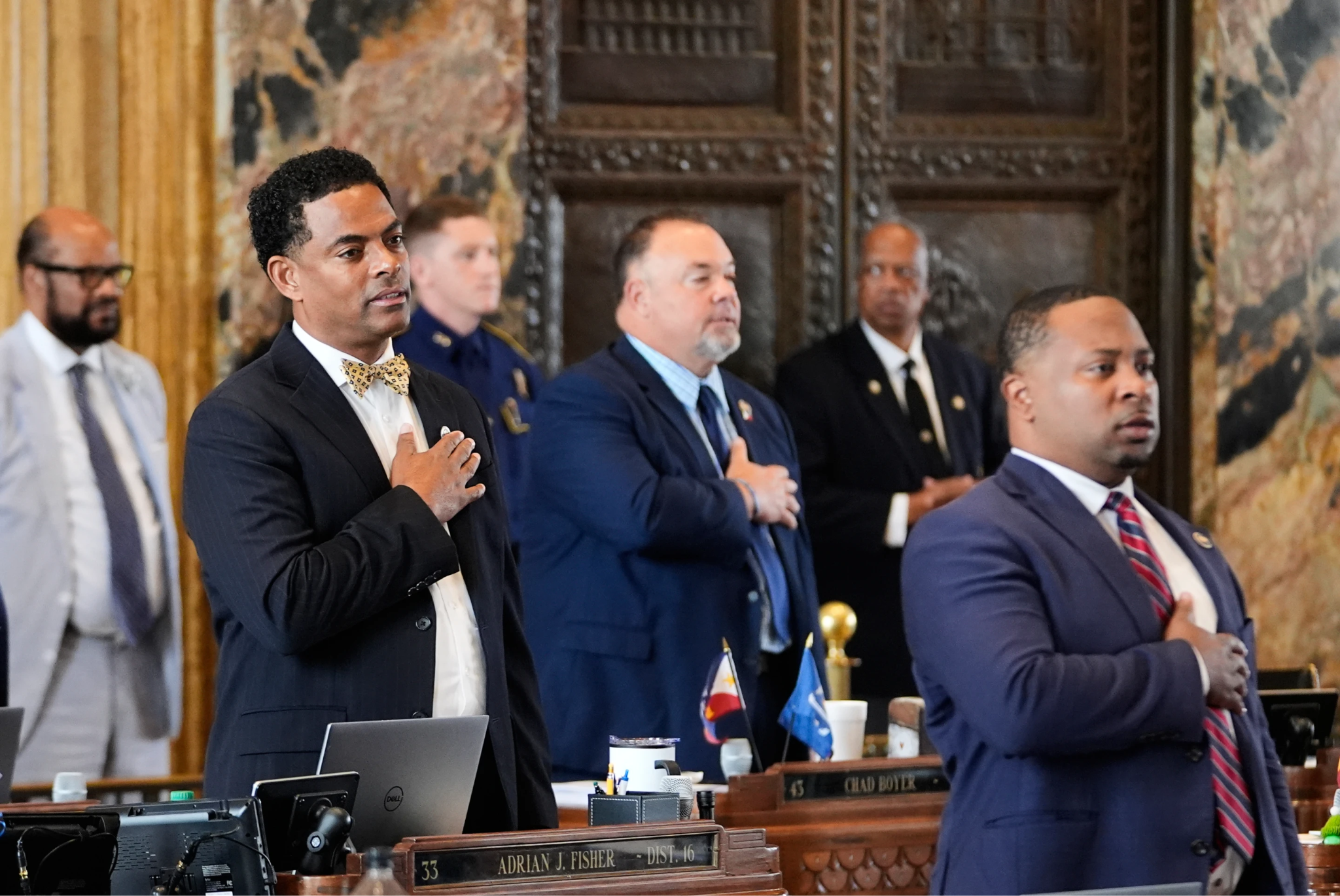
Louisiana Representatives recite the Pledge of Allegiance before voting on redistricting plans. Source: AP News.
On Friday, Louisiana’s Republican-controlled legislature approved a new congressional map that eliminates one of the state’s two majority-Black districts. This move was made possible by the Supreme Court’s ruling on April 29 in Louisiana vs. Callais, which narrowed Section 2 of the Voting Rights Act and made it harder for plaintiffs to challenge racially discriminatory redistricting. As a result of the map’s approval, Republicans stand to flip one of the state’s two Democratic-held House seats ahead of the 2026 midterms. Writing for a 6-3 majority, Justice Alito held that Louisiana's second majority-Black district was unjustified because Section 2, properly interpreted, requires a strong inference of intentional discrimination before liability attaches. This standard is often criticized by the left, who argue it is effectively impossible to meet in practice. The Court stopped short of fully overturning section 2, but the heightened intent requirement represents a substantial departure from prior precedent. Conservatives have countered that the prior framework, under Thornburg v. Gingles (1985), invited exactly the kind of racial sorting the Equal Protection Clause prohibits, and that the new map reflects partisan, not racial, logic. That partisan defense, however, runs into a direct challenge from Democratic legislators on the floor. State Representative Kyle Green argued that invoking colorblindness in Louisiana specifically requires “forgetting a quantity of history that I don't believe any of us has the right to forget.” Republicans responded by expressing that their hands were tied. Representative Beau Beullieu, the map’s sponsor, argued that the legislature had been forced to redraw the boundaries by the Supreme Court’s ruling, and that the result closely mirrors the map the legislature passed in 2022. The Louisiana map is not an isolated event. Tennessee has eliminated its sole Democratic-held seat in Memphis, and governors in Georgia and Mississippi have announced plans to redraw their maps ahead of or after the midterms. Taken together, these developments suggest that Callais has accelerated a regional redistricting shift with tangible implications for House control in November. Whether that shift constitutes a coordinated effort to suppress minority representation or a legitimate correction of race-conscious line-drawing depends almost entirely on which legal framework one applies to the underlying facts.