
The DOGE Dividend
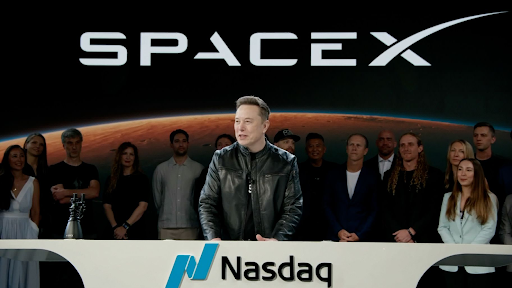
SpaceX founder Elon Musk speaks after the company's initial public offering. Source: CNN.
SpaceX priced its initial public offering at $135 per share, raising $75 billion and surpassing Saudi Aramco’s 2019 record by more than double. It marked a landmark event that is as much a political story as a financial first. The company that just became the seventh most valuable in the United States, and whose founder is now the first trillionaire, generates 61% of its revenue from Starlink, which is the same satellite service its founder, Elon Musk, steered into federal government offices while leading the Department of Government Efficiency (DOGE). The sequence from DOGE contracts to the IPO windfall is what transforms a historic market debut into a question of governance. The structural issue is not that Musk acted corruptly in any legal sense, but rather that no existing ethics framework was designed to handle a figure who simultaneously occupied a federal advisory role, directed agency spending, and stood to benefit personally from the companies that absorbed the spending. Senator Elizabeth Warren made this case explicitly, sending a 12-page letter to the Securities and Exchange Commission urging a delay in the listing and raising concerns about Musk’s controlling power, the accounting treatment of the xAI merger, and the risks posed to retail investors. The SEC proceeded anyway, which itself is a data point about where institutional guardrails currently sit. Defenders of the listing would argue, with merit, that SpaceX's government contract relationships predate DOGE, that the company's operational record stands independent of Musk's political role, and that four-times-over-subscribed investor demand reflects genuine confidence in the underlying business. While valid, these points serve to address the company's competence rather than the conflict at hand. What the SpaceX IPO ultimately illustrates is a gap that predates Musk and will outlast him. American ethics law was built for officials who enter government from the private sector, not for private actors who enter government while retaining and expanding their commercial empires. The record-breaking valuation is, in that sense, a monument less to innovation than to a regulatory architecture that never anticipated needing to contain it.