
The Year North Carolina Showed Up
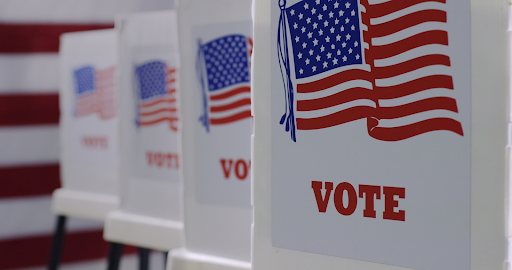
Polling booths set up for voters participating in North Carolina’s 2025 off-year municipal elections. Source: City of Southfield.
Off-year elections have rarely taken center stage in North Carolina. These odd-numbered years are often either overshadowed by the nationwide elections or state midterm elections. However, this year, the 2025 municipal elections made history in North Carolina earlier this month, with more than 19% of registered voters casting ballots for local candidates.
Municipal elections are local elections that select officials like mayors, city council members, and town council members. These officials oversee local government and make decisions on issues that directly affect residents’ daily lives, including zoning, public transit, school board policies, and community infrastructure budgets. In many ways, these elections have an even greater impact than national or state elections, since they address the issues that matter most within communities. Despite their importance, municipal elections consistently experience the lowest turnout rates.
Many overlook off-year elections because they receive far less media attention and do not involve choosing high-profile offices like the presidency. When examining earlier years, turnout rates ranged from approximately 14% to 16%. The recent increase to 19% is unprecedented, and a level of engagement North Carolina hasn’t seen in years. In Chapel Hill and Carrboro, however, turnout was around 15.25%, slightly lower than in 2023, largely because this year’s races were far less competitive. The 2025 ballot featured an unopposed mayoral race and only five candidates running for four council seats. Low turnout also means each vote carries more weight. The fewer the people, the fewer the opinions, making it easier for individual voices to be represented and, at times, overrepresented. A study by the National Civic League found that voters aged 65 and older are seven times more likely to participate in local elections than those aged 18 to 34. Consequently, older, higher-earning white citizens disproportionately influence local policy and election outcomes.
The recent surge in participation, however, may signal a shift. Voters pointed to multiple reasons for showing up at the polls. One of the most significant motivators is North Carolina’s rapid population growth. As one of the fastest-growing states in America, five North Carolina municipalities ranked within the top 100 in population increase, while seven others ranked among the fastest-growing nationally. This influx has driven up housing costs across the state, leaving around 30.6% of households cost-burdened (spending more than 30% of their income on housing) in 2024 alone.
Residents feel the effects firsthand. One voter in Durham said her priority was “not selling out to developers,” while another in Apex noted, “It’s hard to have that sense of community…when you’re getting so large.” Concerns about unchecked development, affordability, and preserving community identity are pushing newer and younger residents to the polls. Voters are increasingly prioritising capable leadership and tangible action, as shown by their choices at the polls.
In Durham, for instance, challengers Matt Kopac and Shanetta Burris unseated incumbents DeDreana Freeman and Mark-Anthony Middleton, shifting the council toward members more cautious on pro-development zoning.
Taken together, these patterns suggest this year’s turnout isn’t by chance. Rapid growth and mounting housing costs are mobilizing voters who have traditionally been less engaged, signaling the early stages of a broader shift. This may point to a resurgence in grassroots politics, a more diverse electorate, and possibly even a renewed desire for meaningful participation in local democracy.
Another factor shaping these outcomes is the role of political parties. Municipal elections are usually nonpartisan, but political parties often signal their preferences by endorsing candidates. This year, Democrats made history by flipping more than 150 seats across North Carolina, in rural, suburban, and urban communities alike. Observers have described it as a “blue mist.” Many Republican incumbents were unseated, and these weren't marginal seats; Democratic candidates defeated a six-term Republican incumbent in Wake Forest, a two-term GOP mayor in Fuquay-Varina, overturned a long-term Republican-held Charlotte City Council seat, and captured the mayoralties in Burlington, Graham, and Warsaw, towns that had previously leaned conservative in local elections. These leadership changes suggest that voters are scrutinizing local leaders more closely in response to concerns like rapid development, rising housing costs, and the broader political climate.
Voters’ shift toward Democrats also reflects growing frustration with federal politics. Some Greensboro residents said they voted more liberal in response to what they viewed as the Trump Administration’s increasingly conservative agenda. In Durham, one voter cited concerns over ICE and safety for immigrants as his main reason for voting. Following the end of the longest government shutdown in U.S. history, during a period of Republican control over all three branches of the federal government, many voters concluded that national politics had become more gridlocked and unresponsive to everyday concerns. As federal politics become increasingly inaccessible, citizens are channeling their frustration into local elections, where they believe their votes can lead to immediate, visible change.
People often dismiss municipal elections as too small to matter, claiming they have little influence on nationwide elections. While that may be true, the current rise in turnout in North Carolina tells a different story: people are beginning to vote. Next year, both the Democratic and Republican parties will be fighting for control of the House of Representatives and Senate. In North Carolina, the high-stakes Senate race between former Governor Roy Cooper and former RNC Chair Michael Whatley could determine whether Democrats possess a Senate majority. In the House, Republicans can afford to lose only two seats nationally, making every competitive district crucial. If Democrats experience another swing in their favor in the 2026 midterms, similar to what occurred this year, it could spell serious trouble for Republicans.
Still, success in this year’s municipal elections does not guarantee a Democratic victory in 2026. There is a great deal of work ahead, and political landscapes can shift quickly. The electorate in 2026 will look quite different, as turnout will be higher and the voter and ideological pool will be broader. But regardless of what happens in 2026, the rise in civic participation seen this year marks an encouraging step toward renewing bottom-up engagement in politics. What ultimately matters is not which party gains the advantage, but that citizens continue to show up. Maintaining this momentum in the years ahead is crucial because the more citizens participate, the stronger and more resilient American democracy becomes.