
Senate Votes Down Resolution to End Iran War
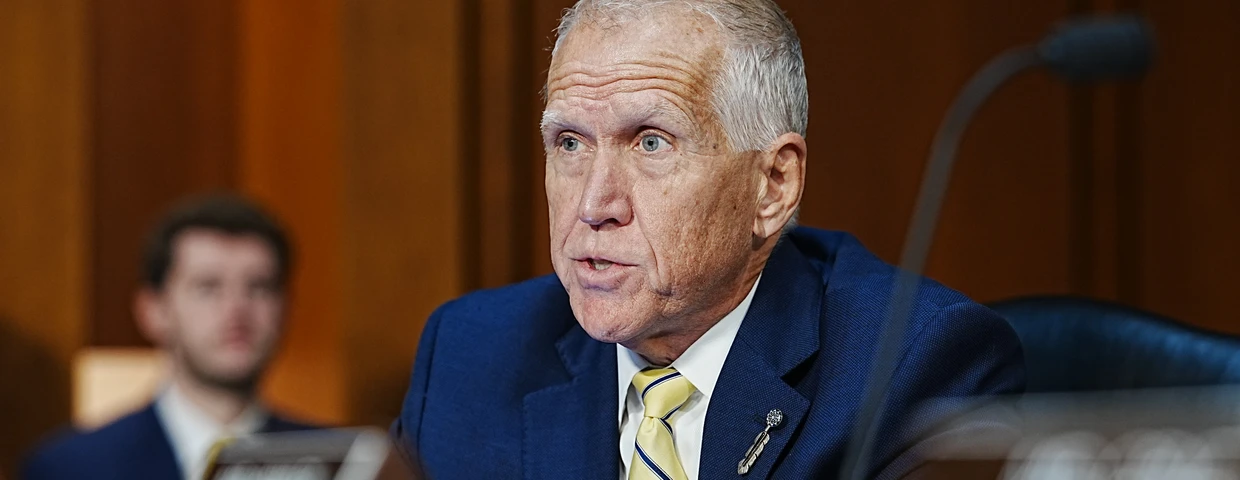
The Senate’s September 24 vote on the Iran War Powers Resolution showed both the strength of party loyalty in Congress and growing divisions within the Republican Party over President Donald Trump’s military campaign. The resolution failed 49–50, with four republicans, Susan Collins (R-ME), Lisa Murkowski (R-AK), Rand Paul (R-KY), and Thom Tillis (R-NC), joining Democrats in support. Notably, only one Democrat voted against the resolution: Pennsylvania Senator John Fetterman. Maryland Democratic Senator Angela Alsobrooks did not vote, citing an urgent family matter.
The republican senators who supported the resolution have different reasons for breaking with Trump. A common theme is concern about the constitutional role of Congress and the socioeconomic consequences of a prolonged war. Senator Paul has consistently argued that Congress, rather than the president alone, should authorize military action. Similarly, senators Collins and Murkowski have raised concerns about the administration exceeding the War Powers Act’s requirements. Tillis, who is retiring from the Senate and has been increasingly outspoken since announcing his retirement, specifically pointed to the administration’s failure to involve Congress after the sixty-day period established by the law.
The Democratic break from the party line was much narrower. Fetterman was the only Democrat to vote against the resolution. His position is consistent with his broader support for a strong U.S.-Israel relationship and the administration’s military approach toward Iran. Rather than viewing his vote as evidence of a major Democratic split, it is perhaps more accurate to see it as an individual exception within an overwhelmingly unified Democratic vote. Fetterman has repeatedly distinguished himself from many Democrats on foreign policy, particularly regarding Israel and military action in the Middle East.
At the same time, the Republican defections raise a different question about the GOP. Four Republican senators supported the resolution, and similar bipartisan defections have occurred in previous votes. The House has seen Republicans join Democrats in efforts to restrict Trump’s war powers. That pattern suggests that concern about the war is not entirely confined to one party, despite Republican attempts to display a unified front. However, the Senate vote itself does not demonstrate a full Republican schism and cannot prove widespread Senate criticism of Trump Administration policy.
The economic environment helps explain why the war has become such a salient political issue. Americans are currently expressing unusually negative views about the economy. The Conference Board reported that the consumer confidence index fell from 88.6 in August 2026 to 81.9 in September 2026, its lowest level since April 2014. Respondents cited inflation, stagnant wages and higher costs for necessities, including gasoline, as major concerns.
Other polling suggests many Americans are increasingly holding the Trump administration responsible for economic conditions. An AP-NORC poll from October 1, 2026 found that 67 percent of adults attributed higher-than-usual prices to Trump’s policies. Only 23 percent approved of his handling of the national economy, while 71 percent disapproved of his handling of Iran.
These numbers demonstrate why gas prices and the Iran war could become significant issues in the midterm elections. It would be difficult to attribute all economic problems directly to the war. Americans were already dealing with years of elevated prices, and other factors such as tariffs, inflation, and broader economic conditions also impact household costs. The war has nevertheless added another source of pressure, particularly through energy prices.
Overall, the Senate vote illustrates a complicated political situation. Democrats were largely united in opposing the war, with Fetterman standing as the clear exception. Republicans showed more visible disagreement within their own party, but the majority still supported Trump’s position. Meanwhile, declining confidence in the economy and widespread dissatisfaction with the administration’s handling of Iran have made the conflict both a foreign-policy issue and a domestic issue, even with the Trump administration’s attempts to downplay the war’s economic impacts. The war has become part of the broader debate over the cost of living and will undoubtedly impact the country’s direction heading into the midterm elections.