
French Student Protests Fuel a Political Reckoning
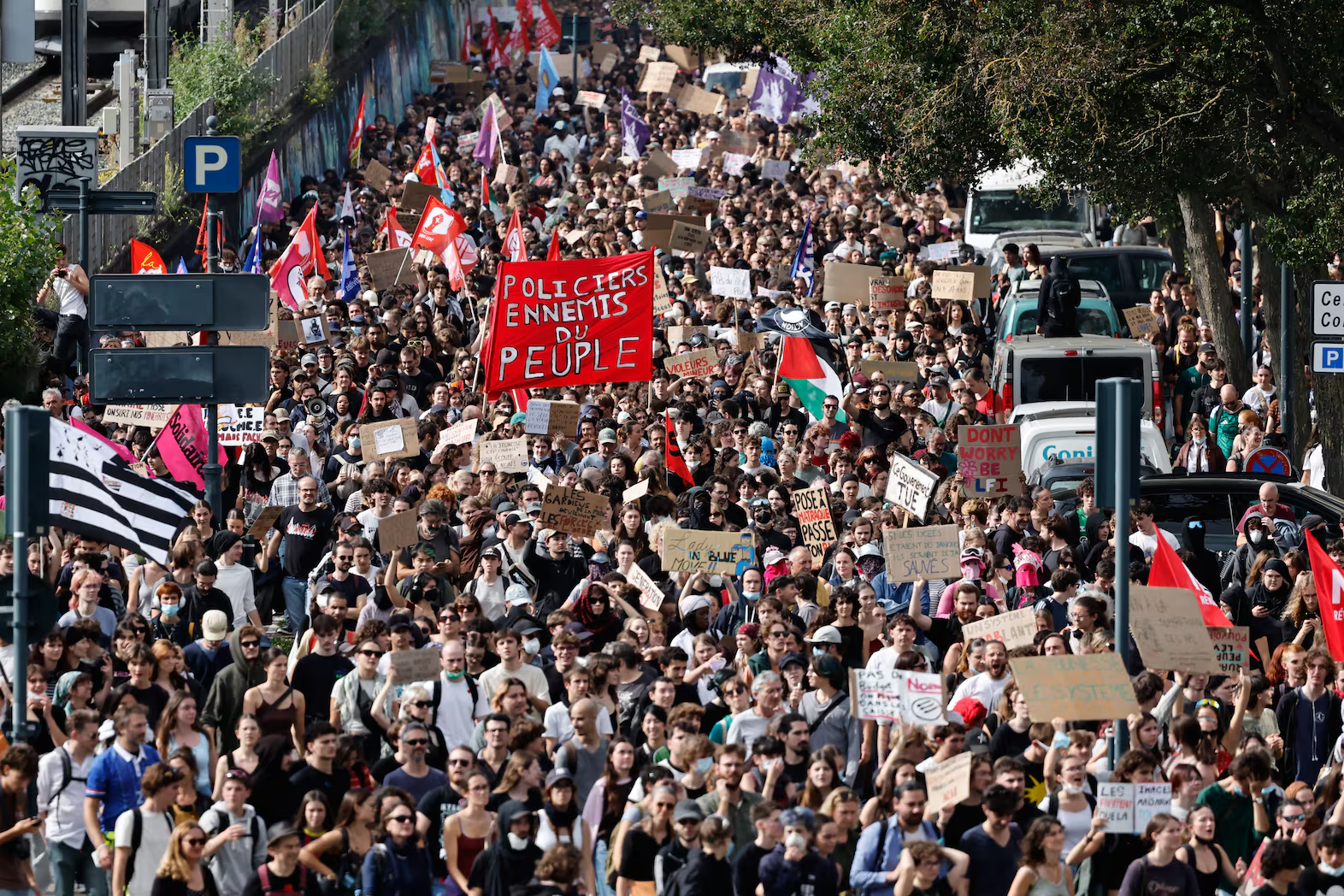
A march in protest of under-resourced schools in France. Source: Jeremias Gonzalez, Associated Press.
Student-led demonstrations have swept across France over the last three weeks, driven by growing anger over deteriorating conditions in public schools, namely, poor infrastructure, acute underfunding, and severe overcrowding. Although protests began peacefully, they have since escalated to high school blockades, arson, and a forceful response from authorities, including the use of tear gas and rubber bullets. Thousands of protesters, 87 percent of whom are minors, have been arrested, and hundreds injured.
Although authorities have condemned the protests, they have also acknowledged some of the protesters’ demands. French Education Minister Édouard Geffray stated that he plans to reform school democracy to include students and address teacher shortages. However, student protestors rejected these promises, dismissing them as a mere “smoke screen.”
As protests continue, political narratives are starting to emerge. France Unbowed, the nation’s primary far-left party, has voiced support for the student protestors. Party leader Jean-Luc Mélenchon even appeared at a rally wearing a white armband to announce his role as a gentle authority figure for the students. As the protests have grown in size and violence, Mélenchon has publicly urged students to use “nothing but nonviolent measures.” In response, right-wing Prime Minister Sébastien Lecornu has accused the left of stirring up violence, a charge that Mélenchon and his allies have denied.
This unrest unfolds as French President Emmanuel Macron nears the end of his term. With presidential elections scheduled for April and May 2027, Macron has already stated that he will not run for reelection, painting his administration as a lame-duck government among many French citizens. Coupled with the unpopularity of Macron’s administration, with approval ratings hovering at a mere 18 percent as of September 2026, the current government lacks the capacity to restore public order or resolve the crisis.
As the elections approach, the ongoing protests have provided candidates an opportunity to insert themselves into the public’s consciousness. While Mélenchon has become a contender, far-right frontrunner Marine Le Pen of the National Rally party has vowed a fiscal overhaul if elected, promising 140 billion euros in savings by 2032. This promise is especially timely given the economic uncertainty that has left a lack of education funding, which the protests are unfolding against, and the deficit that is only predicted to rise.
The ongoing student protests have brought attention to France’s economic situation; Le Pen’s promises show that she is determined to win this election by appealing to current economic woes. If Le Pen wins the presidential election, the events unfolding in France could be seen as a step toward a stronger alignment with the right. A National Rally victory could expand broader populist shifts unfolding across Western Europe, with far-right parties winning recent victories in Germany and holding considerable government influence in Italy and the UK.