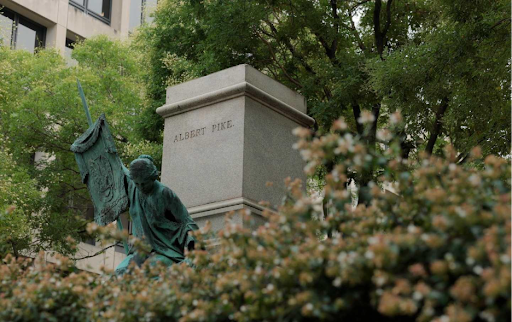
By honoring disgraced figures like Albert Pike while silencing the stories of historically marginalized groups, Trump intends to alter the story of the United States into a nation that is based on nostalgia for a glamorized past, rather than accountability. The administration’s campaign to “restore truth and sanity” risks normalizing an idealized version of history that completely erases the oppression of marginalized groups and distorts the legacy of those who fought for freedom and equality for all Americans.
Read MoreRussia's late October announcement of successful nuclear weapons tests came days after Trump cancelled the Budapest summit and sanctioned major Russian oil companies. The timing reveals these tests as strategic signaling designed to fracture Western unity on Ukraine while positioning Russia as an indispensable nuclear power that cannot be isolated or ignored.
Read MoreThe concept of Thanksgiving in modern-day America is about parades, watching American football, and family meals; however, it does evoke the memory of the past violence, displacement, and dispossession that are less talked about for Native Americans. As an International student, I never completely understood the meaning of American Thanksgiving until I realized that life is not about living in the past, but learning from the past, moving on and being thankful for what we have.
Read MoreOn September 30th, President Trump and Defense Secretary Pete Hegseth made a sudden and politically charged address to hundreds of U.S generals and admirals who were summoned to Virginia at the Marine Corps Base, Quantico. The President and Defense Secretary took the opportunity to press their views upon the military’s finest, calling for the destruction of “woke” ideology within the barracks, ending “decades of decay”, and even eliminating “fat troops” from the forces…. This bombastic address from the Trump Administration certainly has consequences, unintended or not, because President Trump is not following tradition. Such action raises eyebrows regarding the line between military professionalism and civil politics…
Read MoreOver the course of the last month, the United States military has launched at least five strikes on drug ships, targeting alleged ‘narco-terrorists” in Venezuela and the Caribbean. By blurring the line between counter-narcotics policy and political theater, Trump risks igniting instability across the Caribbean while leaving the real domestic fentanyl crisis unaddressed.
Read MoreOn September 19th, President Trump signed a proclamation that fundamentally undermines the structure of the H-1B visa program in the United States. The update that caught the most attention was the additional $100,000 fee for all new H-1B visa petitions, which, along with other changes, sparked rightful outrage about the future of legal immigration to the United States.
Read MoreAt the end of the month, Chris Clemens was asked to resign, as the BOT (Board of Trustees) claimed that he had unjustly shared information discussed in their closed-session meeting. Clemens’ and the BOT’s priorities clearly juxtapose each other, as the BOT believes that the confidentiality of the content discussed during these closed sessions should be prioritized, while Clemens believes that the legitimacy of the closed-session meetings themselves should be called into question. As tensions escalated between the BOT and the former Provost, something else began to be overlooked: UNC-Chapel Hill’s students and staff.
Read MoreCampaigns like this bring to light the concerning development of anti-democratic tactics used by fossil fuel companies, especially in the age of AI. This particular effort was a failure on the part of Williams Companies, but what happens when fossil fuel companies are able to use AI to effectively undermine public opinion and sway decision makers?
Read MorePresident Trump’s administration has escalated its anti-narcotics campaign by authorizing missile strikes against Venezuelan vessels allegedly tied to drug trafficking, invoking new executive powers that classify cartels as “foreign terrorist organizations.” While officials like Secretary of State Marco Rubio argue the strikes were justified under a declared national emergency, critics contend that the administration has blurred the line between law enforcement and military action, raising fears of unchecked executive authority. The operation signals a pivotal shift in U.S. foreign policy, redefining terrorism to include criminal networks and setting a precedent that could expand presidential war powers far beyond traditional threats.
Read MoreAn endorsement from Hochul, a powerful establishment figure, could help further solidify Mamdani’s lead in New York City’s mayoral race and reinforce his path to victory in November. However, it remains to be seen whether it represents a genuine shift towards unity or simply an outlier in a Democratic party defined by infighting.
Read MoreThe recent murders of 23-year-old Iryna Zarutska in Charlotte and popular political personality Charlie Kirk have resulted in heightened questions about the prioritization of public safety in America. These two stories have largely developed state and national politicians’ stances around how our nation needs to handle crime moving forward, resulting in fierce party-line attacks. In North Carolina specifically, politicians such as Governor Josh Stein and House Representative Tim Moore have clashed on the most effective ways to prevent and mitigate violent crime. These ideological confrontations can stifle legislative progress, and must be reconciled to the extent possible for any significant progress to be made.
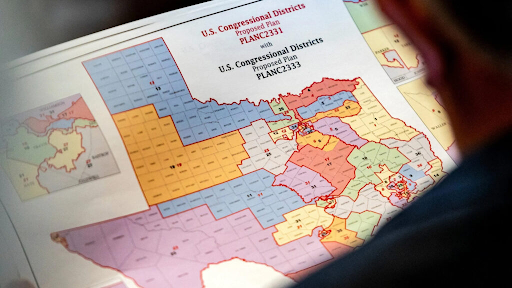
Read MoreOn September 12th, Missouri became the latest state to redraw its voting patterns under the backing of President Trump. This plan, implemented by Republican lawmakers, aims to redistrict Missouri so that Republicans retain seven of eight congressional districts, a small piece of the redistricting puzzle that strives to help Republicans hold the House amidst a presidency that has lost seats in the past.
Read MoreOver the last few weeks, European capitals have been grappling with drone intrusions from Russia. While government officials deliver strongly worded social media statements, Russia denies its deliberate involvement. In the absence of meaningful pushback from NATO, Russia's boldness is expanding.
Read MoreDuring his confirmation hearings, RFK jr. pledged that he would not take actions that discourage people from getting vaccines. However, recent HHS decisions have restricted approvals and made access to COVID-19 vaccines more difficult.
Read MoreChina appears to be moving away from collaborating with the United States on Korean Peninsula stability, instead leveraging North Korea as a strategic buffer to counterbalance deepening ties with Russia and promote a multipolar world resisting U.S. hegemony. The China–North Korea alliance illustrates that economic ties, military developments, and diplomatic positioning are now deeply intertwined, raising the stakes for the U.S. and the international community at large.
Read MoreJimmy Kimmel Live! became the latest target of Trump’s media suppression campaign after Kimmel’s September 15th monologue, where he associated Trump’s ‘MAGA’ movement with political violence. Many Americans wonder: how far will Trump go to suppress left-leaning media and is a president’s influence on the media constitutional?
Read MoreThe decision made by the Brazilian Supreme Court will force Brazil to reassess its international alliances and confront the political discord domestically. Lula will need to figure out how to deal with the fallout by creating a new economic plan for Brazil and finding a way to slow the growing divide between Brazilian citizens. Lula has previously faced threats of violence in this politically volatile situation. If he wishes to avoid further violence, he must act decisively to establish new foreign relationships and to appease aggrieved right-leaning Brazilians.
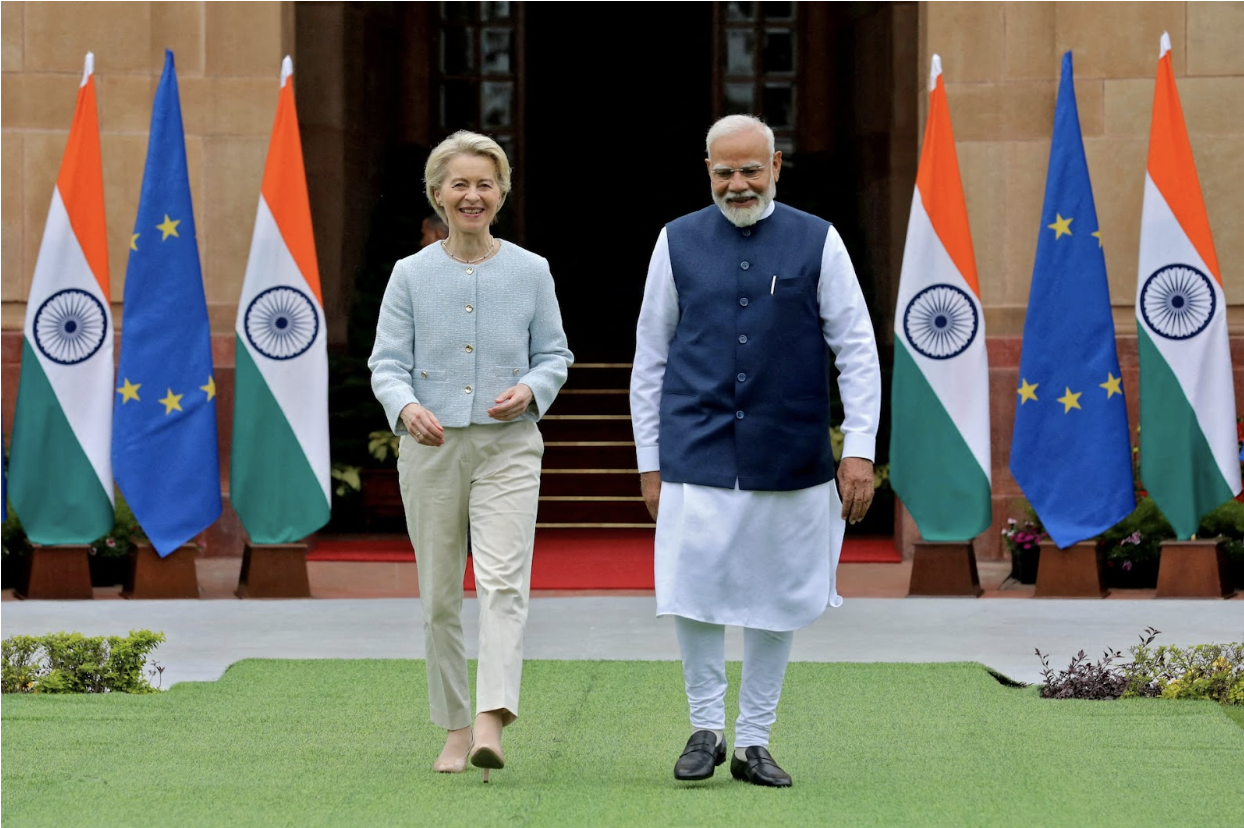
Read MoreIn her State of the European Union address, Commission President Ursula von der Leyen, joined by Parliament President Roberta Metsola, set out a vision of solidarity for a continent under pressure. From current events in Ukraine and Gaza to the significance of energy and technology, the speech revealed both the EU’s determination and its deep divisions. With MEPs pressing tough questions, the speech underscored Europe’s priorities, highlighting the uncertain path ahead.
Read MoreNorth Carolina’s 2026 Senate race is shaping up to be one of the most competitive—and unpredictable—contests in the country. With high-profile contenders emerging in both parties and a vulnerable incumbent caught between factions, the outcome will depend heavily on who actually enters the race.
Read MoreOn April 9, the North Korea state media reaffirmed that its status as a nuclear weapons state is “irreversible” and not open for negotiation regardless of how forcefully the United States or its allies push for disarmament. However, this message is likely more than a mere reiteration.
Read More