
UK Draws Line on West Bank Settlements
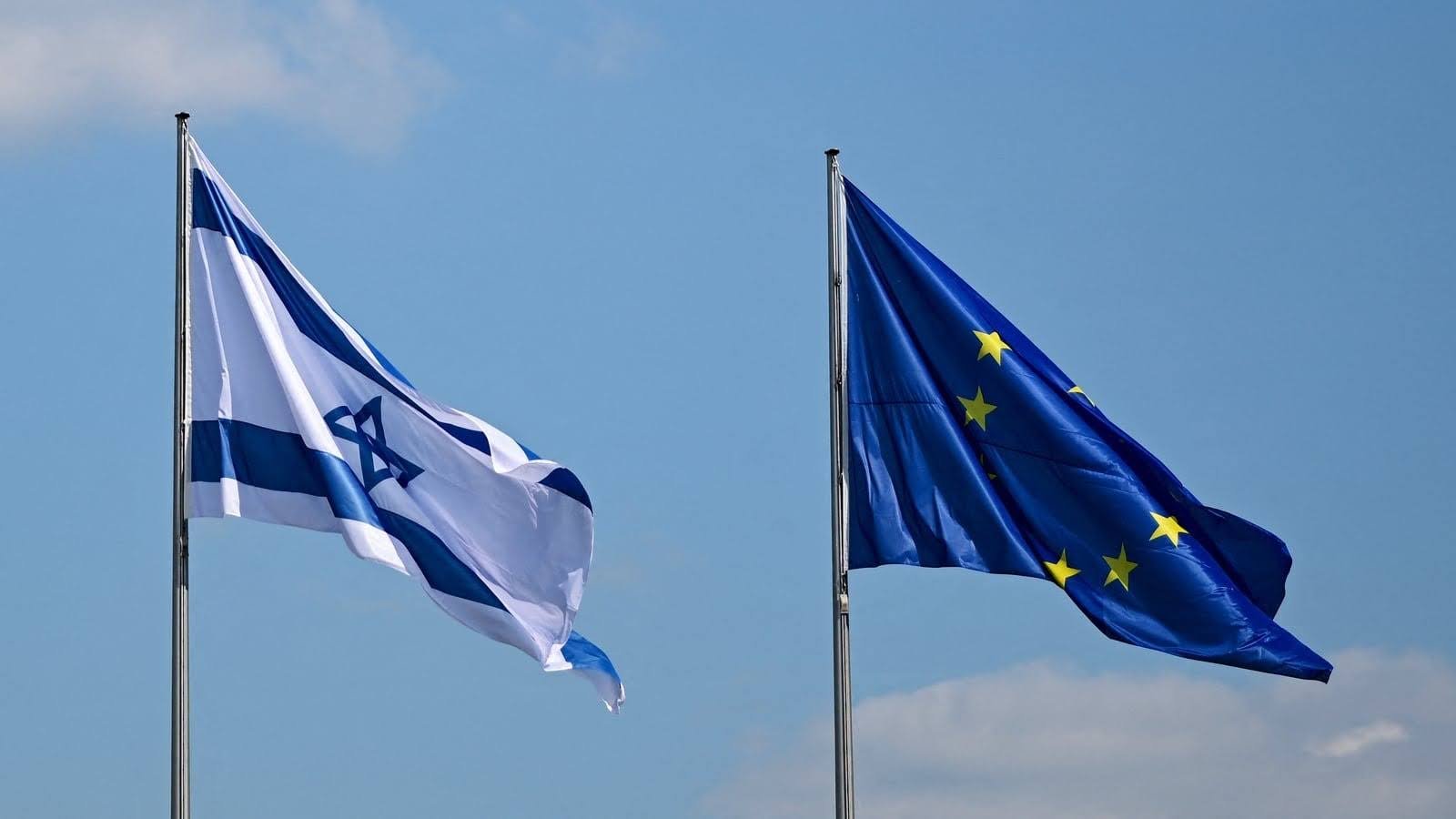
Israel and European Union flags. Source: Raidió Teilifís Éireann (RTÉ) News.
Israel’s expansion into the West Bank has rung alarm bells in Western Europe as the existence of a two-state solution faces a growing existential threat. The E-1 settlement plan, located between East Jerusalem and the settlement of Ma’ale Adumim, has evolved into something of a flashpoint, with its future deciding what penalties Israel is to suffer.
On Wednesday, August 12, Finance Minister Bezalel Smotrich announced approval of 3,000 housing units that would divide the north and south of the West Bank with the intention to “[bury] the idea of a Palestinian state.” This statement is evident in the deliberate disruption of a Palestinian metropolis construction initiative to connect East Jerusalem to Bethlehem and Ramallah. Before E1, this metropolis was believed to become the foundation of a future independent Palestine. The plan has been contested by the international community and has prompted opposition to Israeli expansion within the UK government.
Vocal opposition against Israel is in stark contrast to the diplomatic trajectory the UK and Israel were on. In 2021, the two countries signed a free trade agreement referred to as the 2030 roadmap. In 2022, negotiations to update the agreement were scheduled. Following Israel’s action in Gaza in 2025, the UK suspended negotiations out of protest. In June 2026, the Business and Trade Secretary said the UK terminated these negotiations and the 2030 roadmap in its entirety.
Just this month, leaders such as Foreign Secretary Ed Miliband and former Israeli Prime Minister Ehud Olmert said that the E1 settlement potentially crossed a “red line” that would make the two-state solution impossible and that the E1 settlement could be symptomatic of ethnic cleansing. On September 8, Prime Minister Andy Burnham made these sentiments tangible by imposing trade restrictions. The proposed plan is as follows: in six to nine months, the UK government could ban the import of goods from illegal Israeli settlements, sanction companies and individuals who interact with illegal settlement activity—which has grown from 32 to 38—or potentially ban the advertising of land occupied by Israeli settlers.
Presumably frustrated with the building momentum of Israeli expansion, the UK has begun negotiating a new approach. The Foreign, Commonwealth & Development Office’s said this transformed stance is to “[strengthen] our existing global human rights sanctions regime to target those who commit serious violations of international humanitarian law, in Palestine, and around the world.” Just observing Israeli expansion and condemning it wasn’t enough of an opposition for the UK.
Israel has made moves to rebut the UK’s stance. In a press release responding to the UK trade sanctions, Israel said that the UK’s accusations of Israel “were outrageous lies”, that the action is systematic, and generally “morally distorted.” To respond to the UK’s sanctions, Israel provided tangible evidence of opposition. Minister of Foreign Affairs Gideon Sa’ar and Prime Minister Benjamin Netanyahu established a set of countermeasures: the British Consulate is to be closed in Jerusalem, British representatives are to be removed from the International Support Center in Kiryat Gat, UK forces are banned from training Palestinian Authority forces, and twelve British elected officials and nationals have been blacklisted from Israel.
While these countermeasures, on their surface, could come from the lack of UK engagement, the real exigency can be found in Israel’s fear of a larger Western response. The UK’s trade restrictions alone have generally little impact on Israel as a state, as the goods from the settlements in the West Bank constitute less than five percent of the country's total exports.
However, the UK is not acting alone. Following the UK’s sanctions, a twelve-country pact has collectively imposed trade bans on illegal Israeli settlements. European nations such as the Netherlands, Spain, France, and soon-to-be Belgium have all joined the UK in its stance. If a majority of these countries fall in line behind the UK, this unifying response has the potential to disrupt up to a third of Israel’s goods trade. This was not a surprise conclusion to the UK, which might have known that their trade deal alone wouldn’t be enough to deter Israel.
While Europe is becoming increasingly cohesive in its stance against perceived human rights violations, the U.S. has been left in a profound hesitation about how to address Israel’s expansion.
Within the U.S., the general public has begun to express new sympathy towards the Palestinian people, with a revolutionary majority of young adults, 18 to 34. At the legislative level, anger over the E1 program is being voiced by a proposed bill spearheaded by Chris Coons of Delaware, Elizabeth Warren of Massachusetts, Ron Wyden of Oregon, and Ruben Gallego of Arizona, that would relay a message of “freedom, security, prosperity and self-determination for all Israelis and Palestinians” to Israel through the vehicle of sanctions.
In contrast, the executive has communicated a very different, and slightly ambiguous message. When asked about the UK’s actions, Secretary of State Marco Rubio said the U.S. is “not going to do what the UK did”. In early September, two anonymous inside sources informed the press of an unreleased statement drafted by officials in Jerusalem and Washington condemning trade bans by the UK, France, and Canada.
The U.S. has been pulled into two camps, with Israel requesting Washington to stand with Jerusalem on the international stage and Trump simultaneously expressing opposition to West Bank expansion. Tangibly, nothing has yet been done to help or hinder the E1 settlement, leaving speculation about future United States action.
Divided staunchly between the people and the executive, the U.S. has shown itself to be far less united against Israel than its European allies. Dedicated to sending a message to Israel, Western European states represent a stand against the perceived violations stemming from the E1 expansion. While the world waits for an American answer, whether the message will penetrate Israeli leadership, force Israel to stop, or, on the flip side, expedite the process, is ambiguous. The fight seems to be developing across the sea, and yet the U.S., holding the ability to shift the conflict, is behind the action. The current administration is uncertain whether the American people or the United States’ allies will sway the plan’s implementation. The UK prompted a response, and the rest of the world is beginning to answer.