
Who Inherits the Trump Legacy in the Post-Trump Republican Party?
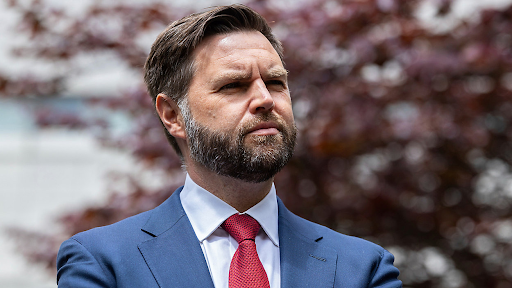
J.D. Vance speaks at a New York press conference in May 2024. Source: Spectrum News 1.
President Donald Trump continues to decline in favorability amidst tariff-induced hiring freezes and renewed scrutiny of his past associations with Jeffrey Epstein. Naturally, the erosion of Trump’s power over the Republican Party has sparked debate over who might lead the Republican ticket in his stead in 2028, especially given that the Twenty-Second Amendment bars the President from seeking a third term.
Crucially, despite widespread disapproval of Trump across the general electorate, 84% of 2024 Trump voters still view him favorably, setting up a central tension in the coming 2028 race: how might Republican contenders balance loyalty to the President’s legacy in the primary and independence from his worst controversies in the general election? Let’s consider who might square the circle.
The clearest prospective 2028 Republican candidate is J.D. Vance, Trump’s incumbent Vice President. A former author and U.S. senator from Ohio, Vance could offer continuity with Trump’s populist legacy as a member of the current administration while providing a younger face at the top of the ticket (Vance is 41, making him 38 years younger than the President). Perhaps, then, it is no surprise that he currently leads the pack of 2028 Republican contenders with 45% support in early primary polls, a 31-point lead over Marco Rubio, the next highest-performing prospective candidate.
However, Vance is not flawless, and coverage of the 2024 presidential election has underscored a recurring weakness in unscripted retail-politics moments. For instance, a Georgia donut-shop stop, which involved a brief, uncomfortable exchange with an employee who asked not to be filmed, went viral, becoming a clear example of his struggles with casual voter interaction, contributing to broader concerns about his personal appeal beyond his partisan Republican audience. This, combined with fears that a continuing collapse in Trump’s popularity might make Vance’s ties to the administration a more glaring general election weakness, might prevent the vice president from being a shoo-in in 2028, even though he remains the frontrunner to succeed Trump as the Republican Party’s leader.
Beyond Vance, the list of Republicans with a clear path to the White House remains small. For instance, Marco Rubio, the current Secretary of State, boasts a long-standing bonafide reputation within the Republican establishment as a U.S. senator from Florida from 2011 to 2025. He has also played a role in many of the Trump Administration’s headline foreign policy actions in his time leading the State Department since last year—most notably, his role in the U.S.-backed operation that resulted in the capture of Venezuelan President Nicolás Maduro in January. With that said, Secretary Rubio only polls at 14% in the GOP primary as of now and, perhaps as a consequence, has already voiced support for Vance for the 2028 race in the event that the latter runs. Of course, the 2028 primary is still two years away, so this must be taken with a grain of salt; after all, even in May 2024, who would have imagined that Kamala Harris would be that year’s Democratic presidential nominee?
In a similar boat is the President’s son, businessman Donald Trump Jr., who currently polls in third place at 13% in primary polling. As the literal heir to President Trump, Trump Jr. would benefit from both high name recognition and continuity with the current administration’s political legacy in a way that would bolster him with GOP primary voters. However, that continuity would be a double-edged sword, hurting him with more moderate general election voters who are skeptical of the incumbent president. Fears about Trump Jr.’s possible poor performance in the general election, combined with the lack of any experience in governance, could bring many primary voters to choose a more experienced political operator with a more clearly defined identity outside of a family name.
Outside of the top three, other prospective candidates have a much rockier path to the White House ahead of them. Among these are 2024 candidates such as former Trump UN Ambassador Nikki Haley, Florida Governor Ron DeSantis, U.S. Senator from Missouri Josh Hawley, and businessman Vivek Ramaswamy (who is also the current frontrunner for Ohio governor), all of whom represent distinct factions within the Republican Party. The Reaganite Haley, culture warrior Desantis, economic populist Hawley, and libertarian Ramaswamy maintain unique ideological bases within their party that could yield all of them meaningful support in a 2028 race sufficient to get them on a debate stage, but without higher name recognition or institutional support from a GOP establishment remade in Trump’s image, they would struggle to beat out the three aforementioned likeliest contenders. That may be why none of these names currently poll above 10% in the Republican primary.
The emerging 2028 Republican field is defined less by ideological experimentation than by a shared constraint: how closely each contender can tether themselves to Trumpism without inheriting its liabilities? Vance currently appears best positioned to manage that balance, pairing institutional backing and ideological continuity with generational change, even if questions about his electoral dexterity remain unresolved. Rubio and Trump Jr. offer alternative paths rooted in experience and lineage, respectively. Beyond them, a fractured second tier reflects a party rich in factions but poor in consensus leadership outside Donald Trump’s personality. Ultimately, unless Trump’s standing within the GOP erodes far more dramatically than current polling suggests, the 2028 Republican primary is likely to reward candidates who can plausibly claim to be his successor rather than his repudiation, a reality that sharply narrows the field long before the first votes are cast.