
North Carolina's Moment in Deep Space
NASA Astronaut Christina Koch. Source: People.
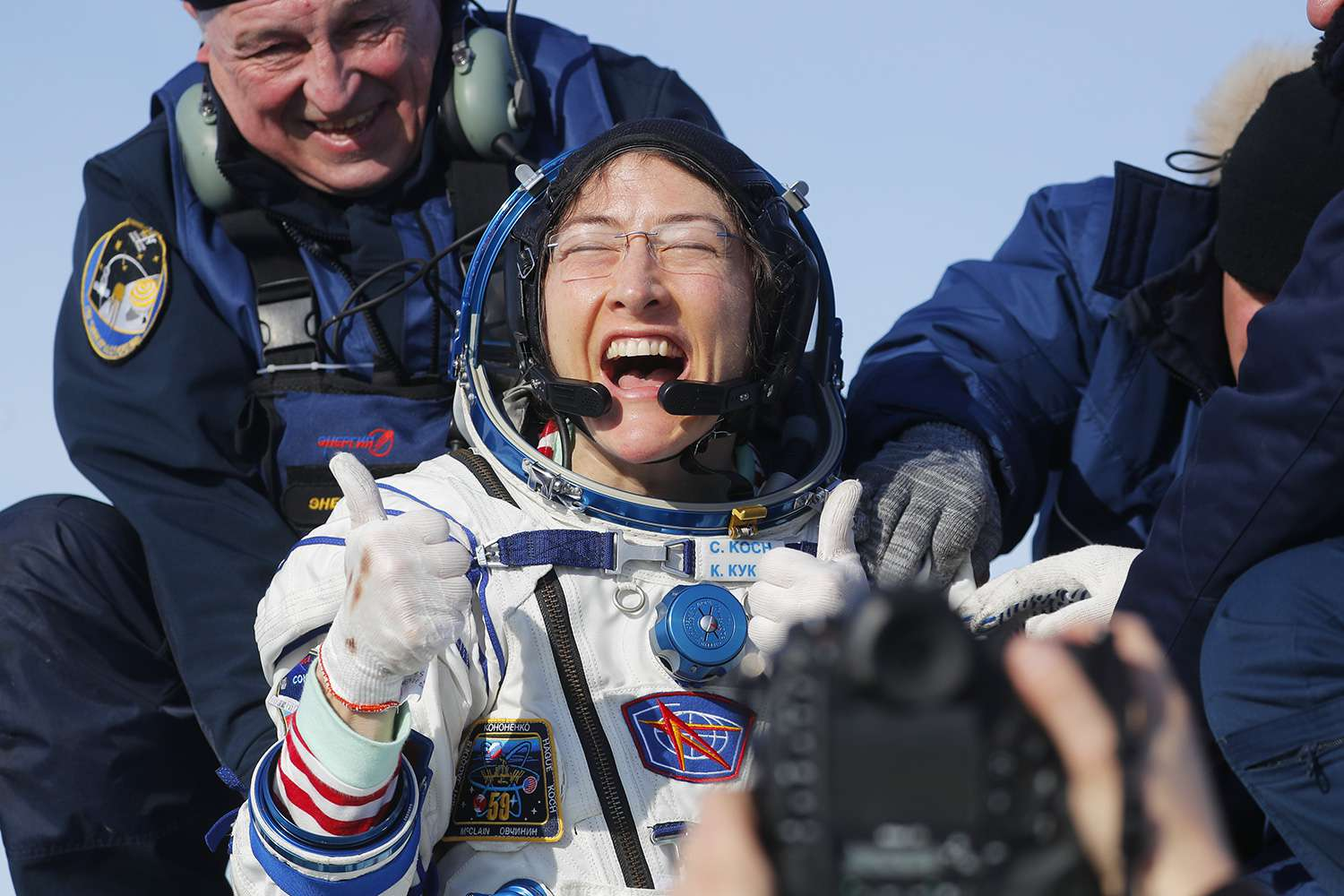
On April 1, an NC State alumna became the first woman to travel beyond the Moon. Christina Koch, 47, grew up partly in Jacksonville, North Carolina, attended the NC School of Science and Math (NCSSM), and earned undergraduate degrees in physics and electrical engineering at NC State before pursuing a master's in electrical engineering. She did not arrive at NASA by accident. Her former undergraduate advisor, Dr. Stephen Reynolds, described her drive as unmistakable from the start — a student with a 4.0 average for whom, he said, the GPA “was the least interesting thing about her.” Her former physics professor, Dr. John Blondin, said, “She's just fearless and willing to take on any challenge.” Koch is now aboard the Artemis II mission alongside NASA astronauts Reid Wiseman and Victor Glover, and Canadian astronaut Jeremy Hansen, the first crewed mission beyond low Earth orbit since Apollo 17 in 1972.
The crew broke Apollo 13's record for the furthest distance humans have ever traveled from Earth, surpassing 248,655 miles. The mission returned to Earth this week, completing a ten-day journey that no crew has attempted in over half a century. For North Carolina, Koch's achievement is more than a feel-good story. It is a reminder of what public investment in science education and research infrastructure can produce, and a prompt to ask whether that infrastructure is being protected. The state's connection to this mission runs deeper than one alumnus. The Pisgah Astronomical Research Institute in Transylvania County (PARI) is one of 34 organizations worldwide selected by NASA to help track the Orion spacecraft during the mission, using two 85-foot radio telescopes originally built by NASA in 1961. PARI hosts summer camps, public stargazing nights, and school field trips under some of the darkest skies in the state, which makes it precisely the kind of grassroots science pipeline that produces the next Christina Koch. The institute is a quiet but concrete example of how federal space investment reaches into communities far from Cape Canaveral. That pipeline, however, depends on sustained federal commitment.
The Artemis program itself has not been immune to cuts: the Lunar Gateway space station program was canceled in March 2026, removing a major component of the long-term lunar architecture and narrowing the scope of future missions. Broader federal research funding pressures have put university science departments across the country on alert. North Carolina's research universities, NC State, UNC, and Duke, are deeply embedded in the federal grant ecosystem that funds the foundational science feeding programs like Artemis. A sustained retreat from that investment would not just affect future missions. It would affect the students sitting in Riddick Hall today, taking the same classes Christina Koch once took.
Dr. Reynolds said, “All they have to do is mention that she's a product of this. The same classes, the same instructors, the same programs they're going through now.” That continuity from a physics classroom in Raleigh to the far side of the Moon is not a coincidence. It is the result of decades of deliberate investment in public science education and federal research infrastructure. Whether the next generation of North Carolina students inherits the same opportunities may depend less on their ambition and more on decisions being made in Washington right now, far closer to home than the Moon.