
Armed Man Shot and Killed Trying to Enter Mar-a-Lago
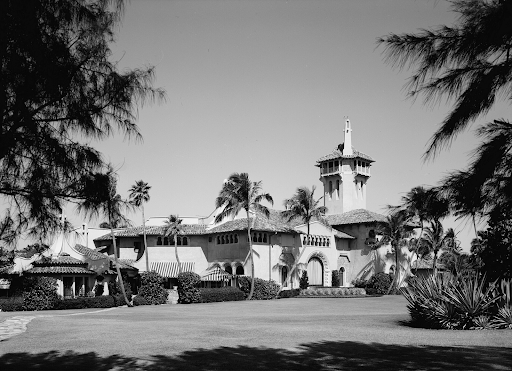
Mar-a-Lago- The Florida estate of President Trump. Source: HABs.
21-year-old Austin Tucker Martin was shot and killed at 1:30 a.m. on February 22 while attempting to enter Mar-a-Lago, one of President Trump's private residences located in Palm Beach, Florida. Reports indicate that he trespassed 20-30 yards onto the property before he was confronted by law enforcement, who proceeded to fatally shoot Martin.
Martin drove to the estate from his family home in North Carolina, obtaining the weapon en route. Palm Beach County Sheriff Ric Bradshaw stated during a brief press conference that authorities “fired their weapons to neutralize the threat.” Multiple reports indicate that Martin owned a fuel canister and also raised his shotgun to a shooting position, creating a threat to the property and people of the estate.
TMZ stated they gained access to a text thread of Martin sharing his feelings regarding the Epstein Files and began questioning his true motives. The texts stated, “I don't know if you read up on the Epstein Files, but evil is real and unmistakable,” and also raised questions about Martin's political affiliations, as The Guardian reported that Martin's cousin stated, “We are big Trump supporters, all of us.”
Despite his family's support for Trump, Martin appeared increasingly frustrated by what he believed were unanswered questions regarding the Epstein Files. Co-workers of Martin stated he was “deeply disturbed by what he believed was a government cover-up and often talked about powerful people getting away with it.”
Amid growing concerns about political violence in recent years, some observers have linked Martin's motivations to frustrations about powerful figures avoiding accountability. Trump has faced threats to his life before, including two other assassination attempts during his 2024 campaign.
The first assassination attempt occurred in Butler, Pennsylvania, during Trump’s 2024 campaign. Thomas Matthew Crooks fired multiple shots towards the stage where Trump was speaking, piercing part of his right ear. Crooks was assassinated on July 13, 2024, by Secret Service counter-snipers 26 seconds after his first shot.
The second assassination attempt was carried out by Ryan Roth, who was sentenced to life in prison for attempting to assassinate Trump. Roth aimed his rifle through the shrubbery on the Trump International Golf Club in West Palm Beach, just a few miles from Mar-a-Lago.
These back-to-back assassination attempts on American presidents are not unprecedented. This can be illustrated in the past, looking at President Gerald Ford, who survived two assassination attempts within 17 days of each other in September 1975. However, despite similar assassination attempts occurring in the past, the political climate in the United States has shifted dramatically.
York University published an article stating that the evident normalization of political violence may be related to the strong polarization of U.S. voters. Not only impacting presidents, but targeted attacks have also impacted families of state representatives, governors, and political activists, including the 2025 assassination of conservative activist Charlie Kirk while speaking at a university event, which many view as a stark example of the growing political violence within the United States.
While polarization is a global phenomenon, with countries like Brazil, India, and Poland facing divisions, the US leads Western democracies in the speed of its polarization, contributing to the increase in recent political violence.
Our democracy faces struggles as major political parties have become increasingly aligned with certain ideologies, races, and religious identities, creating a more homogenous political atmosphere.
Professor of political economy at Brown University, Jesse Shapiro, discusses the concept of homogeneity within political polarization in the United States, stating, "When you identify with a certain party, and you're looking across the aisle, the people you're looking at are more different from you than they were a few decades ago.” This “party sorting” is less pronounced in other countries.
Affective polarization has further become apparent within the United States, where individuals in opposing political groups feel an increasing distrust toward the out-group.
This polarization is driven by and intense dislike for the opposing party, rather than support for ones own.
Although polarization has become increasingly relevant, there have been efforts to combat this issue within the US.
PBS News stated that people are creating projects with the intention to boost “social trust”, creating a vulnerable space for people to discuss political disagreements. Further, Tim Shriver, former head of Special Olympics, developed “The Dignity Index”, which is a way to measure speech by our political leaders, restoring dignity to political disagreements.
Through looking at the implications behind this assassination attempt, Martin's actions can reflect a broader concern in American politics: the increasing normalization of political violence and growing public anger toward those in power.