
Orbán Under Pressure: Pipeline Incident and Rising Opposition Shake Hungary’s Elections
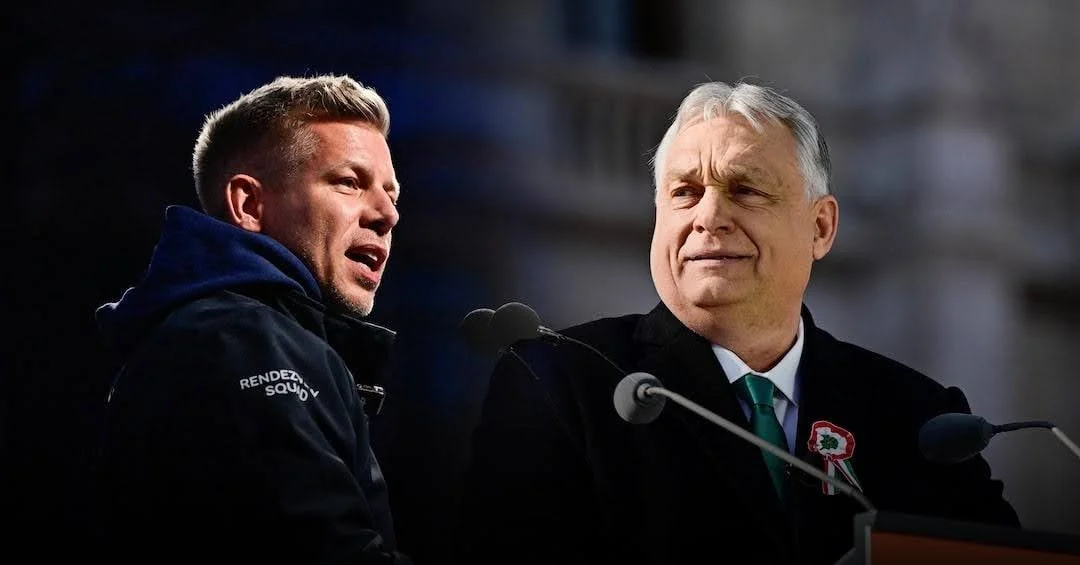
Péter Magyar (left), the opposition candidate running against Viktor Orbán (right) with hopes to end Orbán’s 16-year rule in Hungary. Source: Reuters.
On Sunday, April 5, Hungarian Prime Minister Viktor Orbán called an emergency defense council meeting after explosives were found near a pipeline in Serbia. The pipeline carries Russian gas into Hungary. This event came before crucial elections that took place in Hungary on April 12, which resulted in a defeat for incumbent Viktor Orbán.
The gas pipe incident has been marked as a potential attempt to influence Hungary’s election. Orbán, who was informed of the incident by Serbian President and close ally Aleksander Vučić, claimed the incident was an attempt to blow up the pipeline. Orbán implicitly blamed Ukraine for the incident. He said, “Ukraine has been for years trying to cut off Europe from Russian energy.” Moscow echoed this sentiment. Under Orbán’s rule, Hungary has been an outlier in the European Union for maintaining ties with Russia.
Ukraine denied involvement in the incident, and experts asserted that this was rather an attempt by Russia to influence Hungary’s election. Given that Orbán’s party was falling behind in polls as of April 11, there were accusations by opposition candidates and lawmakers around the world that this was a “false flag” operation, designed to appear propagated by someone other than the group or person responsible for it, by Orbán and Russia, to drum up support in the polls.
The leader of Hungary’s opposition, Péter Magyar, who broke off from Orbán’s party, also accused Orbán of carrying out a false-flag operation. Magyar formed a grassroots party, Tisza, and is leading most polls in Hungary. With a victory, Magyar plans to “reset relations with the EU and end close relations with Russia.”
Within the EU itself, many hope to see an end to Orbán’s rule, with Magyar promising to bolster Hungary’s position in the EU should he be elected. While the EU faces numerous challenges, such as right-wing populism and the war in Ukraine, Orbán has used his right of veto to block decision-making, to create progress on these issues, and extract concessions. Given that many EU decisions require a unanimous vote, Orbán’s use of the veto has frustrated lawmakers who are now hopeful that an end to his rule could be in sight.
Despite growing frustration with Orbán in the EU, Orbán has right-wing allies across the world who voiced support for his reelection. Among these world leaders are Serbia’s Aleksander Vučić, Israel’s Benjamin Netanyahu, and U.S. President Donald Trump. On April 7, US Vice President JD Vance traveled to Budapest to voice support for Orbán despite ongoing attempts at peace talks with Iran.
As the Hungarian elections took place on April 12, the polls closed with a record 77.8% voter turnout. Some have called this election “the most consequential vote in the country in decades.” Given the swing in favor of Magyar’s opposition and the allegations of election fraud and sabotage in the country, as well as Orbán’s historical obstructions of justice, this election is certainly pivotal in determining the strength of democracy and the future of the EU.
The pipeline incident is one example of how Hungary’s politics have been intertwined with international politics. Given the timing of this incident and its relationship to Hungary’s election, this incident is reflective of escalating tensions between Hungary, Russia, and the EU. The election is an opportunity for Hungary to change direction and have a more cohesive relationship with the EU, which will have broad implications for European politics as a whole.