
A Republican Win, but a Democratic Warning Shot in Georgia’s 14th District
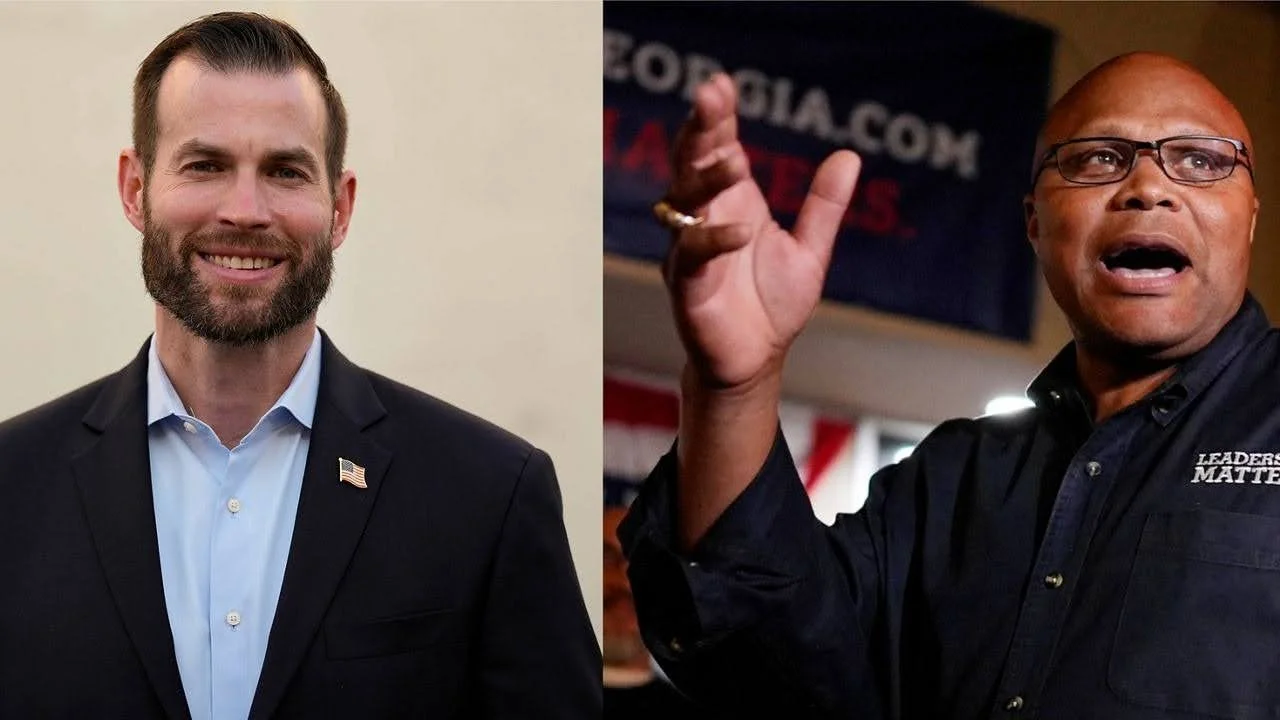
Republican Clay Fuller defeated Democrat Shawn Harris in a special election on April 7th, filling Georgia’s 14th District’s vacant House seat. Source: Spectrum.
Democrats’ recent string of strong election performances across the nation continued, despite a loss. On April 7, Republican Clay Fuller defeated Democrat Shawn Harris in a special election to replace Marjorie Taylor Greene as Georgia’s 14th congressional district representative. The result was not surprising. After all, the district has never elected a Democrat in its 16 years of existence. Even with the loss, however, Harris’s strong performance in the typically ruby-red district was an encouragement for Democrats and a warning sign for Republicans.
Fuller won by only 12 points, a stark contrast to 2024, when Trump carried the district by 37 points. This 25-point swing towards Democrats marks the largest of the seven special elections held so far during Trump’s second term. All ten counties comprising the district saw swings between 20 and 30 points towards Democrats. Notably, Cobb County flipped from red to blue, with a 24-point swing.
While Harris’s performance in the election was impressive, it was not entirely unexpected. Each of the prior special elections saw significant gains for Democrats in deep-red areas, with swings ranging from 13 to 23 points. Structural and historical trends also gave Harris an advantage. Despite being more critical of their own party compared to their right-leaning counterparts, historical data and recent polling have shown that Democratic voters are more motivated in voter turnout, especially in special elections. This is perhaps driven by frustration with current Democratic leadership’s perceived ineffectiveness in pushing against the Trump administration’s policies. Harris’s performance was also bolstered by the fact that historically, midterms and midterm-adjacent elections usually swing against the party in the White House.
The results in Georgia were also likely spurred by broader disillusionment with Trump, whose approval ratings have slumped to record lows. The moderate Harris courted Republicans and Independents who were frustrated with the economy under the current administration. He centered his campaign messaging around “pocketbook” issues: fighting inflation, improving affordability, expanding healthcare access, and supporting small farmers and veterans. He also emphasized the President’s deeply unpopular actions, like the conflict in Iran. He was against deploying ground troops and called for the United States to pull out, starkly contrasting Fuller’s full support for the war. Furthermore, he sought to portray Fuller as Trump’s puppet, saying that he had “sold his soul to Trump.” Fuller, for his part, has embraced Trump’s endorsement.
Fuller’s MAGA loyalty may have swayed some voters in this election. Former representative Marjorie Taylor Greene was a staunch Trump ally, but resigned in January after a falling-out. Greene’s popularity in her district and subsequent feud with Trump could plausibly have played a role in souring some voters on the Trump-endorsed Fuller, especially given that the split was fueled by issues deeply impactful on the district. “Even in Marjorie Taylor Greene’s former district, Georgians are sick and tired of cost-raising, health care-cutting, and failed Republican leadership,” said Georgia Democratic Party Chair Charlie Bailey.
With Fuller’s win, Republicans will maintain their slim majority in the House for the time being. And while Harris himself admitted that his district is “not going to turn blue,” the large swing towards Democrats in this election could have major implications come November. In another month, Fuller will have to go through the Republican primary; the winner will face off against Harris in November for the full two-year congressional term. He will face stiff competition, with opponents trying to “make light of the fact that [he] didn't win by a large enough margin,” according to Emory University political scientist Andra Gillespie.
Harris’s performance could build momentum and energize Democratic voters for key upcoming Georgia races, headlined by Senator Jon Ossoff’s reelection bid and the open gubernatorial race to replace Brian Kemp. There may be record-breaking sums of money spent on races by both sides, as the election in the 14th reinforces the idea that there is “no such thing as a permanently red district,” in the words of Pete Buttigieg, who endorsed Harris.
Both parties face consequential decisions in Georgia and nationally. Republicans must decide whether to continue backing Trump-aligned candidates despite growing political headwinds, or adjust their approach. Democrats, meanwhile, must determine how to convert recent momentum into meaningful results in the midterms. Their recent performances are not a guarantee of a sweeping victory in November: they tend to fare better in special and off-cycle elections compared to general elections anyway, and there is still plenty of time for the political landscape to change. Nevertheless, if Democrats can sustain their energy, and if voters continue to turn against Trump, November could bring a major shift in the balance of power.