
Why Pope Leo XIV Is Calling Out the Trump Administration
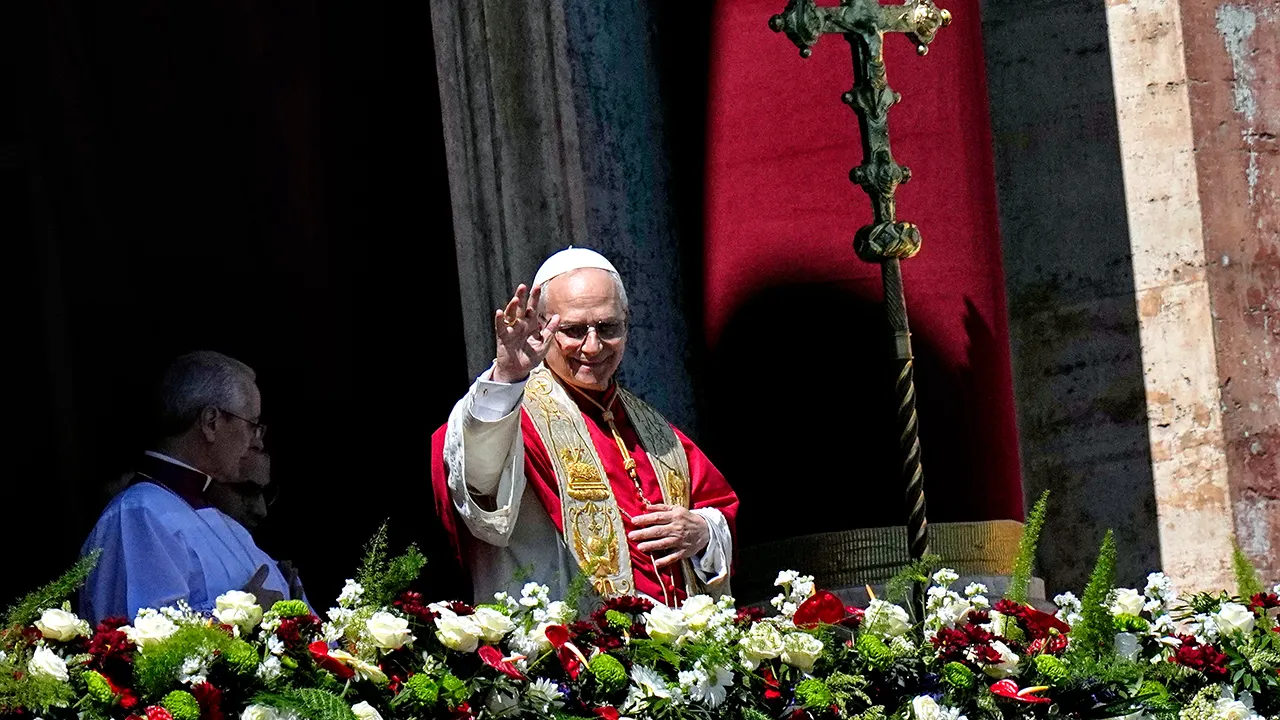
Pope Leo XIV delivers the Urbi et Orbi blessing from the central loggia of St. Peter's Basilica, Sunday, April 5, 2026. Source: AP Photo/Alessandra Tarantino.
Standing on the balcony of Vatican City’s St. Peter’s Basilica on Easter Sunday, almost a year after being elected, Pope Leo XIV delivered the semiannual Urbi et Orbi (‘To the City and the World’) papal speech to thousands of onlookers. The message, delivered at Christmas and at Easter, often includes calls for peace and nonviolence amid ongoing global conflicts.
“On this day of celebration, let us abandon every desire for conflict, domination, and power, and implore the Lord to grant his peace to a world ravaged by wars and marked by a hatred and indifference that makes us feel powerless in the face of evil,” he said. “What a great thirst for death, for killing, we witness each day in the many conflicts raging in different parts of the world.”
Leo’s remarks this Sunday come as little surprise as he maneuvers a world impacted by the Trump administration’s mass military force overseas, all while touting a Christian agenda at home.
White House press secretary Karoline Leavitt was recently asked about Pope Leo's Palm Sunday address that Jesus "does not listen to the prayers of those who wage war, but rejects them." She chose to double down on the Trump administration’s previous approach: "I don't think there's anything wrong with [praying for] our service members and those who are serving our country overseas,” she said. “And if you talk to many service members, they will tell you they appreciate the prayers and support from the commander in chief and from his Cabinet."
But that doesn’t always seem to be the case. Whereas Pope Francis was famously off the cuff and occasionally controversial, from saying in 2016 that Trump was “not Christian” for his proposed border wall policy to calling Israel’s strikes in Gaza an act of “terrorism”—the current pope often lets his fellow clergymen speak for him. In one instance, Cardinal Robert McElroy, the Archbishop of Washington, called the war in Iran “morally” illegitimate and not “just.” Top clergymen in the U.S. Conference of Catholic Bishops have repeatedly criticized the president on foreign military aggression and domestic treatment of migrants.
Tension has only escalated as the Trump administration uses increasingly religious rhetoric to defend the U.S. conflict in Iran. Pope Leo has grown notably more blunt, pushing back against the suggestion that divine providence supports the use of force. When Defense Secretary Pete Hegseth called for "violence of action against those who deserve no mercy," and President Trump punctuated a military ultimatum to Iran with "Glory be to GOD!", the Vatican’s response was swift.
On Palm Sunday, Leo delivered a stinging rebuke, stating that God “does not listen to the prayers of those who wage war.” Quoting the prophet Isaiah, he warned those in power: “Even though you make many prayers, I will not listen—your hands are full of blood.”
For Leo, the challenge seems to be both personal and political. As a global spokesman for human dignity, he must manage his opposition to policies he views as inhuman while sticking to his promise to avoid "partisan politics" and Church polarization.
This is no easy feat, given the current American landscape. Data from Pew Research shows that Trump maintained a stronghold on the Catholic vote, with 55% of voting Catholics surveyed casting a vote for him in 2024; a complex reality in which the Pope’s moral directives often clash with the political preferences of a majority of his American flock.
The administration has responded by attempting to silo the Pope's influence. Vice President JD Vance, a Catholic convert, told The Washington Post that while he admires the Church’s spirit of "Christian charity" toward the vulnerable, politicians have a "different job."
"My job is to make sure that the American people are as safe and prosperous as they can be," Vance argued. Appearing on Fox News, he was even more direct, suggesting that the Pope "stick to matters of...what’s going on in the Catholic Church" and let the president dictate public policy.
As Pope Leo enters the second year of his papacy, the battle lines are clearly drawn. Between the desire for domination he observes in modern statecraft and the way of Jesus Christ he seeks to promote, the American pope finds himself at the center of a struggle for the very soul of the faith in his home country.