
What Shapes Success in the Tennis World?
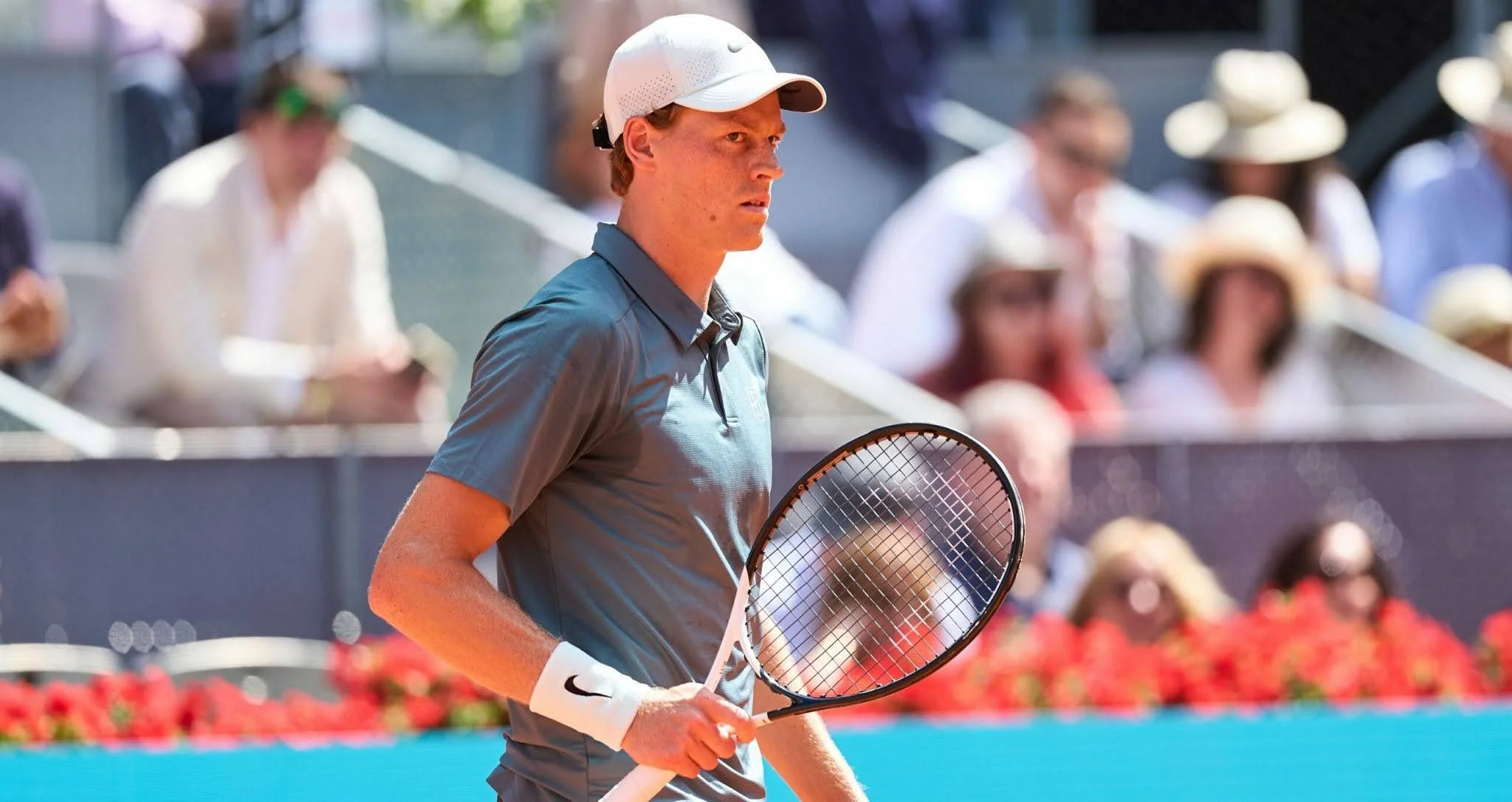
Image from the Mutua Madrid Open 2026 of Jannik Sinner as fans watch the Men’s Singles Championship match, with Jannik Sinner playing against Alexander Zverev. Source: X.
This past weekend, I had the privilege of attending my very first professional tennis tournament, the Mutua Madrid Open.
Not only was the match significant for the tennis world, with new champions emerging, but it also drew out stark political and social constructs for me. This left me wondering why tennis so consistently attracts a wealthy demographic, and how the matches themselves reflect, or even reinforce, the broader systems of privilege behind the athletes who can participate and ultimately succeed.
For those unfamiliar with how tennis tournaments work, when a professional player enters a match, they do so as an individual. While they may have support systems or ties to their home country, they ultimately compete under their own name. They don’t wear team uniforms, don’t follow a centralized schedule. Instead, they choose tournaments based on their own interests and opportunities, often with the guidance of privately hired coaches, managers, and trainers.
This means that playing tennis professionally requires a lot more than just athletic ability. Estimates suggest that it can cost between $50,000 and $100,000 per year for a developing player to compete at an elite level. Without these resources, it becomes nearly impossible to break into the sport at all. As a result, the foundation of tennis appears to rest not only on talent, but on the ability to sustain that talent through consistent investment.
In this way, the sport mirrors a broader social construct. Those who have the means to compete are often the ones who succeed. While other sports exhibit similar patterns, tennis is particularly revealing because of its emphasis on individual responsibility. Players are not backed by institutions in the same way as team sports. Instead, they build and maintain their own regimens of success. On average, tennis players receive only 12% to 20% of tournament revenue, far lower than in other sports. For example, basketball players must receive 51% of Basketball-Related Income (BRI), or the league’s total revenue, including ticket sales and concessions. Even among professionals, many lower-ranked tennis players struggle to break even financially, with travel and coaching costs often exceeding their tournament earnings.
So, why does it so often seem that those with greater financial access are the ones who rise to the top? And why does the audience appear to reflect this same pattern?
Looking at the structure of the Madrid Open itself, the spectating felt unlike any other sporting event I’ve attended. While some of this can be attributed to cultural differences due to watching the matches in Spain, the sport as a whole follows highly traditional and controlled procedures. Players warm up with one another, rather than against each other, establishing an immediate sense of mutual respect. Ball handlers move in a precise, almost choreographed manner, each assigned to specific positions on the court. At the conclusion of the match, both the winner and runner-up give speeches, emphasizing respect, gratitude, and the integrity of the game.
It is also notable that tennis has one of the smallest gender pay gaps in professional sports. Grand Slam tournaments are recognized for paying men and women equally. But there is still progress to be made to level the income playing field.
Equally striking was the behavior of the crowd. Tennis has long been associated with wealth, but this was especially visible in the audience itself. Spectators sat quietly during play, refrained from entering during active games, and dressed in a level of formality rarely seen in other sports arenas. Attending the match felt less like simply watching a competition and more like participating in a social environment where presentation, networking, and perception held significance as much as the sport itself. As some cultural analyses of tennis spectatorship note, the sport often functions as a form of social theater, with attendance signaling not just interest in the game, but participation in a particular social class and cultural space. In fact, 30 percent of U.S. sports fans with an annual household income of more than $140,000 follow tennis compared to 13 percent of viewers in lower-income households.
The financial structure of tennis further reinforces this dynamic. Prize money at major tournaments reaches into the millions. Grand Slam events now offer up to $90 million in total prize pools, with individual champions earning several million each. Even at the Mutua Madrid Open, there was a nearly $20 million prize pool, with $1,186,883 for the singles champions, and $482,748 split between the doubles champions. However, access to that level of competition requires years of prior investment. Most players must fund their development long before they ever reach the stage at which such rewards are possible, creating a system in which financial risk is assumed early. Success is concentrated among those who can afford to sustain it.
This same pattern extends beyond the players and into the sport’s branding. Sponsors are overwhelmingly luxury-focused, including Emirates, Rolex, Mercedes-Benz, and American Express, dominating the courtside visuals and advertisements, and were all sponsors or advertisers during the Mutua Madrid Open. These partnerships shape and promote a tennis tournament’s target market, reinforcing the sport’s core audience of affluent individuals. Tennis consistently attracts one of the highest-income fan bases in global sport, making it particularly valuable to premium brands seeking consumers with significant purchasing power. Because tennis consistently draws one of the highest-income fan bases in global sport, it is especially attractive to premium brands seeking consumers with significant purchasing power. The sport operates within a carefully maintained ecosystem, where athletic performance, financial investment, and social identity are deeply intertwined.
Ultimately, the structure of professional tennis challenges the idea that success is purely the result of individual talent. Instead, it reveals a system in which opportunity is shaped long before an athlete ever steps onto the court.
Watching the emotional intensity between players, the constructed nature of the match itself, and the influence of a carefully curated audience all contribute to the experience of tennis as refined and controlled. The Mutua Madrid Open reflects this sense of elegance, but that framing does not take away from the players’ effort or performance. If the sport continues to grow in ways that prioritize an elite audience and pathway, the question becomes whether it will challenge these patterns or settle more firmly into them in the years to come.