
Ebola Outbreak Brings New Challenges to Historical Disease
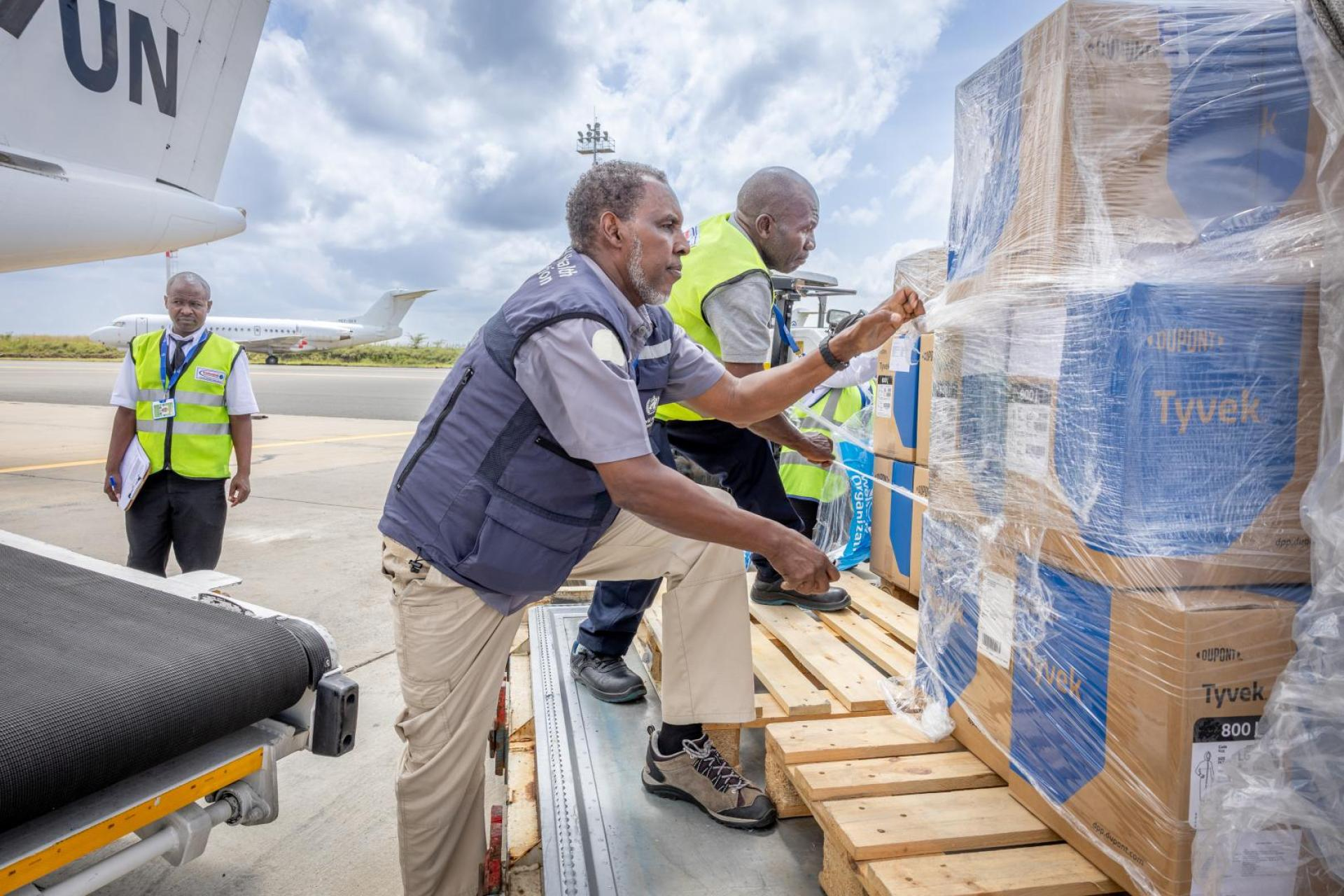
World Health Organization (WHO) and World Food Program (WFP), a field staff handling medical supplies shipment from Tyvek. Source: WHO Africa.
The Democratic Republic of the Congo’s 17th Ebola outbreak brings with it a new variant that threatens to be the most damaging yet. What was officially confirmed in mid-May as an outbreak has spread to 2031 confirmed cases and 756 confirmed deaths in the DRC and Uganda. Furthermore, the CDC estimates the outbreak could grow to over 20,000 cases within the next few months, depending on the efforts made, risking an estimated 4,000 to 10,000 deaths. The CDC reiterates that, in the worst-case scenario, where nothing is done, there could be 1.4 million infected people. The stakes are enormous for this latest Ebola outbreak. Without strong action, the spread of Ebola could take the lives of several thousand people.
The current variant plaguing the DRC is the Bundibugyo variant, which has no specialized treatment or vaccine. According to the BBC, “Ebola viruses normally infect animals, typically fruit bats, but outbreaks among humans can sometimes start when people eat or handle infected animals.” The virus spreads through infected bodily fluids, and symptoms may take up to 21 days to appear.
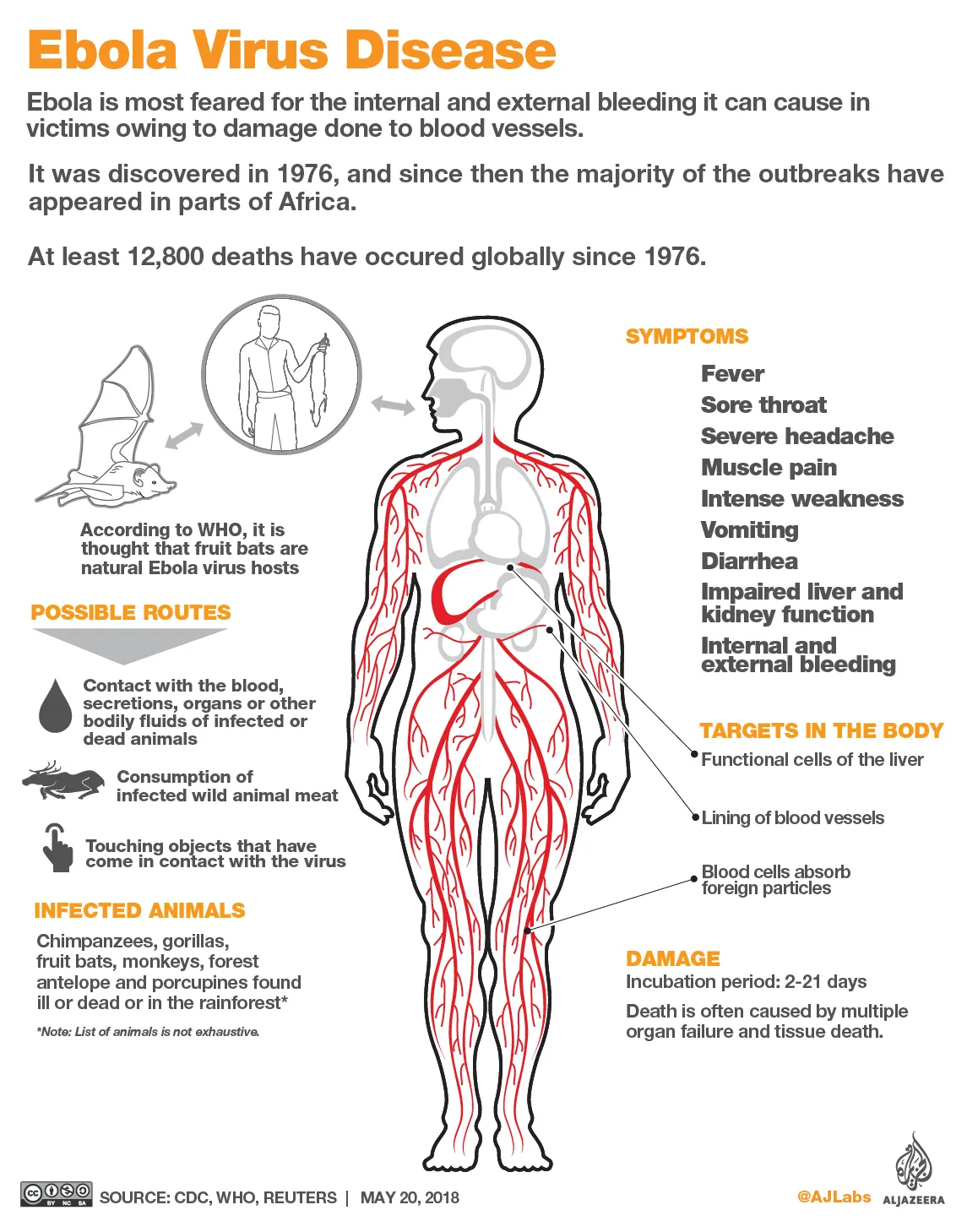
An infographic detailing the causes and impact of Ebola. Source: Alijazeera.
Despite ongoing challenges, the global community is actively trying to contain the outbreak. The United States, for instance, has committed more than $162 million to the outbreak and has promised an additional $50 million to support the creation of clinics. Similarly, the United Nations has allocated $60 million; the WHO $3.9 million; South Africa $2.9 million; and Congo $30 million. The European Union and the UN Children’s Fund also plan on sending 100 tons of equipment. Furthermore, WHO, in partnership with CDC Africa, plans “to raise US $518 million to support African countries together with partners to prepare for, rapidly detect and respond to the outbreak.”
While the large amount of international support will assist DRC’s efforts to contain the disease, there are still many challenges related to funding, medical support, political conflict and geography. Despite pledging the largest financial contribution so far, the Trump administration’s shutdown of the U.S. Agency for International Development, separation from WHO, and substantial international aid reduction will hinder efforts to raise funding.
This is especially relevant given the unique challenges the Congo faces in dealing with Ebola. The first set of issues concerns the medical situation. While there are antibody treatments and vaccines for other variants, there is currently no approved vaccine specifically designed for the Bundibugyo variant. Also, a large portion of medical staff in the DRC is undertrained, leading to several infected staff members, and further decreasing available professional support. Furthermore, the health staff working on the front lines are forced to work with minimal resources, including limited medical supplies, all while receiving scarce compensation and hardly more than a single meal per day. This is a reflection of the Congo’s eroded medical system and the current insufficient distribution of international aid.
Beyond medical problems, the political issues and geographical location are causing major challenges in containing the spread. Most of the virus is concentrated in the Ituri province of the Congo, which is in a conflict zone between Rwanda-backed rebels and the DRC government. This decreases the identification and treatment of the infected. The Ituri province is also home to the mining village of Mongbwaluin, an epicenter of the Ebola variant. The mining nature of this city means that it is inhabited by many migrating workers who have been infected, making it hard to track their locations, where they live, and other details. Overall, it makes tracking the the disease spread difficult and requires more manpower.
There’s a desperate need for substantial international action. Numerous problems plague the DRC’s efforts to contain the virus. Medical staff are chronically underfunded, while conflicts and geographic factors make tracking and treating victims difficult. Currently, global support has not reached health workers the way it needs to. This is especially concerning because the stakes of not properly dealing with Ebola could range from tens of thousands to hundreds of thousands of deaths. Although various countries and the WHO promised assistance, the outcome will depend on the resources' potency and whether the Congo actually receives them.