
U.S. and Iran Hold Nuclear Talks in Oman
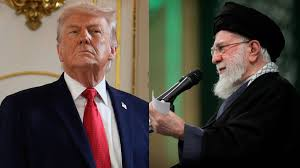
U.S., Iran Hold Nuclear Talks In Oman. Source: Global News.

Over the past two months, the increased threat of military conflict between the United States and Iran has intensified diplomatic efforts between the two countries. Most recently, President Donald Trump informed Iran that he has “built up forces in the region” and will take military action if negotiations regarding Iran's nuclear program don’t begin. On Tuesday, February 3rd, Iranian President Masoud Pezeshkian announced on X that Iranian Foreign Minister Abbas Araghchi will begin negotiations with the United States “provided that a suitable environment exists—one free from threats and unreasonable expectations.”
The negotiations are taking place against a long history of nuclear tensions between the United States and Iran. Over the past 30 years, nuclear tensions have included inspections by the International Atomic Energy Agency (IAEA) over suspicions of Iranian nuclear development, UN sanctions over Iran’s uranium enrichment, the Joint Comprehensive Plan of Action’s (JCPOA) efforts to curb Iran’s nuclear program, and the recent U.S. military confrontation with Iran.
In the 1990s, the United States accused Iran of pursuing nuclear capabilities that could be weaponized, leading to years of IAEA inspections and sanctions from the UN. President Barack Obama eventually struck a deal with Tehran, signing the JCPOA plan that would limit Iran’s nuclear activities in exchange for easing the UN sanctions. However, in 2018, President Donald Trump withdrew from the deal and reinstated the sanctions, leading to Iran’s continued production of more enriched uranium to further their nuclear projects. In 2025, President Donald Trump sent Supreme Leader Ayatollah Ali Khamenei a letter proposing new negotiations with a 60-day deadline. Following these escalations, the United States and Iran began negotiations with worry that no negotiations would lead to implied consequences or even worse, total war. Donald Trump claimed his team was “very close” to making a deal and warned Israel against making any strikes. This potential deal alarmed regional states like Israel, which has historically viewed Iran as an existential threat. Meanwhile, other Middle Eastern states like the UAE and Saudi Arabia were inspired by the talks and tried to encourage the United States to incentivize Israel to reach a ceasefire.
However, just when the talks seemed progressive, Israel launched strikes on Iran, erasing most of the progress that was made in the talks. Israel’s decision to bomb Iran originates from the “Begin Doctrine,” a security doctrine named after the late Prime Minister Menachem Begin that states that Israel may take preemptive military action if it perceives potential danger from a hostile threat. The Begin Doctrine, created in June 1981, has been the origin of Israeli security policy for over 30 years. In the context of the United States and Iran, the Israelis believed Iran’s potential agreement with the United States and their development of nuclear weapons was a potential threat. As a result, Israel launched strikes on Iran and undermined the United States and destroyed most of the progress made between the United States and Iran, with Iran focusing on security and the potential threat from Israel.
That being said, Trump’s renewed interest in striking a deal reflects his ambitions, as securing a new deal would provide the United States with the opportunity to create a deal tougher than the JCPOA plan and to demonstrate American strength to its allies. This conclusion is based on Trump’s repeated criticisms that the JCPOA failed to adequately restrain Iran’s nuclear ambitions, his use of economic sanctions as a negotiating tool, and his diplomatic plans to use the negotiations to show US strength and leverage instead of mutual compromise.
As negotiations moved forward, the talks, originally scheduled to take place in Turkey, took place in Muscat, Oman, on Friday, February 6th, a country seen as a neutral ground for both sides. The meeting brought American and Iranian diplomatic representatives together, with Omani officials as intermediaries. The talks primarily focused on Iran’s nuclear program. While American diplomats declined to comment following the meeting, Iranian Foreign Minister Araghchi announced that both countries will “hold consultations” with their respective countries before the next round of negotiations, and that the meeting was a “good start.” However, Trump later released a statement regarding the meeting stating that it was “very good,” and that Iran wants to make a deal “very badly,” further claiming that Iran will regret the “consequences” if they fail to make a deal.
Trump’s statements could signal one of two things. First, the White House could be maintaining a cautionary stance to prevent allies from panicking while preserving negotiations leverage over Iran. Allies like Israel, Saudi Arabia, and other Gulf Arab states are afraid of Iran’s nuclear influence over the region, considering the possibility of Iran using its nuclear power to force countries to make decisions based on its agenda. If the United States allies feel threatened or unsafe, this could pull the United States into a future war with Iran.
Trump’s statements also indicate that White House officials are trying to add pressure on Iran to get it to concede. The United States, like Iran, has strong nuclear capabilities and isn’t afraid to use military force if negotiations don’t pan out. President Donald Trump has already struck Iran and isn’t afraid to get involved. In addition, the United States’ primary exporter for oil is in the Middle East, meaning that conflict with Iran can lead to higher prices for oil and gas in the United States. For the United States, the coming weeks will therefore be critical in determining whether such diplomacy can decrease or increase tension. For Iran, years of sanctions have negatively affected its economy, resulting in high inflation, a loss of value in currency, reduced oil revenues, and increased unemployment rates. Over the past two decades, the struggling Iranian economy has resulted in a slow population growth, an increase in the average marriage age, and riots across Tehran. The riots have led to hundreds killed, arrested, and raped, putting pressure on the Supreme Leader to negotiate with the United States. To Iran,, these negotiations are not only about protecting its military strategies but also about saving its struggling economy and public support.
Ultimately, the outcome of these negotiations is uncertain. While many view the talks as unlikely to bring any breakthroughs, there is hope that continued dialogue will lead to building trust, creating a framework for future agreements, and gradually reducing tensions between Iran and the United States. Yet, the deeper question remains: can decades of mistrust and tensions be overcome, or will historical conflicts continue to shape this relationship? The next rounds of diplomacy will not only shape these two countries, their people, and economies, but also carry significant implications for the future of important global relations.