
On Cannabis Policy in North Carolina
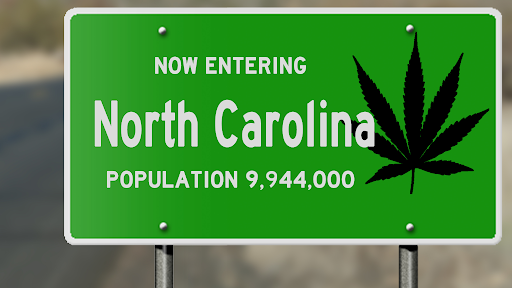
Mock-up of North Carolina entry sign with a depiction of marijuana. Source: Kiplinger.
In June 2025, the North Carolina Advisory Council on Cannabis was spearheaded by Democratic Governor Josh Stein. This April, they have recommended that lawmakers set a path for the legalization of marijuana for adults in the state. Still, two top Republican lawmakers, Representative Timothy Reeder and Senator Jim Burgin, are pushing back on this recommendation, with concerns over relationships between marijuana and negative behavioral health outcomes. As North Carolina invests more in mental health services, the marijuana debate is becoming increasingly polarizing in local government, making additional context important for understanding this bipartisan debate.
As of April 2026, cannabis is illegal for any use in North Carolina, aside from rare cases. Possession of up to 0.5 ounces of it will result in a misdemeanor and a relatively small fine of up to $200, but anything beyond that results in a felony. According to the Epilepsy Alternative Act of 2014, North Carolina also permits patients with unmanageable epilepsy to use CBD extract to treat their conditions. The Eastern Band of Cherokee Indians (ECBI) voted to legalize recreational cannabis on their lands in September 2023. The ECBI acts as a sovereign nation within the borders of North Carolina, meaning it can enact its own laws within its boundaries. This makes the Qualla Boundary the only place in NC where marijuana is completely legal. Marijuana, alongside other psychoactive substances, is still prohibited in all federally controlled public locations.
In 2023, state legislators introduced a bill legalizing medicinal marijuana to the NC Congress. While backed by the Senate, the bill effectively stalled in the House until March, when it was deemed dead. Medical marijuana has long been a point of civil discourse. In past debates, including a bill introduced in 2014, people testified in favor of the benefits of medical marijuana, and many believed that it was unnecessary and a pathway to the legalization of marijuana for recreational use. The circulation of negative sentiment about the use of marijuana for non-medical purposes, especially regarding health, contributed to this decision, leading the state House to cut off all pot-related legislation for multiple legislative sessions.
In recent years, attitudes towards the legalization of marijuana have shifted, particularly amongst NC voters. In a 2026 survey by the Raleigh News & Observer, 66% of responding primary candidates supported the passage of medical marijuana legislation, including some Republicans. Current narratives around such legislation center on approaching the issue with caution, ensuring strict regulation and safeguards against misuse. In a 2025 study by Meredith Poll, 71% of North Carolinians supported the passage of a medical marijuana legalization bill, even those who self-identified as being highly conservative.
Legalization is quickly becoming a bipartisan issue, with civilian majorities, both Democrats and Republicans, in favor of it. Governor Josh Stein describes the current system as a “wild west”. Without proper state regulation of marijuana, illegal sales run freely without uniform standards for procurement, making NC the home of the second-largest unregulated cannabis market in the United States. Overcaution regarding such policy may lead to further losses and the strengthening of illicit markets, creating a $3 billion problem. At the same time, concerns over the popularization of marijuana run rampant. Representative Reeder speaks of the correlated risks of psychosis and negative health outcomes amongst young adults. As of now, the Marijuana Legalization and Reinvestment Act, filed in March 2025, is the present legislative vehicle, legalizing marijuana possession for adults 21, taxing marijuana sales to be reinvested into communities, and expunging past convictions.
North Carolina’s legislature is once again taking up marijuana legalization in 2026, with lawmakers in Raleigh expected to weigh perspectives from both parties and input from constituents across the state. While legalization, especially for medical use, has gained bipartisan support among voters, lawmakers are divided over how to balance the potential benefits with risks to public health and safety. The recommendation from the Advisory Council implies momentum towards a more regulated system, but resistance from top legislators highlights the caution shaping the debate. Decisions made will likely depend on how politicians balance these differing perspectives in the years to come.