
Italy’s Latest World Cup Failure Sparks Administrative Turmoil
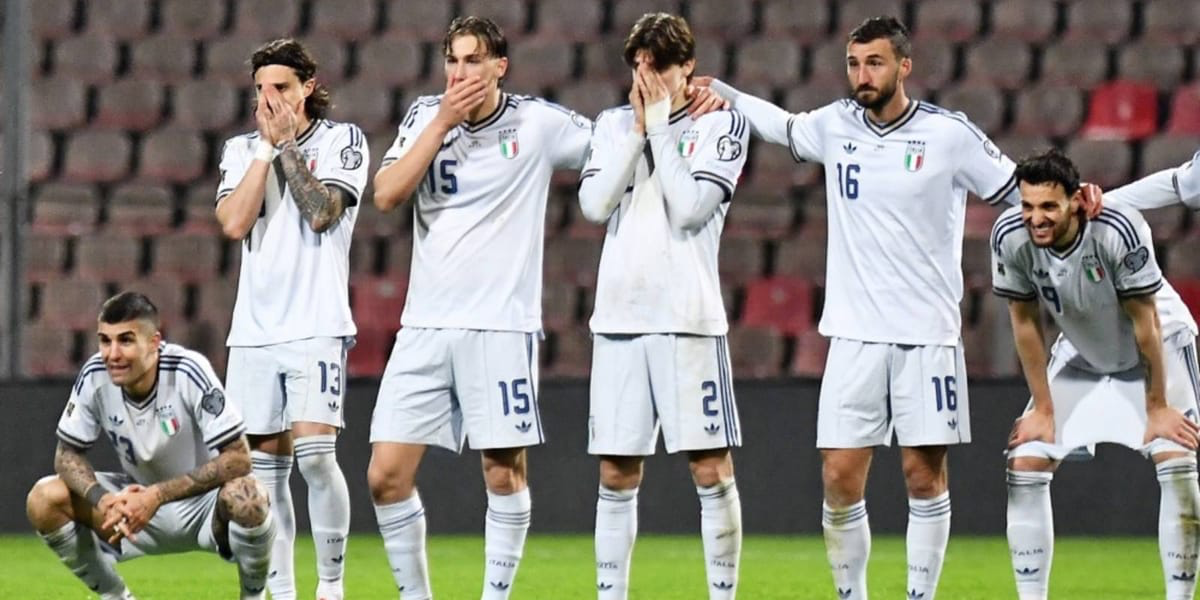
Italian players reacting during penalty shoot-out loss to Bosnia & Herzegovina. Source: FreeMalaysiaToday.
Italian football is deemed to be in crisis after Italy failed to qualify for the 2026 World Cup. Their penalty-shootout loss against Bosnia and Herzegovina solidified their losing status, as the four-time World Cup winners continued their downward trend away from their past glory. The turmoil has set off a string of administrative changes, including the resignation of Italian Football Federation President Garbeiele Gravina and the removal of coach Gennaro Gattuso.
Italy’s struggles are nothing new. Their recent loss marks their third straight World Cup qualification failure, despite being one of the most successful national teams in World Cup history. Some critics attribute the team’s misfortunes to player development and structural issues, while others blame the players themselves for their poor performances. The latter has been echoed by former Italian soccer star Andrea Pirlo, who is considered one of the greatest midfielders of all time and was a player on the Italian team during their last qualification in 2014, who has criticized the team for playing with fear and relying excessively on defensive tactics rather than taking the initiative. Italy’s losing streak has become the new norm; even after winning the UEFA 2020 Euro Cup championship, they have not been able to carry this momentum forward. Their failure to qualify even after the World Cup expanded to 48 teams has done nothing to soften the blow.
Gravina himself, along with other Italian coaches, admitted that problems with Italian football run deep and called for a redesign of the entire system. Most notably, Italy has been prioritizing foreign talent over domestic players, especially as clubs pursue their own interests rather than taking the time to develop young players through the national team pipeline. With foundational issues such as these, it is unclear what path Italy will take to restore its teams to their former glory. A complete rehaul of the system requires time, and whether players will stick around is unclear. Additionally, many Italian teams play in outdated stadiums and require modernization to meet their current needs, but this could take time during which Italian talent could leave to play for other clubs overseas.
But their journey to the 2026 World Cup might not be over yet. There is a potential for Iran to withdraw from the World Cup due to the ongoing war and subsequent geopolitical tensions. If they withdraw, FIFA plans to organize a playoff where two teams from Asia and two from Europe would participate. But this scenario is far-fetched. Even if Italy miraculously qualifies, they still do not currently have a coach following Gattuso’s resignation and are in a subsequent transition period, which will impact their training, strategy, and overall gameplay.
All in all, Italy’s future is unclear. Despite their previous World Cup failures, they have yet to make changes, and it took a third straight loss for them to recognize the crisis they are in. It will take a restructuring of youth development, reducing reliance on foreign players, and fixing structural issues to spur revival. Whether or not Italy will actually implement these changes is unknown, but if they don’t, they risk cementing their status as a losing team and losing relevance in global soccer.