
The Power of SuperPACs on the NC Senate Race
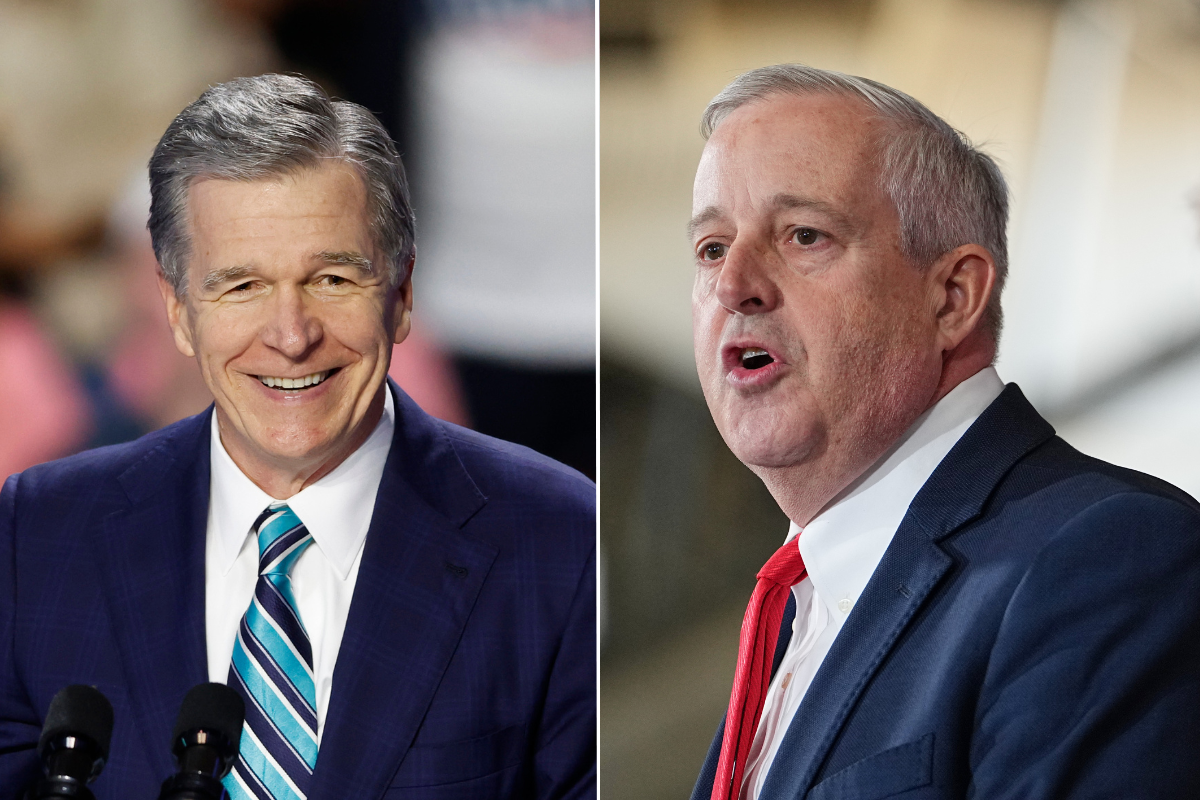
North Carolina U.S. Senate candidates Roy Cooper (left) and Michael Whatley (right). Source: Cooper: AP Photo/Nell Redmond; Whatley: AP Photo/Matt Rourke.
In 2014, Thom Tillis set the record for the most expensive non-presidential campaign in American history, with close to $100 million in total spending. Now, the current campaign to succeed him in the US Senate is expected to come close to or surpass this number, with help from PAC investments.
PACs, or political action committees, are organizations that raise and spend money to elect or defeat candidates and usually represent some sort of corporate or ideological interest. These organizations have limited contribution amounts of about $5,000 per contributor and can coordinate with and contribute directly to candidates. Super PACs, a category of PACs, have unlimited contribution and spending amounts, but must operate independently and cannot coordinate with the candidate at all. These organizations have given rise to controversy around the impact of wealthy donors on election campaigns, the potential for corruption, and the disproportionality given to average citizens.
The ongoing Senate race between Michael Whatley (R) and former Governor Roy Cooper (D) has pushed this controversy into the spotlight as the Senate Leadership Fund (SLF), a Republican-based SuperPAC, revealed its plan to spend an estimated $71 million to aid Whatley’s campaign. In keeping with SuperPAC characteristics, the largest donors to this fund include billionaires Elon Musk, Ken Griffin, and Stephen Schwarzman. The main aim of the SLF is to expand and protect the Republican Senate majority, and they have plans to invest in Senate races in Ohio, Georgia, and Michigan.
While announcing the investment, the SLF began prying at Cooper’s campaign, calling him a failed governor who was driving up costs for families and harming North Carolinians. They outlined their planned extensive efforts to influence citizens’ votes through television and radio advertisements, text-messaging, and increasing voter turnout. In early April, they announced $300 million dollars in planned spending to support Republican candidates in Senate elections. This includes $271 million reserved for television, digital and streaming ads, and the rest towards mail and other voting operations. This drastic spending amount demonstrates an aggressive strategy aimed at shaping the narrative in battleground states and bombarding voters with messaging.
This highlights the increasing influence of PACs on swaying voters through targeted advertisements. These advertisements can push misleading and manipulated information, increase polarization, and can lead voters to base their decisions on distorted messaging. For example, last year, the SLF blamed Cooper for releasing DeCarlos Brown, the person responsible for stabbing a young woman to death on the Charlotte Light Rail, as part of a settlement during the COVID-19 pandemic. In reality, Brown had been released before the settlement, but the SLF used this misinformation to claim that Cooper should take direct responsibility for the attack because of his alleged prioritization of criminals over public safety.
Citizens United v. FEC, a landmark Supreme Court ruling, enabled the creation of Super PACs and indirectly furthered the imbalance of anonymous, wealthy donors in campaign spending. This allowed these specialized interests to shape political agendas instead of the general public. This raises questions about whether the voting public and their interests actually matter to lawmakers. Polls show that voters believe that campaign donors, special interest groups, and lobbyists have disproportionate power and contribute to political corruption, and that unlimited spending in elections threatens democracy. In North Carolina, this massive investment can cause voters to question the messaging and interests that are being forced upon them. In many cases, donors can remain anonymous by utilizing nonprofits to route their money, so voters are unaware of whose interests are being advanced through a campaign. This undermines the supposed design of democracies to be transparent, pushing voters to lose trust in the political system and decreasing electoral participation.